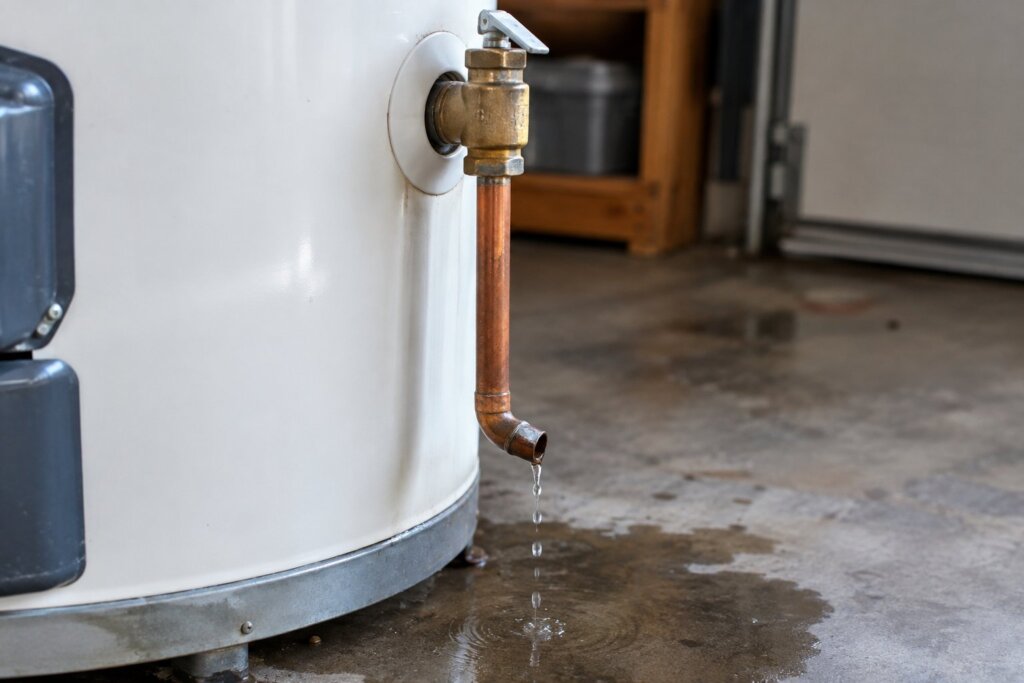
When you find a water heater relief valve leaking, the valve is most often reacting to excessive water pressure, and that pressure usually comes from thermal expansion in a closed plumbing system with no expansion tank. The Lochinvar residential water heater manual, from an A. O. Smith company, says it directly: “Excessive water pressure is the most common cause of temperature-pressure relief valve leakage.”
The other two causes are a valve that has worn out and no longer seats, and water that is overheating. The last one is rare and urgent. Here is how to tell them apart and fix each one.
Why is my water heater relief valve leaking?
The temperature-pressure relief valve, or T&P valve, opens when the tank gets too hot or the pressure gets too high. A leak means one of three things:
- Pressure is too high. Heated water expands. In a “closed system,” where a check valve, pressure-reducing valve or backflow preventer stops water from flowing back to the main, the pressure climbs until the valve opens. The Lochinvar manual says “excessive water system pressure is most often caused by thermal expansion in a ‘closed system.'” High street pressure can do the same.
- The valve has failed. A valve that no longer seats keeps weeping even at normal pressure. Amtrol says to replace a relief valve if corrosion is evident or it does not function.
- The water is overheating. If a thermostat fails, the water keeps heating. Watts’ 100XL, a common residential T&P valve, relieves temperature at 210°F.
Is a leaking relief valve dangerous?
The drip itself is the valve doing its job. What would be dangerous is stopping it. The Lochinvar manual warns in capital letters: “DO NOT PLUG THE TEMPERATURE-PRESSURE RELIEF VALVE OPENING. THIS CAN CAUSE PROPERTY DAMAGE, SERIOUS INJURY OR DEATH.”
The urgent case is a valve releasing a steady stream of very hot water or steam. Ogden City, Utah explains why in its homeowner handout: if the thermostat fails, the water keeps heating, and above 212°F it becomes “super heated” and turns instantly to steam when a faucet opens. “As the pressure within the tank continues to build up under super heated conditions, the tank may explode.” If you see that, turn off the power or gas to the heater, keep clear of the discharge, and call a plumber.
For water pooling around the base rather than from the valve pipe, read our guide on whether a leaking water heater is dangerous, because a tank leak is a different problem.
How do you find out which cause it is?
Watch when it leaks and measure your water pressure. A pressure gauge threaded onto a hose bib, with no water running, gives your static pressure in a minute.
| What you see | Likely cause | Fix |
|---|---|---|
| Drips during or after a heating cycle, then stops | Thermal expansion in a closed system | Install a properly sized expansion tank |
| Static pressure above 80 psi | High supply pressure | Pressure-reducing valve, plus an expansion tank |
| Weeps all the time at normal pressure and temperature | Worn or fouled valve | Replace the T&P valve |
| Steady flow of very hot water or steam | Overheating, often a failed thermostat | Shut off power or gas now, call a plumber |
The 80 psi line comes from the 2021 International Residential Code, section P2903.3.2, which says static water pressure “shall be not greater than 80 psi” and requires a pressure-reducing valve above that. That valve closes the system, which is why it usually needs an expansion tank alongside it. Our guide to water heater expansion tank installation covers sizing and setup.
How do you test a water heater relief valve?
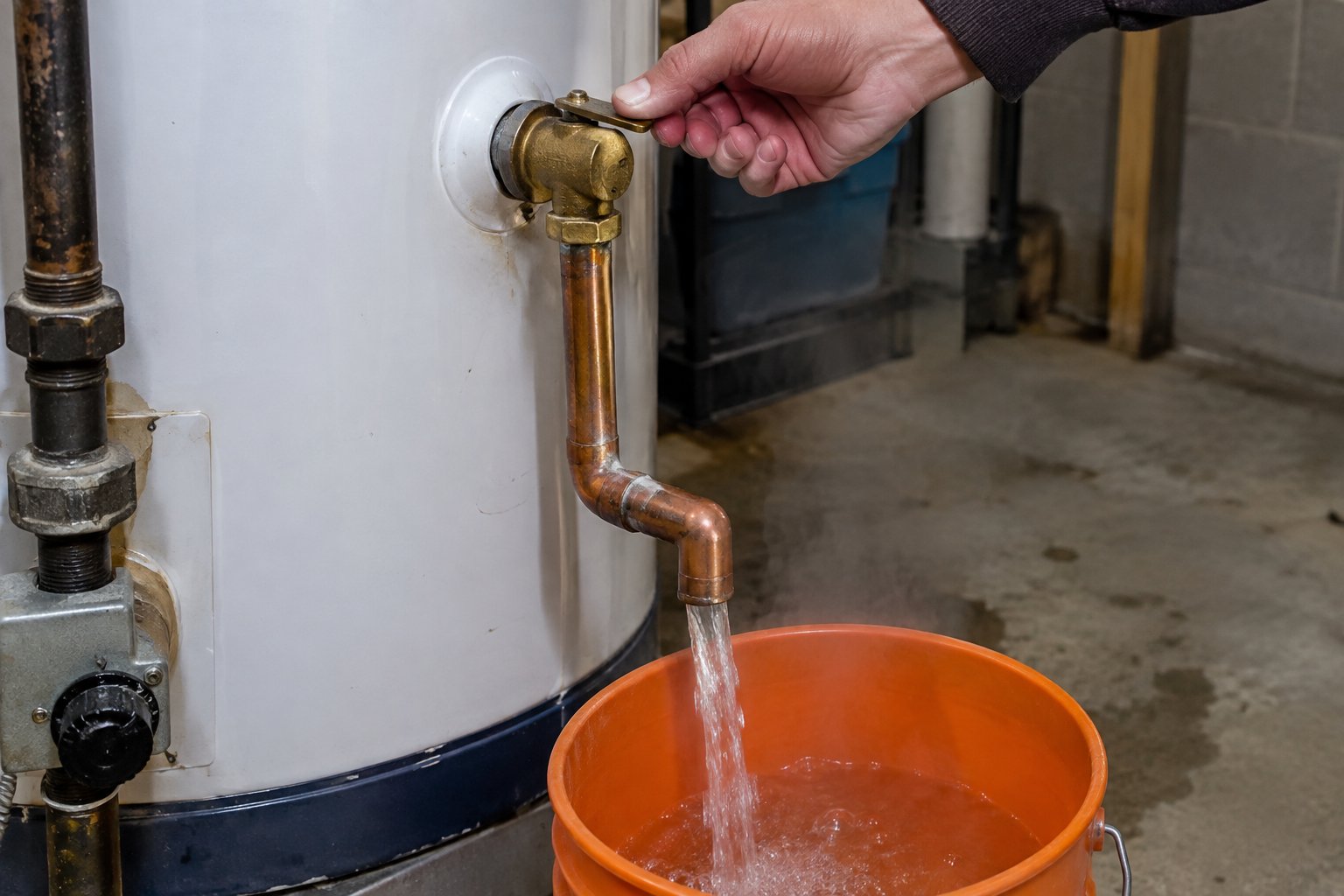
Lift the test lever and let it snap back. The Lochinvar manual recommends checking the valve “every 6 months” and says: “lift the lever at the end of the valve several times… The valve should seat properly and operate freely.”
Before you do, make sure “no one is in front of or around the outlet of the temperature-pressure relief valve discharge line,” and that the discharge will not damage anything, “as the water may be extremely hot.”
If the valve does not reset and keeps releasing water, the manual’s instruction is to “immediately close the cold water inlet to the water heater and drain the water heater,” then replace the valve. Amtrol, which makes expansion tanks, adds that a licensed contractor should inspect the valve at least once every three years, or any time it discharges, and replace it if corrosion is present.
How do you replace a T&P valve?
Use a valve rated for your heater, and install it directly into the tank’s relief valve opening. The Lochinvar manual sets the rules for a replacement:
- It must be a combination temperature-pressure relief valve certified to ANSI Z21.22 / CSA 4.4 and meeting ASME code requirements.
- Its maximum set pressure must not exceed the heater’s marked working pressure, 150 psi on that heater.
- Its discharge capacity must be at least the heater’s Btu/hr or kW input rate from the rating label.
- “No valve or other obstruction is to be placed between the temperature-pressure relief valve and the tank.”
The swap itself: turn off the power or gas, close the cold water inlet, open a hot faucet to relieve pressure, and drain enough water to bring the level below the valve. Unscrew the old valve, apply thread sealant to the new one, thread it in until the outlet lines up with the discharge pipe, and reconnect the discharge pipe. Refill the tank with a hot faucet open until water runs without air, then restore power or gas.
Parts and tools for this job
- Watts 100XL8 T&P relief valve, 3/4 inch, 150 psi, 210°F: check that the pressure setting does not exceed the working pressure on your heater’s rating plate.
- CARBO water pressure test gauge with a max pointer: the red pointer holds the highest pressure it saw, which shows thermal expansion spikes overnight.
- Amtrol ST-5 thermal expansion tank, 2 gallon: the usual fix when expansion pressure is what opens the valve.
As an Amazon Associate, Complete Water Guide earns from qualifying purchases. Prices change, so check the listing.
What are the rules for the discharge pipe?
The pipe exists so a discharge goes somewhere safe. The Lochinvar manual’s requirements:
- Not smaller than the valve’s outlet, with no reducing couplings or restrictions.
- Never plugged, blocked or capped, and no valve anywhere between the relief valve and the drain.
- Made of material listed for hot water distribution, and not exposed to freezing.
- Ending no more than 6 inches above an adequate floor drain, or outside the building. Inside is recommended in cold climates.
- No direct connection to a drain unless a 6-inch air gap is provided.
- Kept short: more than 30 feet of length or more than four elbows “can cause restriction and reduce the discharge capacity of the valve.”
Without a proper end point, even a small drip soaks the floor around the heater. Ogden City’s handout makes the same point: “A drain line must be installed to avoid water damage and scalding injury when the valve operates.”
How much does it cost to fix a leaking relief valve?
Replacing a T&P valve costs $100 to $250 with a plumber, including labor, according to Fixr’s water heater repair cost guide, updated August 29, 2025. That is a vendor estimate. If the cause is thermal expansion, a new valve alone will not stop the drip, and you will also need an expansion tank.
Note one warranty point. The Lochinvar manual says relief valve leakage “due to pressure build up in a closed system that does not have a thermal expansion tank installed is not covered under the limited warranty.” Fixing the pressure protects the tank as well as the valve, and a new tank is far more expensive, as our guide to water heater replacement cost shows. For other symptoms, see the water heater troubleshooting guide.
Frequently asked questions
Why does my water heater relief valve drip after heating?
Heated water expands, and in a closed system the extra volume raises the pressure until the valve opens. An expansion tank on the cold line gives that water somewhere to go.
Can I cap or plug a leaking relief valve?
No. The Lochinvar manual warns that plugging the relief valve opening can cause property damage, serious injury or death. Fix the cause or replace the valve.
How often should I test my T&P valve?
The Lochinvar manual recommends every six months, by lifting the lever several times. Amtrol adds that a licensed contractor should inspect it at least every three years.
What pressure is too high for a water heater?
The 2021 International Residential Code caps static household pressure at 80 psi. Common residential T&P valves such as the Watts 100XL are set to relieve at 150 psi and 210°F.
How much does a new relief valve cost?
About $100 to $250 installed by a plumber, per Fixr’s 2025 repair guide. The valve must match the heater’s pressure rating and input rate.
Where should the relief valve discharge pipe end?
Within 6 inches above an adequate floor drain or outside the building, per the Lochinvar manual, with no valve, cap or reduction anywhere along it.
Sources
- Lochinvar (an A. O. Smith company), Residential Gas Water Heater Installation and Operation Manual, 2017: T&P valve requirements, test, discharge piping, thermal expansion.
- Ogden City, Utah, Thermal Expansion Danger homeowner handout, quoting 2021 International Residential Code section P2903.3.2.
- Watts, 100XL Series temperature and pressure relief valves, product page.
- Amtrol, Therm-X-Trol Installation and Operation Instructions, part 9017-091 (04/24): relief valve inspection.
- Fixr, Water Heater Repair Cost, updated August 29, 2025. Vendor estimates.