The water heater replacement cost for a standard tank unit is about $1,000 to $2,700 installed in 2026, and gas units average around $1,900, according to contractor pricing data. The Department of Energy’s own model puts a typical installed gas tank at $1,578 and an electric tank at $1,855, in 2022 dollars. A heat pump or tankless unit costs more up front, and the federal tax credit that used to cut that gap ended with 2025.
Below are the real numbers, where each one comes from, and the few line items that turn a $1,500 job into a $4,000 one.
How much does it cost to replace a water heater in 2026?
Most homeowners pay between $900 and $3,000, with an overall average of $1,400, based on Fixr’s January 2026 cost guide. Gas tank replacements run higher, at a national average of $1,900 and a typical range of $1,000 to $2,700.
No regulator publishes a current retail price for water heaters, so every range in the table below comes from a contractor-pricing site. Treat them as vendor estimates, not measured prices, and use them to check whether a quote is in the right neighborhood.
| Water heater type | Installed cost range | Source |
|---|---|---|
| Tank (gas or electric) | $600 to $2,500 | Fixr, Jan 27, 2026 |
| Gas tank replacement | $1,000 to $2,700 (average $1,900) | Fixr, Jan 30, 2026 |
| 40-gallon tank | $550 to $2,300 | Fixr, Jan 27, 2026 |
| 50-gallon tank | $700 to $2,500 | Fixr, Jan 27, 2026 |
| 80-gallon tank | $1,200 to $3,600 | Fixr, Jan 27, 2026 |
| Tankless | $1,000 to $4,000 | Fixr, Jan 27, 2026 |
| Heat pump (hybrid) | $1,200 to $4,600 | Fixr, Jan 27, 2026 |
If you are weighing a tank against a tankless unit, our tankless vs tank cost comparison runs the numbers over the full life of each.
What does the Department of Energy say a water heater costs installed?
The DOE estimates an average total installed cost of $1,578 for a gas-fired storage water heater and $1,855 for an electric storage water heater, measured at the efficiency level it adopted in its May 2024 rule and stated in 2022 dollars.
These figures come from the life-cycle cost analysis in the final rule published in the Federal Register on May 6, 2024. The DOE built them from manufacturer costs, distributor and retailer markups, shipping, sales tax and installation labor, run across a sample of real U.S. households. That makes them the closest thing to a neutral national number that exists, with one catch: they are four years old and they model the 2029-compliant product, not the cheapest unit on the shelf today.
The same rule estimates an average lifetime of about 15 years for storage water heaters. Spread across that life, a $1,900 replacement works out to roughly $127 a year before energy costs.
What makes up the bill?
A replacement quote has five parts: the unit, labor, removal of the old tank, the permit, and any code work the inspector requires. The unit is usually the biggest single line.
- Labor: about 20% to 25% of the total for a tank-style unit, or roughly $200 to $650. Plumbers who bill hourly charge $45 to $200 an hour (Fixr).
- Removal and disposal: $100 to $500, and some contractors fold it into labor (Fixr). Ask, because it is the line most often left off a low quote.
- Permit: $25 to $300 for a simple swap (Fixr). Local fees are often at the low end. Eugene, Oregon charges a flat $72 for a residential water heater replacement, and Delaware County, Ohio lists $60 per heater on its 2026 permit form.
- Bigger plumbing or gas changes: if the job needs a new gas line or major plumbing changes, permit and inspection costs alone can reach $1,500 or more (Fixr).
A permit is not paperwork for its own sake. Eugene’s form asks whether the new heater goes in the same location and whether new electrical work is needed, which is exactly where a cheap install tends to cut corners.
Does switching from gas to electric cost more?
Yes, often by a lot. The DOE puts the cost of upgrading to a 200-amp electrical panel at approximately $750 to $2,000, and says older homes and homes heated by gas furnaces are the most likely to need one before an electric water heater can go in.
Going the other way is not cheap either. The DOE notes that switching between gas and electric means new panels, new gas lines or new venting, and that these costs “can possibly exceed $1,000 on top of the installed costs” in its analysis.
The DOE also makes a point that matters if your tank just failed: “Switching from a gas-fired to an electrical water heater is especially unlikely in the case of an emergency replacement where time is a critical factor.” If you want to change fuel type or move to a heat pump, plan it while the old tank still works.
Can you still get a tax credit for a new water heater in 2026?
No federal tax credit applies to a water heater installed in 2026. The IRS page for the Energy Efficient Home Improvement Credit states that the credit is allowed for qualifying property “placed in service on or after Jan. 1, 2023, and before December 31, 2025.”
That credit was worth 30% of the cost, up to $2,000 a year for a qualified heat pump water heater. Many cost guides still quote it, so check the date on anything you read.
Rebates through state energy offices are a separate program, and they depend on your state launching it. Minnesota’s version lists up to $1,750 for an ENERGY STAR heat pump water heater for households below 80% of area median income, and $875 for households between 80% and 150%. As of the state’s October 12, 2026 update, “Save Energy Minnesota has not launched yet.” Check your own state energy office and your electric utility before you buy, because a utility rebate is now often the only discount available.
Will the 2029 federal rule change what you can buy?
It changes electric tanks the most. Under the DOE’s May 2024 final rule, compliance is “required on and after May 6, 2029,” and the rule sets standards for larger electric storage water heaters “that are met through the use of heat pump technology,” while smaller ones can still use electric resistance. A. O. Smith’s summary of the rule draws that line at 35 gallons: electric tanks above 35 gallons and up to 120 gallons will need a heat pump. For gas tanks between 20 and 55 gallons, the same summary describes a small efficiency increase, with atmospheric models needing a damper.
The new levels apply to water heaters produced on and after May 6, 2029, not to the heater already in your basement. As of the DOE’s current rulemaking page, the May 2024 rule stands. A separate rule for gas tankless water heaters was withdrawn on May 20, 2025.
Should you repair or replace?
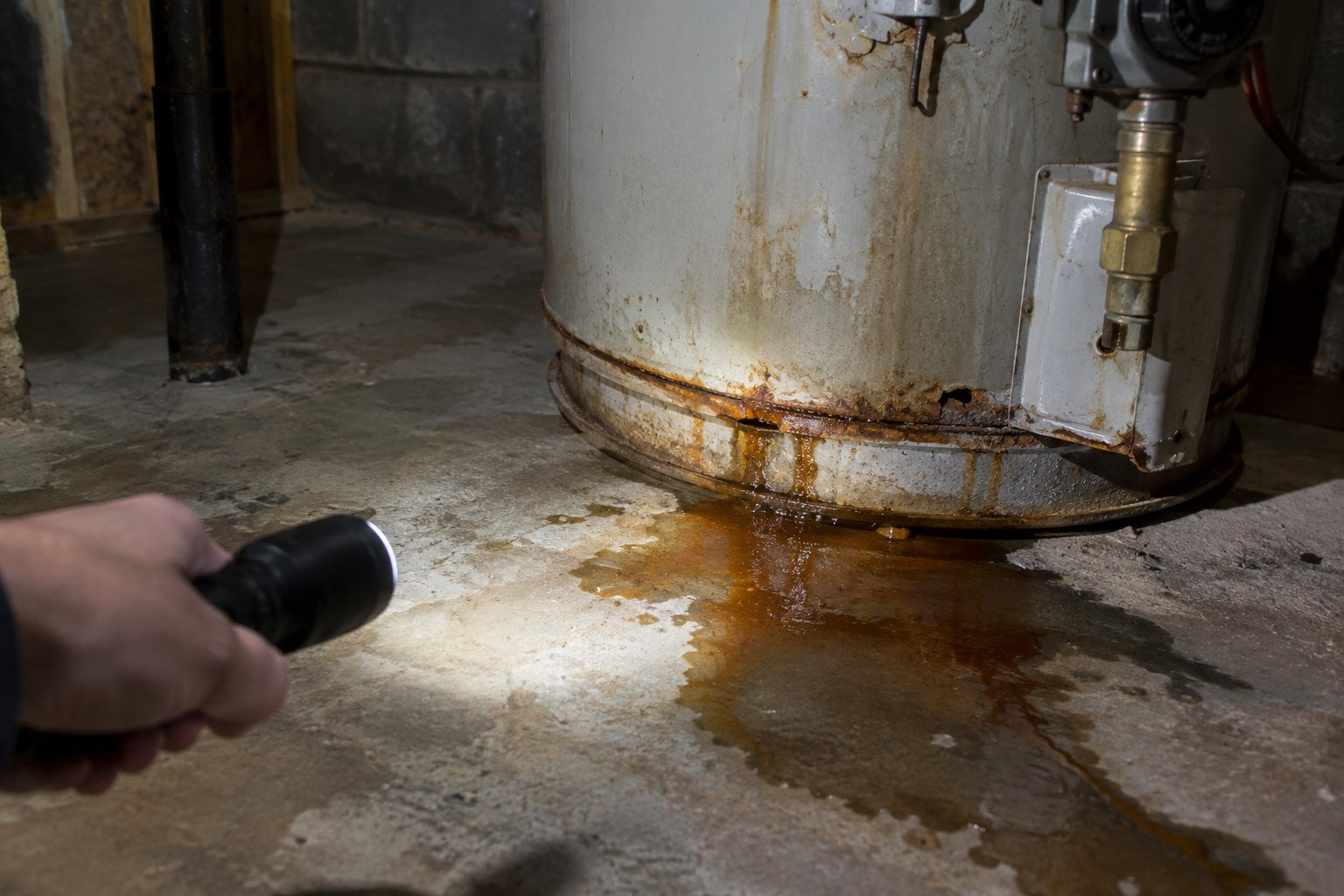
Replace when the tank itself leaks, and consider repair when a replaceable part such as an element, thermostat or valve fails on a heater well short of its 15-year average life.
Our guide on water heater repair vs replace walks through that decision part by part. If you are not sure what is wrong yet, start with the water heater troubleshooting guide, and if water is pooling under the unit, read whether a leaking water heater is dangerous before anything else.
How can you keep the cost down?
The cheapest replacement is a like-for-like swap: same fuel, same size, same spot. Every change from that adds labor, permit scope or both.
- Get at least three written quotes and ask each one whether removal, the permit and any expansion tank or code items are included.
- Replace before failure if your tank is near the DOE’s 15-year average, so you have time to compare prices and check rebates.
- Ask your electric utility about heat pump water heater rebates before choosing a model.
- Maintain the new one. Draining sediment as the manufacturer’s manual directs is covered in our guide on how to flush a water heater, and rusty hot water is often an early warning, explained in why a water heater produces rusty water.
One number you will not find anywhere: a current, neutral national price. The DOE’s figures are the only ones built from a household sample, and they are modeled in 2022 dollars. Everything else is a vendor’s estimate, including the ranges above.
Frequently asked questions
How much does it cost to replace a 50-gallon water heater?
A 50-gallon tank costs about $700 to $2,500 installed, according to Fixr’s January 2026 guide. The 80-gallon size runs $1,200 to $3,600.
How long does a tank water heater last?
The Department of Energy estimates an average lifetime of about 15 years for storage water heaters, in its May 2024 rule. Your own unit’s age is printed in the serial number on the rating plate.
Is there a federal tax credit for water heaters in 2026?
No. The IRS limits the Energy Efficient Home Improvement Credit to property placed in service before December 31, 2025. State rebate programs and utility rebates may still apply.
Do I need a permit to replace a water heater?
Many cities and counties require one, usually for $25 to $300. Eugene, Oregon charges $72 for a residential replacement and Delaware County, Ohio charges $60 per heater.
Is it cheaper to replace a gas or an electric water heater?
The DOE’s model puts a typical gas tank at $1,578 installed and an electric tank at $1,855, in 2022 dollars. Staying with your current fuel is almost always cheaper than switching.
What changes for water heaters in 2029?
From May 6, 2029, new electric storage water heaters above 35 gallons will need heat pump technology under the DOE’s May 2024 rule, per A. O. Smith’s summary. Heaters already installed are not affected.
Sources
- U.S. Department of Energy, Energy Conservation Program: Energy Conservation Standards for Consumer Water Heaters, final rule, Federal Register, May 6, 2024 (89 FR 37778).
- U.S. Department of Energy, Consumer Water Heaters rulemaking page (status of the 2024 rule and the May 20, 2025 withdrawal).
- Internal Revenue Service, Energy Efficient Home Improvement Credit.
- Minnesota Department of Commerce, Home Electrification and Appliance Rebates (HEAR), updated October 12, 2026.
- City of Eugene, Oregon, Plumbing Permit Application; Delaware Public Health District (Ohio), County Water Heater Permit, 2026.
- A. O. Smith, New DOE Minimum Efficiency Standards (manufacturer summary of the 2024 rule).
- Fixr, Gas Water Heater Cost (updated January 30, 2026) and Water Heater Installation Cost (updated January 27, 2026). Vendor estimates.