A well water filtration system can only be sized correctly after a test, and the EPA and CDC both say the same four things belong in that test: total coliform bacteria, nitrates, total dissolved solids, and pH. Buy before you test and you are guessing at which of those four is your actual problem.
Nobody regulates a private well. There is no utility running treatment upstream and no annual report arriving in the post, so the testing schedule and the equipment choice are both yours. This page covers what to test, what the limits actually are, and how each result maps to a different piece of equipment.
What should you test well water for first?
Four things every year, and both federal agencies agree on the list. The EPA tells private well owners to “test your private well annually for total coliform bacteria, nitrates, total dissolved solids, and pH levels.” The CDC uses almost identical wording: “test your well water at least once every year for total coliform bacteria, nitrates, total dissolved solids, and pH level.”
Coliform is the one with the unusual limit: the EPA allows no more than 5.0 percent of samples to test positive in a month, so a single positive on a private well is a finding, not a rounding error. Both agencies add the same instruction about where the test goes. The EPA says to “only use laboratories that are certified to do drinking water testing.” The CDC says to “use a state-certified laboratory to test your water.” A hardware-store strip kit is a screening tool, not a result you can size equipment from.
The CDC also names four moments to test outside the annual cycle: when someone in the house becomes pregnant, when a child starts living there, when the taste, colour or smell changes, and when something happens near the well such as flooding, land disturbance or nearby waste disposal.
What do the numbers on a well water test mean?
The four annual tests do very different jobs. Two are enforceable health limits, and two are diagnostic readings that shape equipment choice rather than trigger alarm.
| Test | EPA limit | What a failure tells you |
|---|---|---|
| Total coliform bacteria | No more than 5.0% of samples positive in a month | A pathway exists between the surface and your water. This is a well integrity problem before it is a filtration problem. |
| Nitrate | 10 mg/L MCL | Agricultural or septic influence. Carbon does not touch it. |
| Total dissolved solids | No federal health limit | Bulk mineral content. Drives softener and RO sizing. |
| pH | No federal health limit | Corrosivity. Low pH leaches metals from your own plumbing. |
The two without federal health limits are the ones that decide what you buy. TDS is how you size a softener or judge whether reverse osmosis is worth its water loss. pH below neutral means the water is corrosive, and a corrosive supply can put copper and lead into your glass from the pipe rather than the ground.
Which system does your test result point to?
Each of the four results, and the contaminants a local health department may add, maps to different equipment. This is why sizing before testing goes wrong so often.
| What the test found | What actually treats it | What does not |
|---|---|---|
| Coliform bacteria | Shock chlorination first, then UV disinfection under NSF/ANSI 55 if it returns | Sediment or carbon filtration alone |
| Nitrate above 10 mg/L | Reverse osmosis, ion exchange or distillation | Carbon block, at any price |
| High TDS | Reverse osmosis for drinking water, softening for hardness minerals | Sediment filtration |
| Low pH, corrosive water | Acid neutralising filter, typically calcite | Anything that filters rather than adjusts |
| Arsenic above 0.010 mg/L | Reverse osmosis or specialist adsorptive media | Standard carbon or sediment stages |
| Uranium above 30 ug/L | Reverse osmosis or anion exchange | Carbon, softening |
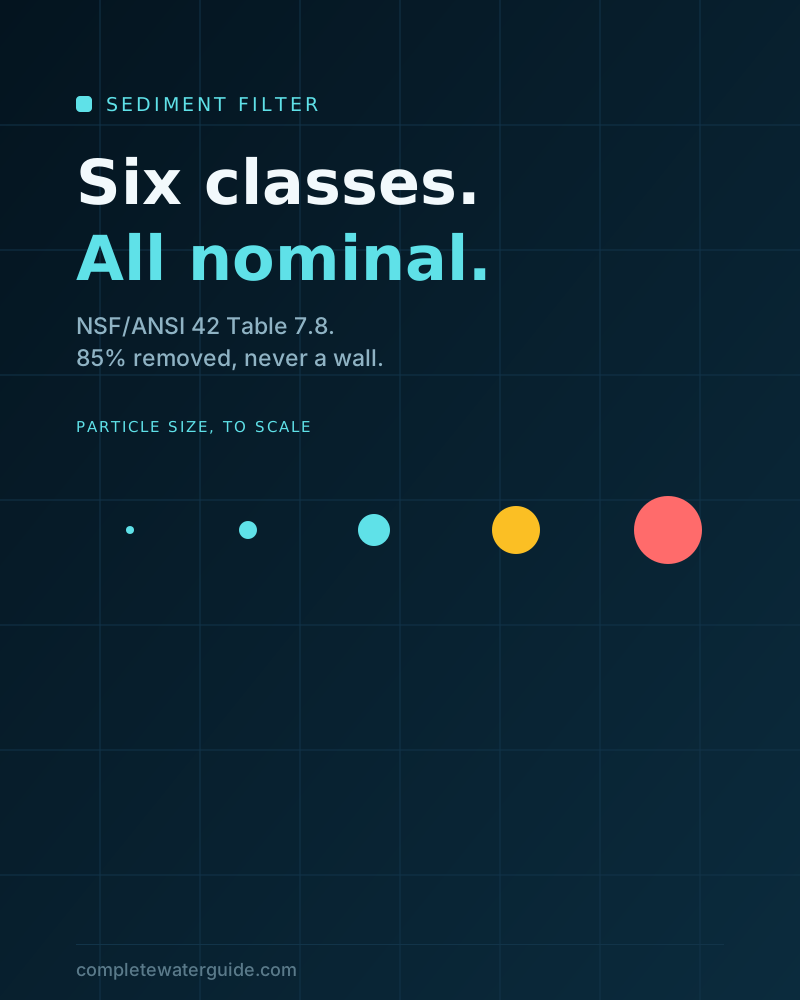
| Visible sediment, sand, grit | Sediment pre-filter, sized by micron rating | Nothing else works until this is handled |
| Iron staining, rotten egg odour | Oxidising filter, air injection or greensand | Standard cartridge filtration |
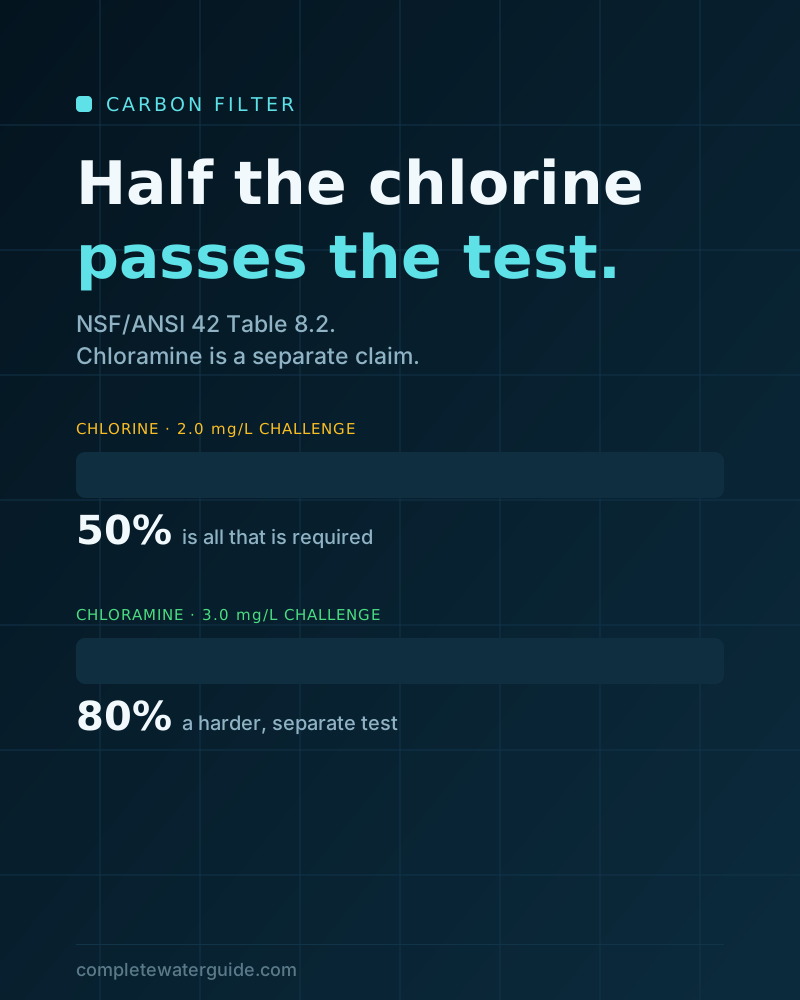
Two patterns are worth naming. A coliform positive is not usually solved by adding a filter, because the reason surface water is reaching your well is normally a cap, casing or seal problem. And nitrate is the contaminant most often assumed to be covered by a carbon system that has no nitrate claim at all: the EPA sets nitrate at 10 mg/L, arsenic at 0.010 mg/L and uranium at 30 ug/L, and carbon addresses none of the three.
Those limits come from the EPA’s National Primary Drinking Water Regulations, which set nitrate at 10 mg/L, arsenic at 0.010 mg/L and uranium at 30 ug/L as enforceable Maximum Contaminant Levels.
What order should the stages go in?
Coarse to fine, always, because each stage protects the one behind it.
- Sediment first. Sand and grit destroy every stage downstream. A sediment cartridge is the cheapest component in the system and it is what keeps the expensive ones alive.
- Oxidation and iron removal next, if iron, manganese or hydrogen sulfide showed up. These stages need contact time and will foul a carbon bed if placed after it.
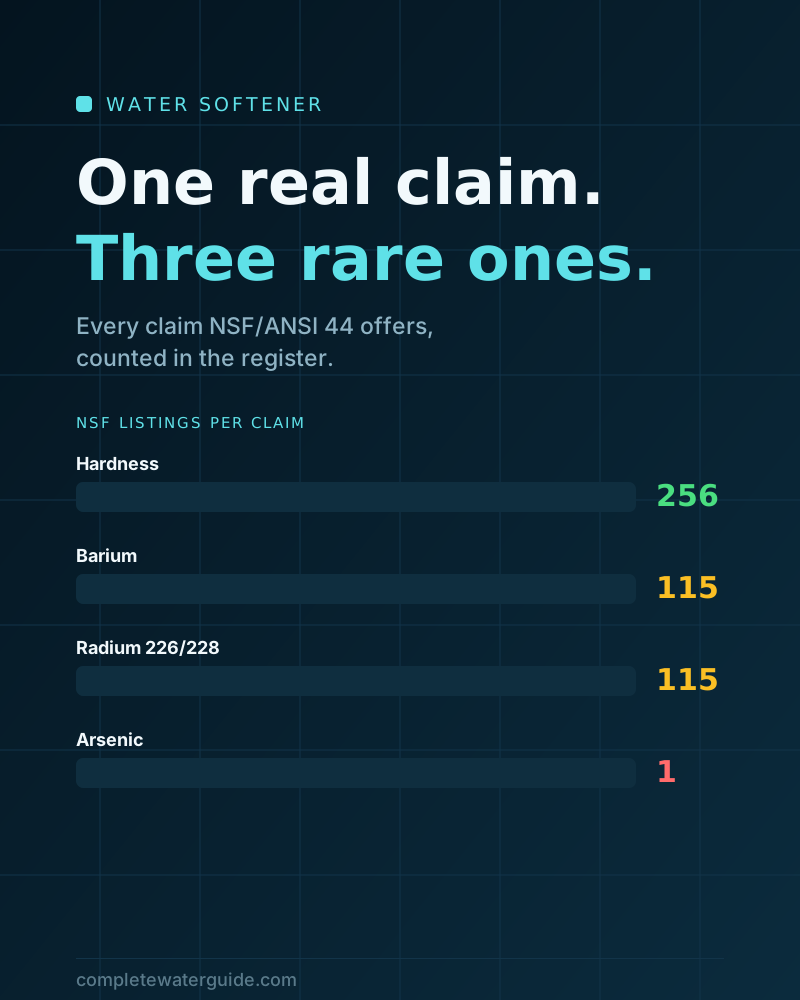
- Softening, if hardness demands it. Ion exchange removes calcium and magnesium. It is a separate machine from a filter and it belongs after iron removal, because iron fouls softener resin.
- Carbon for taste, odour and organics. Broad but shallow: excellent on chlorine and taste, useless on nitrate and dissolved minerals.
- UV last, if bacteria were confirmed. Ultraviolet needs clear water to work, so every particle-removing stage must sit ahead of it.
Put UV before the sediment filter and you have paid for disinfection that turbidity will shield bacteria from. Put carbon before iron removal and you have paid for a carbon bed that will foul in months.
Is a well water filtration system worth it?
It is worth exactly what your test result justifies, which is why the order matters. A single sediment filter costs very little and solves the most common complaint on a private well. A full multi-stage train with softening, oxidation and UV is a different scale of purchase, and it is only rational if the test found the problems each stage addresses.
The thing to avoid is the pre-packaged whole house bundle bought before any test. Every stage you do not need costs money to install, costs money in cartridges forever, and drops pressure across the house for no benefit. Our guide to what whole house filter certification actually proves covers how to read those claims, and the difference between a home test kit and a lab test matters more here than anywhere else, because well decisions are made on the numbers.
What does a well water test cost?
State-certified laboratory pricing varies widely, and no federal body publishes a benchmark, so treat any single figure with suspicion. What is fixed is the requirement: both the EPA and CDC direct well owners to state-certified laboratories, and your state or county health department maintains the list of which ones qualify.
Our breakdown of well water testing cost by state collects real lab prices rather than estimates, which is the only way to compare when there is no published standard.
What this page could not verify
Some sources describe a three-year testing cycle for chronic contaminants such as arsenic, radon, uranium, lead and copper, alongside the annual four. That schedule does not appear on either the EPA’s private wells page or the CDC’s testing guidelines, both of which give the annual list and then direct owners to their local health department for what else is common in local groundwater. It may well be sound advice from a state programme, but it is not stated by either federal agency, so it is not presented as their recommendation here.
The bottom line
Test first at a state-certified laboratory, for total coliform bacteria, nitrates, total dissolved solids and pH, then ask your health department what else is common in your area’s groundwater. Read the result before you read a product page. Buy the stages the result justifies, in coarse-to-fine order, and nothing else.
A well water filtration system built from a test is a piece of engineering. One built from a catalogue is a guess with a monthly cartridge bill.
Frequently asked questions
What should I test my well water for?
The EPA and CDC both recommend testing a private well annually for total coliform bacteria, nitrates, total dissolved solids, and pH level, using a state-certified laboratory. Contact your local health department to find out which additional contaminants are common in your area’s groundwater, since that varies with local geology and land use.
How often should well water be tested?
At least once a year for the four core tests. The CDC also names four triggers for testing outside that schedule: when someone in the household becomes pregnant, when a child starts living there, when the taste, colour or smell changes, and when there are problems near the well such as flooding, land disturbances or nearby waste disposal sites.
What is the safe nitrate level in well water?
The EPA sets an enforceable Maximum Contaminant Level of 10 mg/L for nitrate. Above that, the water needs reverse osmosis, ion exchange or distillation. Carbon filtration does not remove nitrate at any price point, which is the most common mismatch between what people buy and what their test found.
Does a well water filter remove bacteria?
Only if it is designed for it. A coliform positive means surface water is reaching the well, which is usually a cap, casing or seal problem rather than a filtration problem. Shock chlorination comes first, and UV disinfection certified to NSF/ANSI 55 handles recurrence. Sediment and carbon filtration do not disinfect.
What order should well water filtration stages go in?
Coarse to fine: sediment, then oxidation and iron removal, then softening, then carbon, then UV. Each stage protects the one behind it. UV must be last because it needs clear water, and carbon must come after iron removal because iron fouls a carbon bed.
Do I need a whole house system or just a filter for drinking water?
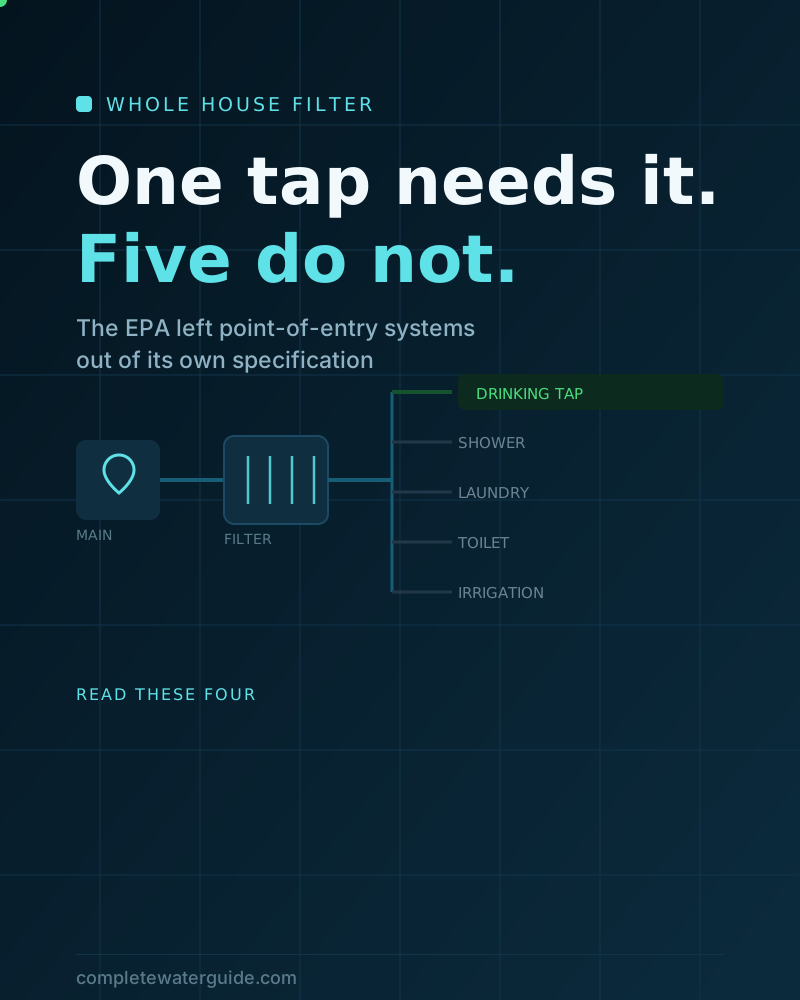
It depends on which of the four results failed. Sediment, iron staining and hydrogen sulfide odour affect every outlet and need point-of-entry treatment. A nitrate or arsenic problem in drinking water alone can be handled at one tap with reverse osmosis for a fraction of the cost.
Who is responsible for testing a private well?
The owner. Private wells sit outside the Safe Drinking Water Act regulations that cover public systems, so no utility tests the water, no treatment happens upstream, and no annual quality report is issued. Both the EPA and CDC direct well owners to arrange their own testing through a state-certified laboratory.