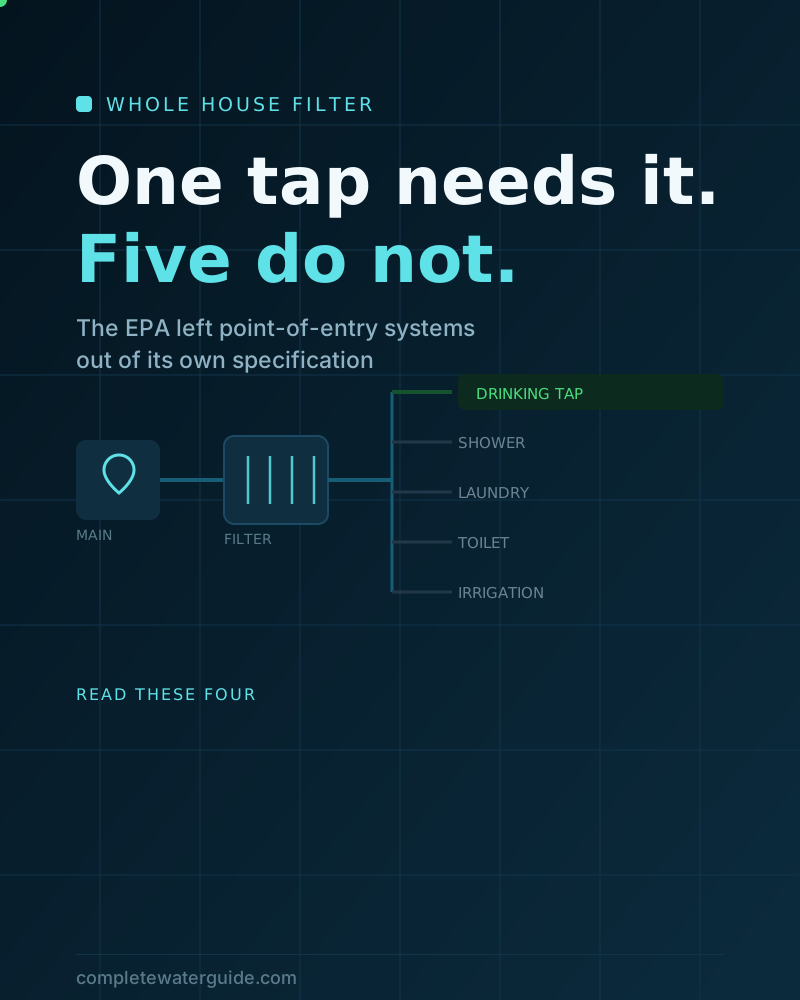
A whole house water filter treats every drop entering the building, and the EPA’s own position on treating a whole house is blunter than any manufacturer will tell you. In its November 2024 WaterSense supporting statement, the agency wrote that point-of-entry systems “treat, and subsequently waste, much larger quantities of water than POU systems, and they are typically not recommended for most treatment applications.”
That does not make whole house filtration wrong. It makes it the answer to a narrower question than the shelf suggests. This page covers what the certification actually proves, why the top-ranking brands are missing from the certifier database, and the four numbers on a data sheet that decide whether a system fits your house.
What is a whole house water filter?
It is a point-of-entry system, plumbed into the main line before any fixture, so bathing, laundry, toilets and irrigation all run through it. The standards bodies define the category by flow rather than by position. NSF/ANSI 330 sets the point-of-entry definition the EPA works from: a system treating the supply “at the entry of a building or facility for drinking and for washing, flushing, or other non-consumption use,” with a minimum initial clean-system flow rate of at least four gallons per minute at 15 psig pressure drop.
That four-gallon floor matters more than it looks. A point-of-use cartridge treats a few gallons a day at one tap. A point-of-entry system has to keep up with a shower and a washing machine running together, which is why sizing and pressure drop, not contaminant claims, are where most whole house purchases go wrong.
What does whole house filter certification actually prove?
Only the claims listed on the certificate, and the two standards that cover these systems answer very different questions.
| Standard | What it covers | What it does not tell you |
|---|---|---|
| NSF/ANSI 42 | Aesthetic effects: chlorine, chloramine, taste and odour, particulate, iron, manganese, zinc, TDS | Nothing about health contaminants |
| NSF/ANSI 53 | Health effects, with more than 50 contaminant reduction claims, set against EPA and Health Canada limits | Which of those 50 the system actually holds |
| NSF/ANSI 44 | Cation exchange water softeners, a separate category | Filtration of anything else |
| NSF/ANSI 55 | Ultraviolet microbiological treatment | Chemical contaminants |
Both 42 and 53 explicitly cover point-of-entry systems, so a whole house unit can legitimately carry either. The trap is the same one that runs through every filter category: certification is granted per claim, not per standard. A system “certified to NSF/ANSI 53” may hold one claim under a standard that offers more than fifty.
Our guide to what NSF/ANSI 42, 53, 58 and 401 each cover works through that distinction in detail.
Why can I not find my filter in the NSF database?
Because three organisations certify to these standards and each keeps its own separate register. NSF, WQA and IAPMO R&T all run accredited programmes, and IAPMO R&T publicly lists certification to NSF/ANSI 42, 44, 53, 55, 58, 62, 177, 222, 401, 419 and P473.
This is not a small detail on this particular search. Checking the NSF listing database in September 2026 for the brands that currently rank at the top of Google for “whole house water filter” returns no matching products for Aquasana or SpringWell, searched by both company and trade name. Pentair returns listings. Absence from one register is not evidence of no certification, but it does mean a shopper who checks the obvious database, finds nothing, and assumes the worst has been failed by the system rather than by the product.
| Certifier | Register | Searchable without an account |
|---|---|---|
| NSF International | info.nsf.org listing search | Yes, by company, trade name or standard |
| IAPMO R&T | iapmort.org product listings | Yes |
| WQA | find.wqa.org product finder | Interface only, results load in the browser |
Search all three before concluding anything. If a product appears in none of them, ask the seller which body issued the certificate and for the listing number.
Why does the EPA discourage whole house treatment?
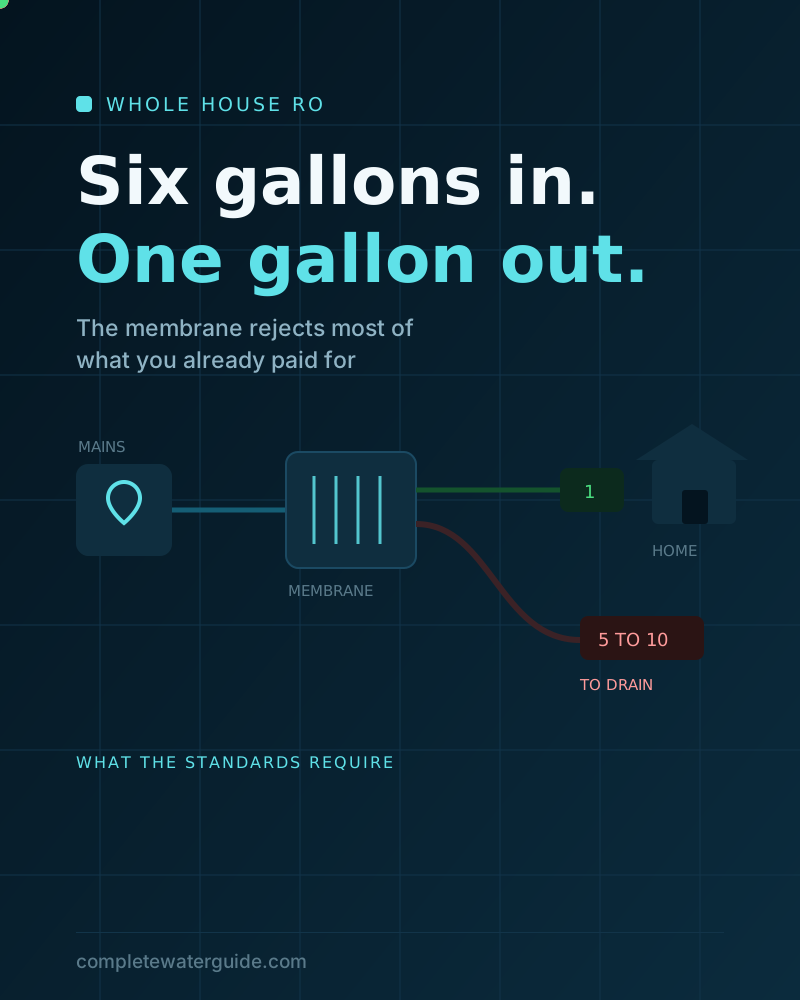
Because most water in a house does not need treating. The EPA’s reasoning, written into the WaterSense supporting statement, is that “not all end uses of water require or even benefit from the quality of water produced by an RO system (e.g., water used for toilet flushes, clothes washing, or bathing),” and that “in most cases it is more practical to install a POU system that treats water at just one fixture in a house than it is to install a POE system to treat the entire household water supply.”
The agency went further and excluded point-of-entry systems from the WaterSense specification entirely, saying it “does not want to encourage the use of oversized systems that subsequently generate significant water waste during the treatment process.”
Read that carefully, because it is narrower than it first sounds. The passage sits inside a specification about reverse osmosis, where the waste ratio is the whole issue. A whole house sediment or carbon filter wastes almost nothing by comparison. The EPA’s objection is to treating an entire supply to drinking standard, not to point-of-entry filtration as a category.
When is a whole house filter the right buy?
When the problem reaches fixtures a pitcher never touches. Three cases justify it clearly.
- The water damages the house. Sediment scoring valves, iron staining fixtures, or hydrogen sulfide odour through every outlet are point-of-entry problems by definition. No under-sink unit protects a water heater.
- A tested contaminant has to leave every outlet. Where exposure through showering or laundry matters, treating one tap does not solve it.
- You are on a private well and the supply is untreated. There is no utility doing the first stage of treatment for you, so the house is the first barrier.
Where it is the wrong buy is equally clear. If the concern is drinking water quality, a certified point-of-use unit costs a fraction and carries the same claims. If the concern is scale and spotted glassware, that is hardness, and a softener does that job directly where a filter does not.
What should you read on the data sheet?
Four numbers, and none of them is the price.
- Flow rate in gallons per minute. It has to exceed your peak simultaneous demand, not your average. A system rated at the four GPM floor will struggle in a house running two showers.
- Pressure drop across the system. Rated at the same flow you will actually run. This is the number behind most complaints about weak showers after installation.
- Capacity in gallons before replacement. Certification to NSF/ANSI 53 requires the manufacturer to state filter capacity, meaning the volume of water that can pass through before the filter must be changed. Divide the cartridge price by that figure and you have the real running cost.
- The claim list, contaminant by contaminant. Not the standard number. The specific substances with verified reduction percentages beside them.
The same arithmetic that exposes filter pricing at the tap works here: our breakdown of what a water filter actually costs per gallon shows how far sticker price and running cost diverge.
What this page could not verify
Two things, stated rather than filled in.
There is no published federal efficiency specification for point-of-entry systems. The WaterSense specification released in November 2024 covers point-of-use only, by the EPA’s explicit choice, so no equivalent benchmark exists for comparing whole house systems on water use.
The WQA product finder returns results through the browser rather than the page, so this article could not confirm from the source whether the brands missing from the NSF register appear in the WQA one. That check has to be run by hand at find.wqa.org, and it is worth running before you write off a product.
The bottom line
A whole house water filter is the right answer when the problem reaches the whole house: sediment, iron, odour, or a tested contaminant that matters at every outlet. It is the wrong answer to a drinking-water problem that a certified under-sink unit solves for a fraction of the cost, and the EPA has said in writing that treating an entire supply is not recommended for most applications.
Check all three certifier registers, read the flow rate and pressure drop before the contaminant list, and divide cartridge price by rated capacity before you compare anything to anything.
Frequently asked questions
Does a whole house water filter remove lead?
Only if it carries a specific lead reduction claim under NSF/ANSI 53. That standard offers more than 50 contaminant reduction claims and a system is certified for the ones listed on its certificate, not for the standard as a whole. A system certified to NSF/ANSI 53 for chlorine tells you nothing about lead.
Why is my water filter brand not in the NSF database?
NSF, WQA and IAPMO R&T all certify to the same NSF/ANSI standards and each maintains a separate register. A product certified by WQA or IAPMO R&T will not appear in the NSF listing search. Checking in September 2026, several brands ranking at the top of Google for whole house filters returned no NSF listings, so search all three registers before concluding a product is uncertified.
Is a whole house water filter worth it?
It is worth it when the problem affects every outlet: sediment, iron staining, hydrogen sulfide odour, or a tested contaminant where exposure through bathing and laundry matters. For drinking water quality alone it is poor value, because a certified point-of-use system carries the same contaminant claims at a fraction of the cost.
What flow rate do I need for a whole house filter?
Enough for your peak simultaneous demand rather than your average use. NSF/ANSI 330 defines a point-of-entry system as having a minimum initial clean-system flow rate of not less than four gallons per minute at 15 psig pressure drop, which is a floor rather than a target. A house running two showers at once needs considerably more.
Does the EPA recommend whole house water filters?
No. In its November 2024 WaterSense supporting statement the EPA wrote that point-of-entry systems “treat, and subsequently waste, much larger quantities of water than POU systems, and they are typically not recommended for most treatment applications,” and excluded them from the specification. That reasoning was written about reverse osmosis, where waste is the central issue, and applies less to a sediment or carbon filter.
What is the difference between NSF/ANSI 42 and 53 for a whole house filter?
NSF/ANSI 42 covers aesthetic effects, including chlorine, chloramine, taste and odour, particulate, iron, manganese, zinc and TDS. NSF/ANSI 53 covers health effects with more than 50 contaminant reduction claims set against EPA and Health Canada limits. Both cover point-of-entry systems, so a whole house unit may hold either or both.
How long does a whole house water filter last?
Read the stated capacity, not the interval in months. Certification to NSF/ANSI 53 requires the manufacturer to state filter capacity, which is the volume of water that can pass through the filter before it must be changed. A six-month rating means nothing until you know how many gallons your household actually runs.