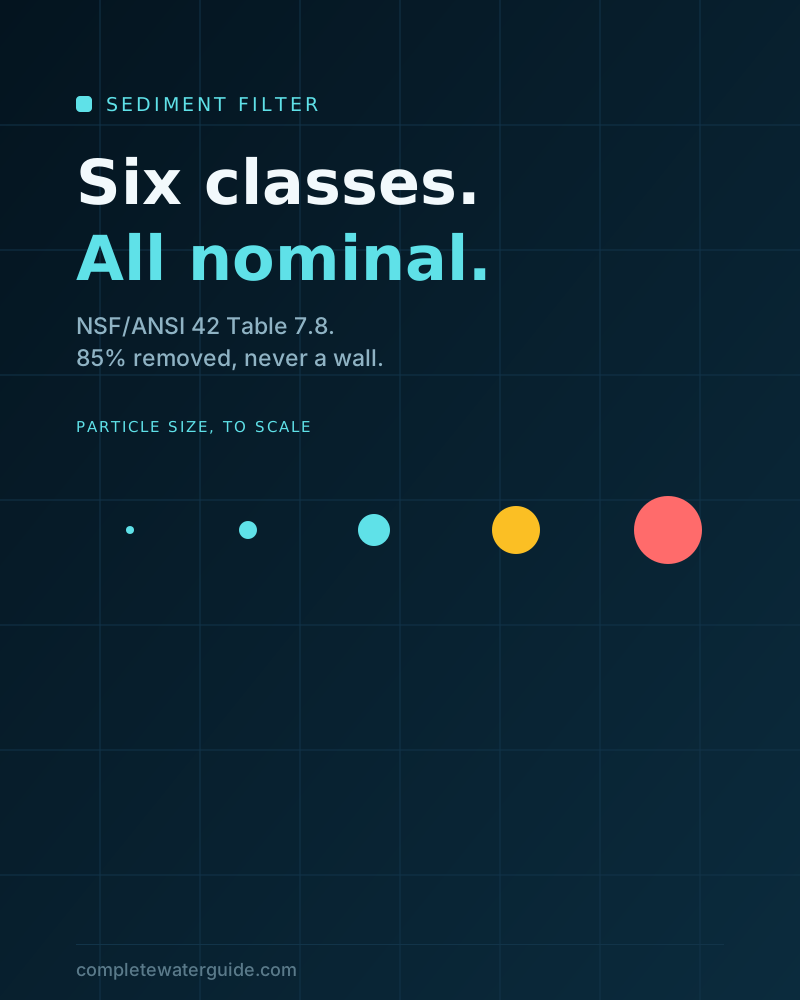
A whole house sediment filter is rated by the size of particle it removes, and the standard that defines those ratings is more specific than any product listing suggests. NSF/ANSI 42 divides particulate reduction into six numbered classes by particle size in micrometres, and every one of them is a nominal claim requiring at least 85 percent reduction.
Two things follow from that, and both change how you read a spec sheet. A rating is a range rather than a cutoff, and the word “absolute” appears nowhere in the classes the standard defines.
Everything below is quoted from the published NSF/ANSI 42-2022 standard document and from the NSF/ANSI 330 point-of-entry definition that the US Environmental Protection Agency works from, rather than from any manufacturer’s description of its own product.
What are the NSF particulate reduction classes?
Six classes, defined by particle size, each requiring the system to remove at least 85 percent of particles in its range. This is Table 7.8 of NSF/ANSI 42-2022.
| Class | Particle size | What that catches |
|---|---|---|
| Class I | 0.5 to under 1 µm | The finest rating the standard defines |
| Class II | 1 to under 5 µm | Fine silt and cyst-sized particles |
| Class III | 5 to under 15 µm | Visible cloudiness |
| Class IV | 15 to under 30 µm | Fine sand |
| Class V | 30 to under 50 µm | Grit |
| Class VI | 50 to under 80 µm | Coarse debris only |
The standard also fixes what the system is tested against. Classes I to IV are challenged with at least 10,000 particles per millilitre in the relevant size range. Classes V and VI are challenged with at least 1,000 particles per millilitre. In every class the requirement is the same: reduce that count by 85 percent or more.
One line in the standard settles most spec-sheet arguments: “The system’s rating shall be consistent with the smallest particle size effectively removed as determined by the test.” A system claiming Class I has demonstrated it at the 0.5 micrometre end, not merely somewhere in the vicinity.
Does a 5 micron filter remove everything above 5 microns?
No, and this is where the marketing and the standard part company. A class rating means 85 percent of particles in that size band were removed under test. It does not mean a wall that everything larger bounces off.
The classes NSF/ANSI 42 defines are explicitly nominal. The heading on the table reads “Nominal particulate reduction (85%) classes,” and a manufacturer wanting to claim a higher percentage has to prove it: “A claim for a greater percent reduction, if made, shall be substantiated by testing.”
So when a product listing advertises an “absolute” micron rating, it is not using a term from the particulate classes in this standard. That does not automatically make the claim false, because absolute ratings exist in industrial filtration under other test methods. It does mean the number is not the NSF/ANSI 42 class rating, and you should ask which standard and which test produced it.
What micron rating do you need?
Whatever your water actually carries, which is a question a test answers and a catalogue does not. The useful principle is that finer is not better, because a finer filter clogs faster and drops more pressure across the house for the same job.
- Visible sand or grit, the common well complaint, is handled by the coarse classes. There is no benefit in taking a 30 micrometre problem down to half a micrometre.
- Cloudiness that survives settling points to the finer classes, and this is where pressure drop starts to matter.
- Protecting downstream equipment is the real reason most sediment filters exist. A softener or carbon bed fouled by sediment costs far more than the cartridge that would have prevented it.
Where sediment is heavy, a graded arrangement works better than a single fine cartridge: a coarse stage first to take the bulk, then a finer stage that lasts because it is not doing the coarse stage’s work. That is the same coarse-to-fine logic that governs a whole well water treatment train.
How does a sediment filter affect water pressure?
Every filter costs pressure, and the loss grows as the cartridge loads. Pressure drop is a published figure on a compliant data sheet, rated at a stated flow, and it is the number that decides whether a system is livable in your house.
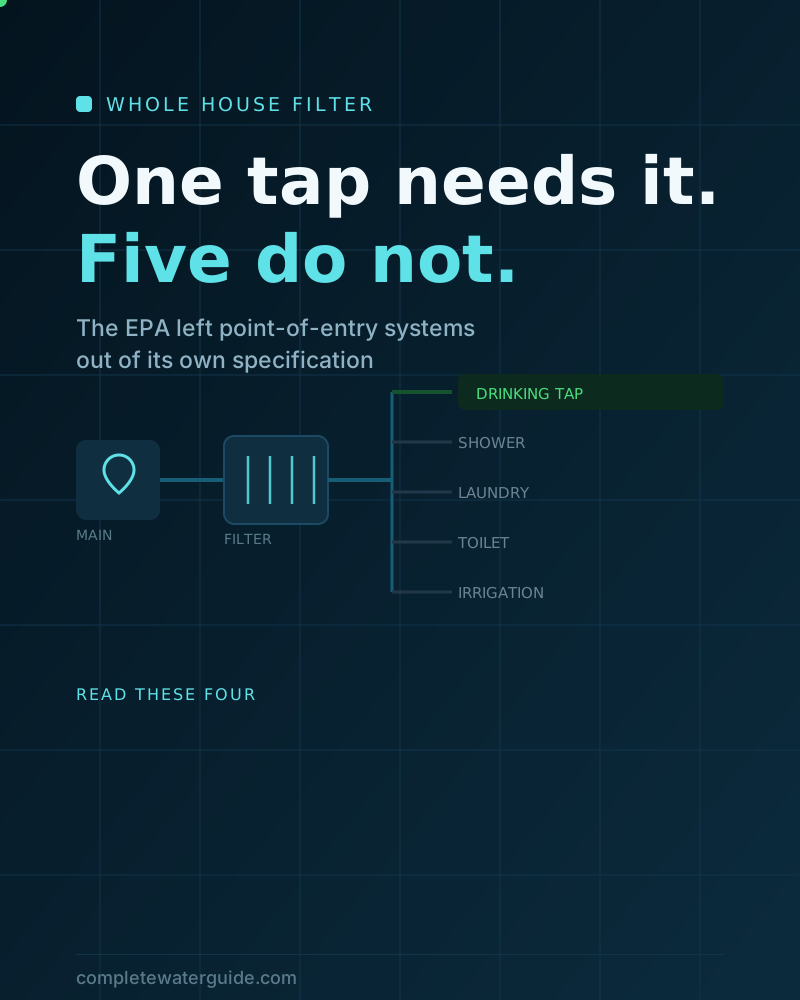
The federal reference point is NSF/ANSI 330, quoted in the EPA’s WaterSense supporting statement, which defines a point-of-entry system as having a minimum initial clean-system flow rate of not less than four gallons per minute at 15 psig pressure drop. Note the two words doing the work: initial and clean. That is the best the system will ever perform, measured before anything has loaded it.
A cartridge that has been in service for months is not the system that was tested. When people report weak showers after fitting a whole house filter, a loaded cartridge is usually the reason, and the fix is a maintenance schedule rather than a bigger housing.
When should you change a sediment cartridge?
On pressure, not on the calendar. Fit a pressure gauge before and after the housing, note the difference when the cartridge is new, and change it when that gap grows by a meaningful margin. A calendar interval is a guess about how dirty your water is, and it is wrong in both directions: it wastes cartridges on clean supplies and leaves loaded ones in place on dirty ones.
This is the same argument that applies to every whole house filter claim: capacity is stated in gallons on a compliant data sheet, and gallons are a measurement while months are an assumption.
What a sediment filter does not do
It removes particles. That is the entire function, and the certification scope reflects it.
| Contaminant | Handled by a sediment filter? | What handles it |
|---|---|---|
| Sand, grit, silt, rust flakes | Yes, by class | Sediment filtration under NSF/ANSI 42 |
| Chlorine, taste, odour | No | Carbon, also under NSF/ANSI 42 |
| Lead, PFAS, VOCs | No | NSF/ANSI 53 filtration or 58 reverse osmosis |
| Hardness | No | Ion exchange softener under NSF/ANSI 44 |
| Dissolved iron | No | Oxidation first, then filtration |
| Bacteria | No | UV under NSF/ANSI 55, after the sediment stage |
Dissolved iron is the one that catches people out. Iron in solution passes straight through a sediment cartridge, because there is no particle to catch until it has been oxidised. Filters sold as iron filters usually oxidise first and filter second, which is a different machine from a sediment cartridge.
Hardness is the other frequent mismatch. A sediment filter does nothing to calcium and magnesium, and what NSF/ANSI 44 certifies a softener for is a separate list entirely.
What this page could not verify
The class definitions and challenge concentrations here are quoted from the published NSF/ANSI 42-2022 standard document. Manufacturers’ own micron figures were not independently verified, because doing that requires each product’s certification listing rather than its marketing page. Look the model up in the NSF, WQA or IAPMO R&T register and read the class on the listing.
The bottom line
A sediment filter rating is a class from NSF/ANSI 42, and the six classes run from 0.5 micrometres up to 80, each requiring 85 percent removal of particles in its band. Match the class to what your water carries rather than buying the finest available, because pressure drop is the price of unnecessary fineness.
Then change it on measured pressure rather than on a date, and treat everything that is not a particle with the stage built for it.
Frequently asked questions
What micron rating is a whole house sediment filter?
NSF/ANSI 42 defines six particulate reduction classes by particle size: Class I covers 0.5 to under 1 micrometre, Class II 1 to under 5, Class III 5 to under 15, Class IV 15 to under 30, Class V 30 to under 50, and Class VI 50 to under 80. Each requires the system to remove at least 85 percent of particles in that range under test.
Is a lower micron rating always better?
No. A finer cartridge clogs faster and drops more pressure for the same result, so taking a coarse sand problem down to half a micrometre costs pressure and cartridges without improving the water. Match the class to the particle size your water actually carries.
What does nominal micron rating mean?
It means the rating is a percentage reduction across a size band rather than a hard cutoff. NSF/ANSI 42 titles its table “Nominal particulate reduction (85%) classes” and requires at least 85 percent reduction in the tested range. Any higher percentage claim must, in the standard’s words, “be substantiated by testing.”
What is the difference between nominal and absolute micron ratings?
The particulate classes in NSF/ANSI 42 are nominal, at 85 percent reduction. The word absolute does not appear among them. Absolute ratings exist in industrial filtration under different test methods, so when a product advertises one, ask which standard and which test it came from, because it is not the NSF/ANSI 42 class rating.
Does a sediment filter remove iron?
Only iron that is already a particle. Dissolved iron passes straight through, because there is nothing solid to catch. Iron removal systems oxidise the iron first so it becomes filterable, which is a different machine from a sediment cartridge.
How often should a sediment filter be changed?
When the pressure drop across it grows, not on a calendar. Fit gauges before and after the housing and record the difference with a new cartridge. A months-based interval is an assumption about how dirty your water is, and it is wrong on clean supplies and dirty ones alike.
Will a whole house sediment filter reduce my water pressure?
Yes, by a published amount that grows as the cartridge loads. NSF/ANSI 330 defines a point-of-entry system by a minimum initial clean-system flow rate of not less than four gallons per minute at 15 psig pressure drop, and both those words matter: that figure is measured when the system is new and clean.