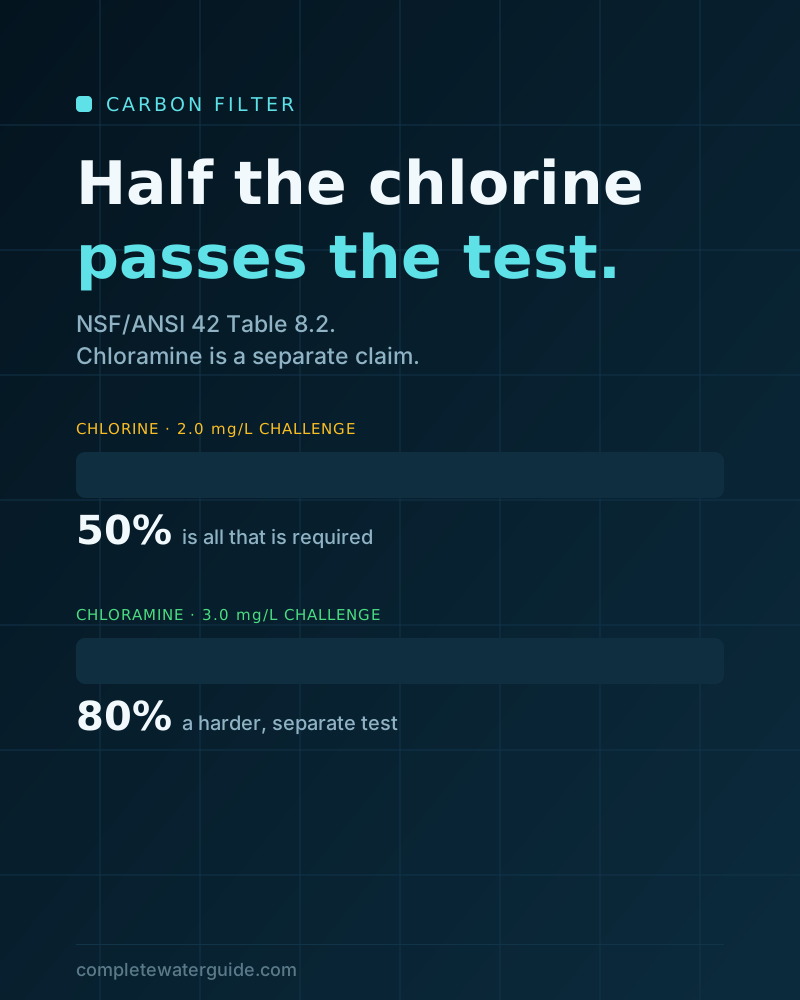
A whole house carbon filter is certified under NSF/ANSI 42, and the standard sets the bar for its headline claim lower than almost anyone expects. To claim chlorine reduction, a system is challenged with 2.0 mg/L and has to remove at least 50 percent of it. Half.
Chloramine, the disinfectant a growing number of US utilities use instead, is the harder test: 3.0 mg/L challenge, at least 80 percent reduction. A filter can hold the chlorine claim and not the chloramine one, and on a chloraminated supply that difference is the entire purchase.
What does NSF/ANSI 42 require for chlorine reduction?
An influent challenge of 2.0 mg/L plus or minus 10 percent, and a reduction of at least 50 percent. That is the published requirement in Table 8.2 of NSF/ANSI 42-2022, and it is the bar every certified carbon system clears.
Fifty percent is a floor rather than a target. Products routinely reduce chlorine far beyond it, and any figure above 50 percent has to be proved: the standard requires that a claim for a greater percent reduction “be substantiated by testing.” So the useful number is not the badge, it is the percentage printed on the performance data sheet.
| Claim | Challenge concentration | Requirement |
|---|---|---|
| Chlorine | 2.0 mg/L ± 10% | At least 50% reduction |
| Chloramine | 3.0 mg/L ± 10% | At least 80% reduction |
The two are separate claims with separate tests. A system certified for chlorine has told you nothing about chloramine, which matters because the two behave very differently in carbon.
Does a carbon filter remove chloramine?
Only if it holds the chloramine claim, and that claim is measurably harder to earn. Chloramine is more stable than free chlorine and needs longer contact with the carbon bed to break down, which is why some systems that clear the 50 percent chlorine bar comfortably cannot reach 80 percent on chloramine.
The standard also allows a route that is worth knowing about. A manufacturer may base a chlorine reduction claim on chloramine testing as a surrogate, in which case NSF/ANSI 42 requires the basis to be identified and sets exactly how the number is derived: “The chlorine influent concentration shall be specified as 2 mg/L, the chlorine product water concentration shall be calculated based on the percent reduction of chloramine, and the stated percent reduction for chlorine shall be equal to that achieved for chloramine.”
In plain terms, a system tested on chloramine can carry a chlorine figure calculated from that result rather than measured directly. It is a legitimate, disclosed method, and it is another reason to read the data sheet rather than the box.
Ask your utility which disinfectant it uses before buying. That single question decides which claim you need.
What else does NSF/ANSI 42 cover?
A short list of aesthetic substances, each with a fixed challenge concentration and a maximum permitted level in the treated water. These are the Table 8.1 claims.
| Substance | Influent challenge | Maximum in product water |
|---|---|---|
| Hydrogen sulfide | 1.0 mg/L ± 10% | 0.05 mg/L |
| Iron | 3 to 5 mg/L | 0.3 mg/L |
| Manganese | 1 to 2 mg/L | 0.05 mg/L |
| Zinc | 10 mg/L ± 10% | 5 mg/L |
| Chloride | 800 mg/L ± 10% | 250 mg/L |
| Sulfate | 800 mg/L ± 10% | 250 mg/L |
| Total dissolved solids | 1500 mg/L ± 10% | 500 mg/L |
| Phenol | 5.0 mg/L ± 10% | 0.25 mg/L |
| Foaming agent | 5 mg/L ± 10% | 0.5 mg/L |
Every one of these is an aesthetic claim, about taste, odour, colour and staining. None of them is a health claim, and a carbon system is certified only for the ones on its own listing rather than for the table as a whole.
Does a carbon filter remove lead or PFAS?
Not under this standard. Lead, PFAS, VOCs, cysts and the rest of the health contaminants live under NSF/ANSI 53, and reverse osmosis claims live under NSF/ANSI 58. A carbon block can be certified to 53 as well, but it has to be tested and listed for it, which you confirm in the NSF register or the equivalent IAPMO R&T listing.
This is the same distinction that runs through the whole category, covered in our guide to what NSF/ANSI 42, 53, 58 and 401 each cover: 42 is the aesthetic standard and 53 is the health standard, and a badge for one says nothing about the other.
Why do carbon filters carry a warning about unsafe water?
Because the standard requires it. NSF/ANSI 42 mandates that a performance data sheet for an activated carbon system carry this statement: “Do not use with water that is microbiologically unsafe or of unknown quality without adequate disinfection before or after the system.”
That is not boilerplate. Carbon beds are damp, dark and full of surface area, which makes them a place bacteria can establish. The standard’s own note points to NSF/ANSI 55 Class A systems and the EPA’s guidance on certified drinking water filters as examples of the disinfection it means.
On a private well, this is the reason UV goes after the carbon stage rather than before it, and why the stage order in a well treatment train is not negotiable. On a municipal supply the utility has already done the disinfection, which is what the chlorine you are filtering out was doing.
What does a bacteriostatic claim mean?
Less than the word suggests, and NSF/ANSI 42 requires the manufacturer to say so in a fixed form of words: “The term ‘bacteriostatic’ indicates that the system limits the passage or growth of bacteria that may already exist in the incoming water. It does not mean that water leaving the system is safer to drink than water entering the system.”
That second sentence is mandated by the standard because the claim is so easily misread. Bacteriostatic is about the filter looking after itself, not about treating your water.
How is a whole house carbon filter sized?
By contact time, which is why a large housing outperforms a small one on the same media. Water has to stay in the carbon bed long enough for adsorption to happen, and a system pushed beyond its rated flow gives the water less time than the test allowed.
Two figures on the data sheet control this. The rated flow is the flow the claims were measured at. For point-of-entry systems the standard also requires the pressure drop of the new system at rated flow to be published, so both numbers exist and both should be read against your household’s actual peak demand rather than its average.
Our guide to whole house filter certification covers the other two numbers that belong in the same reading: capacity in gallons, and the contaminant claim list.
What this page could not verify
Everything quoted here is from the published NSF/ANSI 42-2022 standard document. What no standard publishes is how long a given carbon bed lasts on your water, because that depends on your incoming chlorine or chloramine level and your household’s volume. That figure comes from the manufacturer’s stated capacity in gallons, and this article did not test any manufacturer’s claim against its own listing.
The bottom line
A whole house carbon filter is certified for aesthetics, and the chlorine claim it usually leads with is a 50 percent floor at a 2.0 mg/L challenge. If your utility uses chloramine, that is a separate claim at 3.0 mg/L and 80 percent, and it is the one to check for.
Read the percentage on the data sheet rather than the badge, size it on rated flow rather than housing size, and remember the warning the standard makes them print: carbon is not disinfection.
Frequently asked questions
How much chlorine does a certified carbon filter remove?
At least 50 percent, which is the requirement in Table 8.2 of NSF/ANSI 42-2022 at an influent challenge of 2.0 mg/L. Most products achieve considerably more, but any higher figure must be substantiated by testing and printed on the performance data sheet, so read the percentage rather than the certification badge.
Does a carbon filter remove chloramine?
Only if it carries the chloramine claim, which is a separate and harder test: 3.0 mg/L challenge with at least 80 percent reduction. Chloramine is more stable than free chlorine and needs longer contact with the carbon, so a system certified for chlorine has told you nothing about chloramine. Ask your utility which disinfectant it uses.
Does a whole house carbon filter remove lead or PFAS?
Not under NSF/ANSI 42, which is the aesthetic standard covering taste, odour, chlorine, particulate and a short list of nuisance substances. Lead, PFAS and VOCs are certified under NSF/ANSI 53. A carbon block can hold both certifications, but only if it is tested and listed for each.
Why does my carbon filter say not to use it on unsafe water?
Because NSF/ANSI 42 requires that statement on activated carbon systems: “Do not use with water that is microbiologically unsafe or of unknown quality without adequate disinfection before or after the system.” A carbon bed is damp and porous, which makes it somewhere bacteria can establish. Carbon is filtration, not disinfection.
What does bacteriostatic mean on a water filter?
NSF/ANSI 42 requires manufacturers to define it in fixed wording: the term “indicates that the system limits the passage or growth of bacteria that may already exist in the incoming water. It does not mean that water leaving the system is safer to drink than water entering the system.” It describes the filter protecting itself, not treating your water.
What size whole house carbon filter do I need?
One rated for your peak simultaneous flow, not your average. Carbon works by contact time, so pushing a system past its rated flow gives the water less time in the bed than the certification test allowed. For point-of-entry systems the standard requires pressure drop at rated flow to be published, so both numbers are available to check.
Does a carbon filter remove iron or hydrogen sulfide?
Only if certified for those specific claims. NSF/ANSI 42 sets iron at a 3 to 5 mg/L challenge with a maximum of 0.3 mg/L in the treated water, and hydrogen sulfide at 1.0 mg/L challenge with a maximum of 0.05 mg/L. On well water carrying significant iron or sulfide, an oxidising stage ahead of the carbon usually does the real work.