

Sparkling Water and Your Teeth: A Dentist-Informed Guide for 2025
Updated on • For U.S. readers
If you switched from soda to seltzer, your teeth already won a big battle: there’s no sugar to feed cavity-causing bacteria. The remaining concern is enamel and acidity. Below you’ll find a simple playbook—what dentists emphasize, which habits truly matter, and how to choose bubbly drinks that fit your goals. For broader category basics, see our Sparkling Water Guide or the health explainer Is Sparkling Water Good for You?.
What Dentists Actually Care About
U.S. dental guidance consistently ranks plain seltzer above soda and juice. Sparkling water lacks sugar and is usually only mildly acidic. Risk climbs when acid sits on enamel for a long time.
- Sugar vs. acidity: Sugar drives cavities; acid relates to enamel wear.
- Frequency & exposure: A single can with lunch is very different from grazing for hours.
- Saliva matters: Your mouth naturally buffers acid—give it time to work before brushing.
Acidity Basics (Plain Talk)
Carbonation creates carbonic acid, nudging pH downward. Plain seltzers typically hover near a borderline pH—less acidic than many sodas and some juices. The bigger hit comes from added acids in certain flavors (especially citrus).
- Plain seltzer: borderline acidity; usually safe with smart habits.
- Citrus flavors: lower pH; manage like other acidic drinks.
- Sodas/energy drinks: very low pH plus sugar—tough combo for teeth.
Plain vs. Flavored: How to Drink Smarter
You don’t need to quit flavor; you just need a better rhythm. Think “enjoy, then rinse,” not “sip forever.” If bold aromas help you ditch soda, that’s a long-term win.
- Daily default: Choose plain or non-citrus most of the time.
- Flavor moments: Have citrus or tart cans with meals and finish within 20–30 minutes.
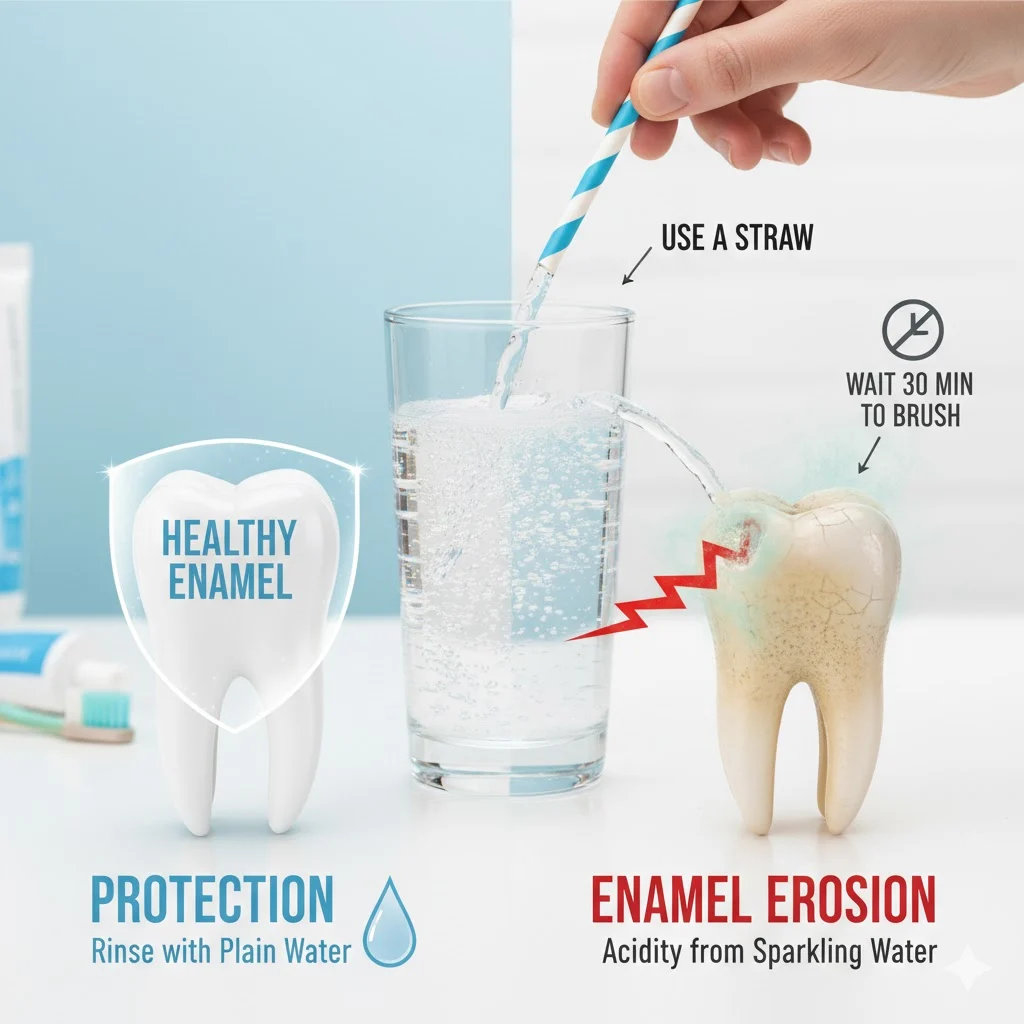
- Rinse and reset: Sip a little plain water afterward to clear acids.
For bold, zero-sugar flavors, explore Waterloo. If you prefer sharp bubbles and minerality, read our guide to Topo Chico. Want a fresh, juicy profile? Spindrift uses real fruit juice (more acidity and some calories)—great with lunch, not an all-day sipper.
Habits That Protect Enamel
Small routine changes beat complicated hacks. Copy these and you’ll keep the fizz without the fuss.
- Time-box it: Avoid nursing the same can for hours.
- Brush later: Wait 30–60 minutes after acidic drinks to let enamel re-harden.
- Fluoride toothpaste: Supports re-mineralization between exposures.
- Straw (optional): Can reduce front-teeth contact; less important than overall habits.
Where Sparkling Water Sits on the pH Map
Use this snapshot as a guide. Brands and batches vary, but the pattern holds: plain seltzer usually beats soda and juice.
| Beverage | Typical pH | Dental Takeaway |
|---|---|---|
| Plain sparkling water | ~4 (varies) | Borderline acidity; fine when not sipped all day. |
| Citrus-flavored seltzer | ~3.0–3.8 | More erosive; best with meals, then rinse. |
| Cola / energy drinks | ~2.5–3.2 | Very erosive, often sugary—hard on teeth. |
| Orange juice | ~3.2–3.9 | Acidic; enjoy with food, not all day. |
Who Should Be Extra Careful?
Some situations increase risk because acids linger longer or enamel is more vulnerable. The fix is usually smarter timing, not quitting fizz.
- Dry mouth (xerostomia): Less saliva = slower neutralization. Favor plain, drink with meals, rinse after.
- Acid reflux/GERD: You already get extra acid. Limit citrus flavors and avoid bedtime fizz.
- Kids/teens: Same rules: plain most of the time, no day-long sipping, flavored cans with meals.
- Whitening sensitivity: Start with plain; add flavors gradually and see how you feel.
Pick Bubbles That Fit Your Routine
Choose a style you’ll actually drink—consistency beats perfection. These guides can help you compare taste, bubbles, and ingredients without adding sugar.
- Flavor-first zero sugar: Waterloo (bold aromas, no sweeteners).
- Mineral kick: Topo Chico (plain mineral version for daily use).
- Fresh & juicy: Spindrift (real juice = more acidity and calories; keep it with meals).
- Nighttime fizz, no jitters: Check Does Waterloo Have Caffeine?.
- Easy shopping: Start with Top Zero-Calorie Sparkling Waters and the full Sparkling Water hub.
FAQs
Is sparkling water bad for your teeth?
- Usually no—plain seltzer is far better than soda or juice.
- Manage exposure: avoid all-day sipping, pair flavors with meals, rinse afterward.
How long should I wait to brush?
- About 30–60 minutes after an acidic drink so enamel can re-harden.
What should I drink daily?
- Plain or non-citrus seltzer most of the time.
- For ideas, see our zero-cal list and brand pages like Waterloo and Topo Chico.
Is Spindrift okay for teeth?
- Spindrift has real juice (adds calories and acidity).
- Enjoy with food; choose plain seltzer for frequent sipping.
References & Further Reading
For deeper reading, visit the American Dental Association, browse consumer tips at ADA MouthHealthy, and see brushing-timing guidance from the Mayo Clinic. If you like research papers, explore reviews via PubMed Central.

3 Comments
Is Sparkling Water Bad for Kidney Stones? (Honest Answer)
October 18, 2025[…] citrus flavorings are more acidic on teeth. If that’s a concern, read our dentist-informed guide Sparkling Water and Teeth for safe sipping […]
Sparkling Water vs Club Soda: Which Should You Drink?
October 18, 2025[…] check: Acidity matters for enamel. If you love citrus flavors, read our dentist-informed guide Sparkling Water and Teeth for safe sipping […]
What Is Still Water? Complete Guide to Non-Carbonated Water
December 1, 2025[…] Is Sparkling Water Bad for Your Teeth? […]