
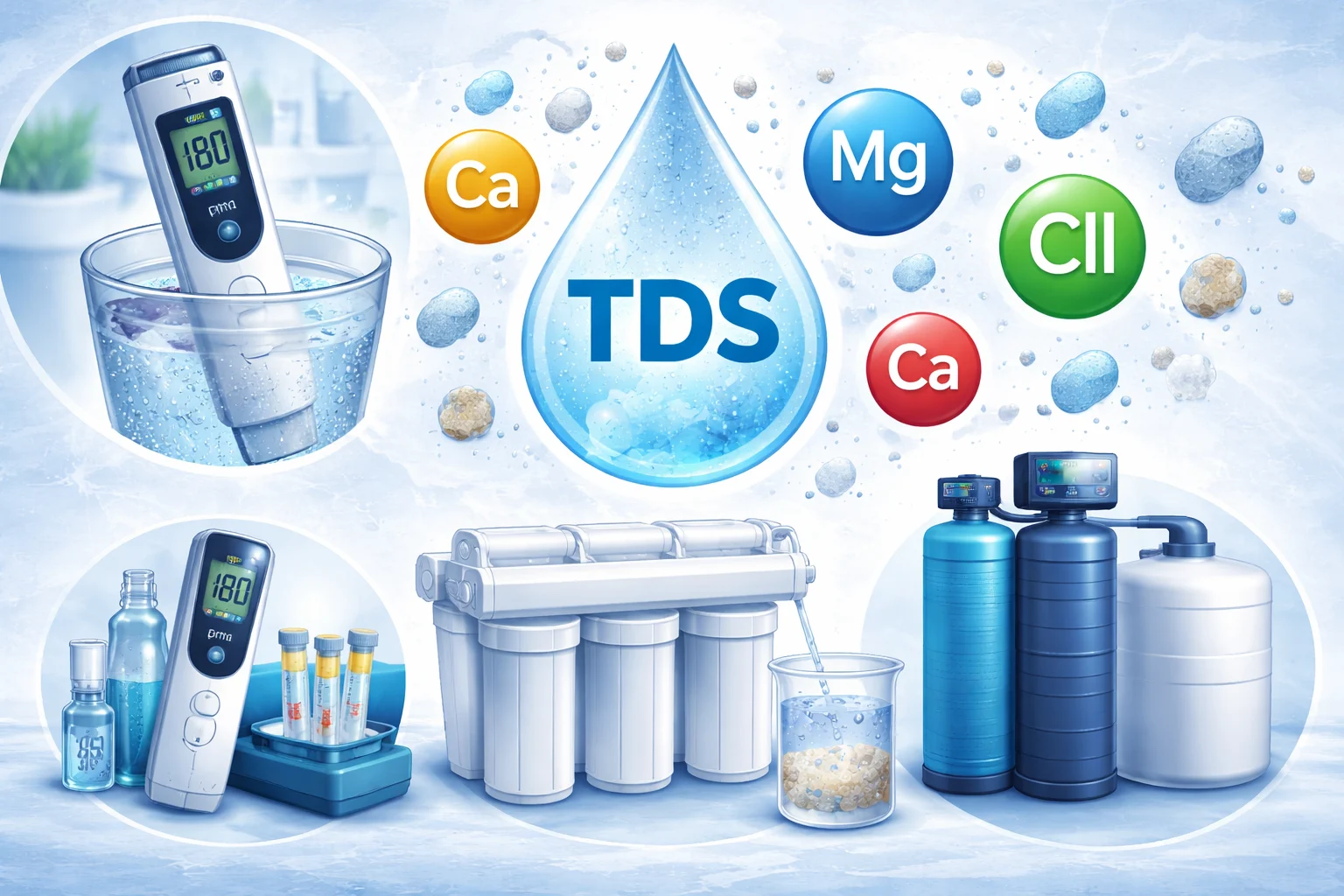

TDS is one of the most important factors in determining water quality. If you’ve ever used a water purifier or testing device, you’ve likely seen TDS readings. But what exactly does it mean, and why does it matter? This guide explains TDS in drinking water and its importance for health and safety.
What Is TDS in Drinking Water?
TDS stands for Total Dissolved Solids. It includes inorganic salts such as calcium, magnesium, potassium, sodium, and small amounts of organic matter dissolved in water.
What Does TDS Include?
- Calcium and magnesium (hardness minerals)
- Sodium and potassium
- Chlorides and sulfates
- Trace metals
Why TDS Matters in Drinking Water
1. Affects Taste
High TDS can make water taste salty or bitter, while low TDS can taste flat.
2. Indicates Water Quality
TDS helps measure the level of impurities in water.
3. Impacts Health
Balanced mineral levels are important for health, but very high TDS may contain harmful substances.
4. Affects Appliances
High TDS water can cause scaling and reduce appliance lifespan.
Ideal TDS Levels for Drinking Water
| TDS Level (ppm) | Water Quality |
|---|---|
| 0 – 50 | Very low (flat taste) |
| 50 – 150 | Excellent |
| 150 – 300 | Good |
| 300 – 500 | Acceptable |
| 500+ | Poor |
How to Measure TDS
- Use a TDS meter
- Use water testing kits
- Lab testing for accurate results
How to Reduce High TDS
1. Use RO Water Purifier
RO systems effectively reduce dissolved solids.
2. Install Water Softener
Helps reduce hardness minerals.
3. Blend Water Sources
Mixing low and high TDS water can balance levels.
FAQs
What is TDS in water?
It refers to total dissolved solids like minerals and salts.
Is high TDS harmful?
It can be harmful if it contains toxic substances.
What is the ideal TDS level?
50–150 ppm is considered excellent.
Can RO reduce TDS?
Yes, RO systems effectively reduce TDS levels.
Conclusion
TDS plays a key role in determining water quality, taste, and safety. Monitoring and maintaining proper TDS levels ensures clean, healthy drinking water for everyday use.
