
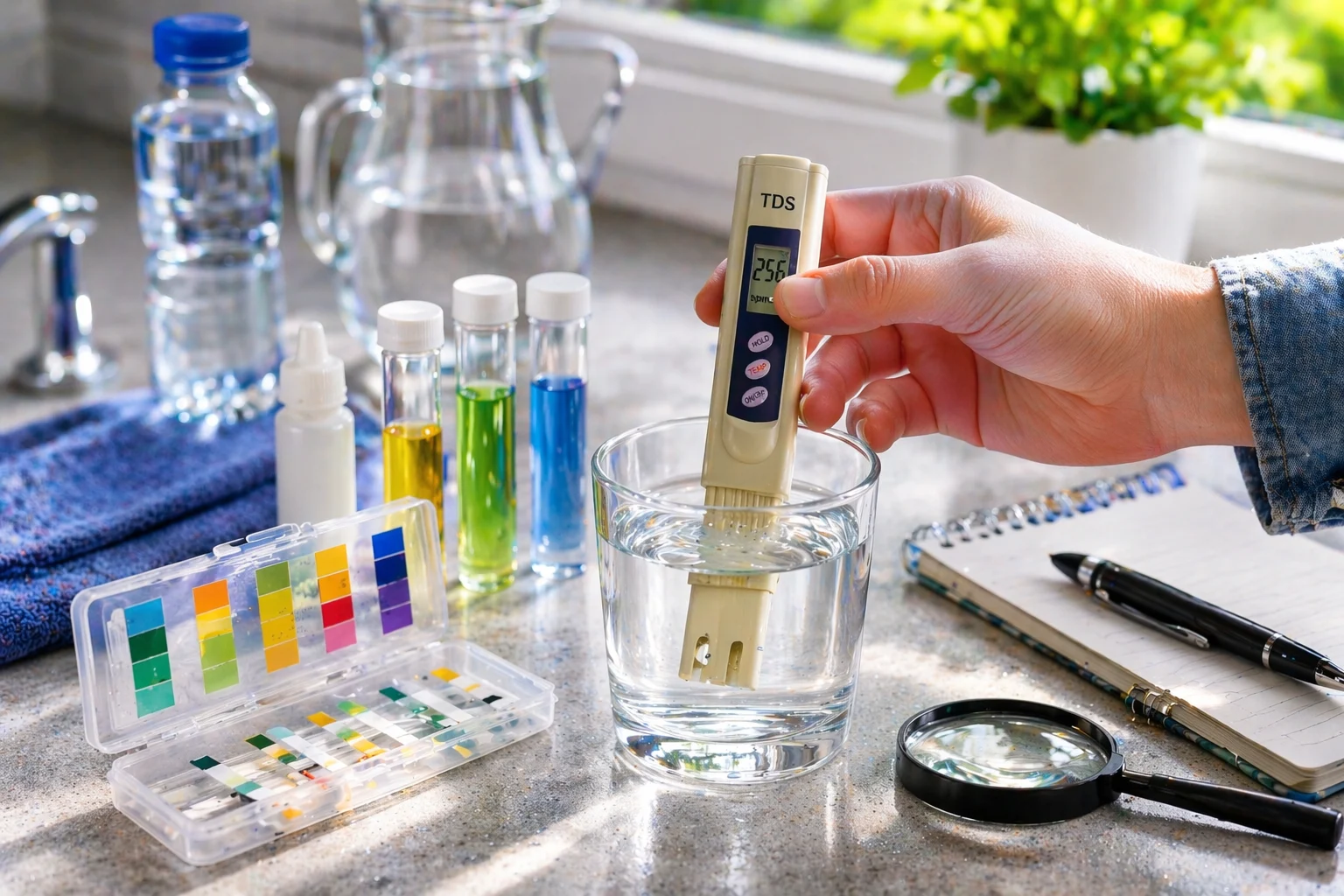

Ensuring your drinking water is safe doesn’t always require expensive lab tests. You can check water quality at home using simple DIY methods and tools. These quick tests help you detect common issues like contamination, hardness, and impurities.
Why Testing Water at Home Is Important
Regular water testing helps you identify harmful contaminants early and choose the right filtration system. It ensures your water is safe for drinking, cooking, and daily use.
Easy DIY Methods to Test Water Quality
1. Visual Inspection
Check for cloudiness, unusual color, or floating particles. Clear water doesn’t always mean safe water, but visible impurities indicate a problem.
2. Smell Test
A strong chlorine smell, musty odor, or rotten egg smell can indicate chemical contamination or bacteria.
3. Taste Test
Salty, metallic, or bitter taste may suggest high TDS, heavy metals, or dissolved salts.
4. TDS Meter Test
A TDS meter measures dissolved solids in water.
- 0–300 ppm: Good quality
- 300–600 ppm: Acceptable
- 600+ ppm: Needs filtration
5. Water Test Strips
Test strips can detect pH, hardness, chlorine, nitrates, and more within seconds.
6. Soap Test for Hard Water
Add soap to a bottle of water and shake:
- More foam = soft water
- Less foam = hard water
7. Boiling Test
Boil water and check for white residue—this indicates hardness or mineral content.
Common Signs of Poor Water Quality
- Unpleasant taste or smell
- Cloudy or discolored water
- Stains on utensils or fixtures
- Dry skin or hair after bathing
When to Use Professional Testing
DIY tests are helpful, but you should consider professional testing if:
- You suspect heavy metal contamination
- Water has a strong odor or unusual color
- There are health concerns in your household
DIY vs Professional Testing
| Method | Accuracy | Cost |
|---|---|---|
| DIY Testing | Moderate | Low |
| Lab Testing | High | Medium |
FAQs
Can I test water quality at home?
Yes, using TDS meters, test strips, and simple DIY methods.
What is a safe TDS level?
Generally below 300 ppm is considered good.
Are DIY tests reliable?
They provide basic insights but are less accurate than lab tests.
How often should I test water?
At least once a year or when issues arise.
Conclusion
Testing drinking water at home is simple and effective for identifying basic quality issues. By using DIY methods and tools, you can ensure your water is safe and take the right steps to improve it when needed.
