
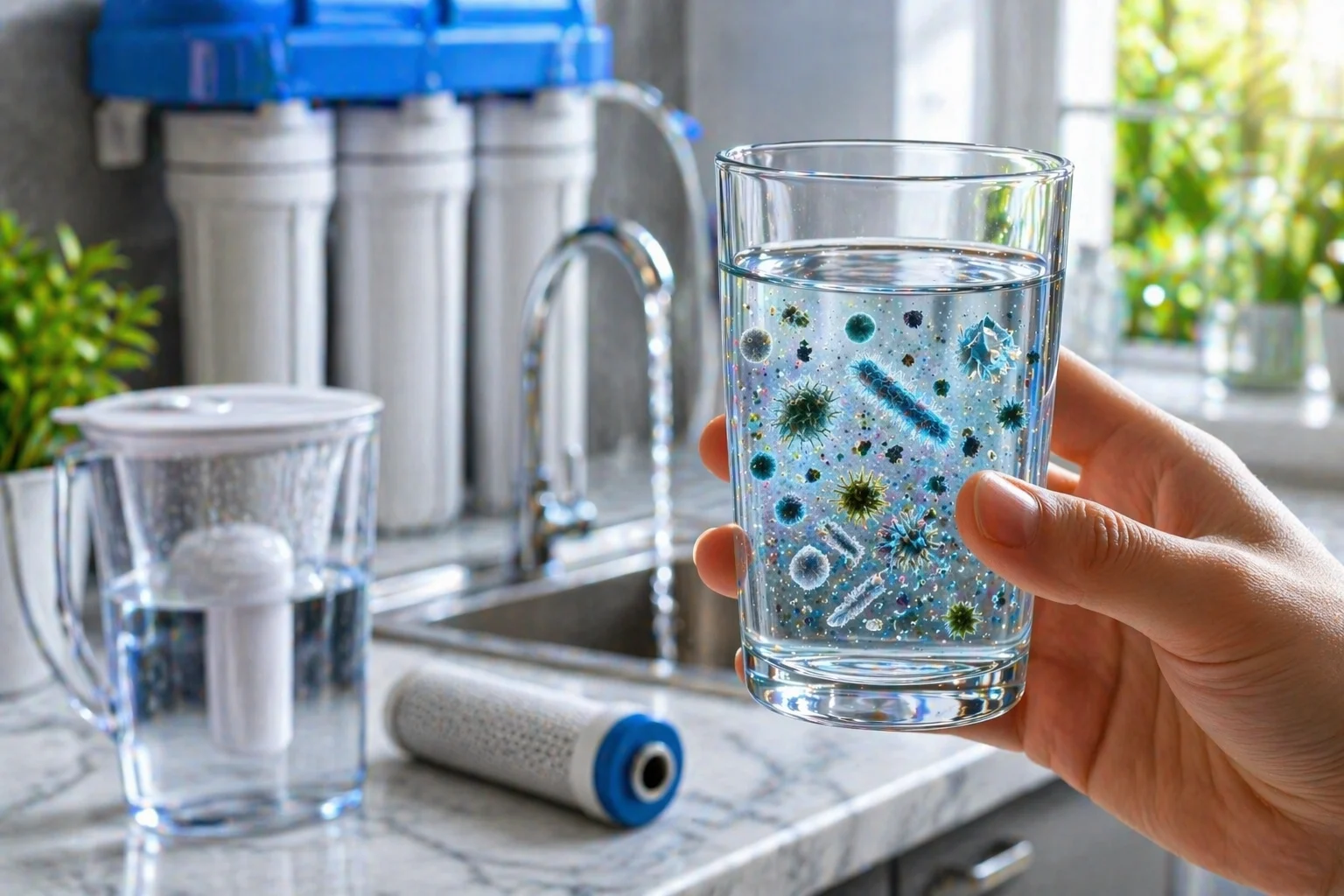

You may trust your tap water to be safe, but is it really free from harmful substances? Even clear and odorless water can contain hidden contaminants that affect your health over time. Understanding what might be in your water is the first step toward safer drinking habits.
Why Your Drinking Water May Not Be Completely Safe
Water treatment systems remove many harmful substances, but some contaminants can still remain or enter the water supply through pipes, storage tanks, or environmental pollution.
Common Hidden Contaminants in Drinking Water
1. Bacteria and Viruses
Microorganisms can enter water through contamination and cause waterborne diseases.
2. Heavy Metals
Lead, arsenic, and mercury can leach into water from old pipes or industrial pollution.
3. Chlorine and Disinfection Byproducts
Used to kill germs, but excess chlorine can affect taste and may have health impacts.
4. Pesticides and Chemicals
Agricultural runoff can introduce harmful chemicals into water sources.
5. Microplastics
Tiny plastic particles are increasingly found in drinking water supplies.
6. Sediment and Rust
Old plumbing systems can release particles that affect water clarity and safety.
Signs Your Water May Be Contaminated
- Unusual taste or smell
- Cloudy or discolored water
- Stains on utensils or fixtures
- Health issues like stomach problems
How to Make Your Drinking Water Safer
- Use a reliable water purifier (RO, UV, or carbon filter)
- Test your water regularly
- Clean storage tanks and pipes
- Replace filters on time
Best Filtration Methods
| Filter Type | Removes |
|---|---|
| RO | Heavy metals, TDS |
| UV | Bacteria, viruses |
| Carbon Filter | Chlorine, odor |
| Sediment Filter | Dirt, rust |
FAQs
Is clear water always safe to drink?
No, harmful contaminants can be invisible.
What is the safest way to drink water?
Using a proper filtration system.
Can boiling remove all contaminants?
No, it removes microbes but not chemicals.
How often should I test water?
At least once a year or when issues appear.
Conclusion
Even if your water looks clean, it may still contain hidden contaminants. Taking simple steps like testing and using the right filtration system can help ensure safe and healthy drinking water for your family.
