
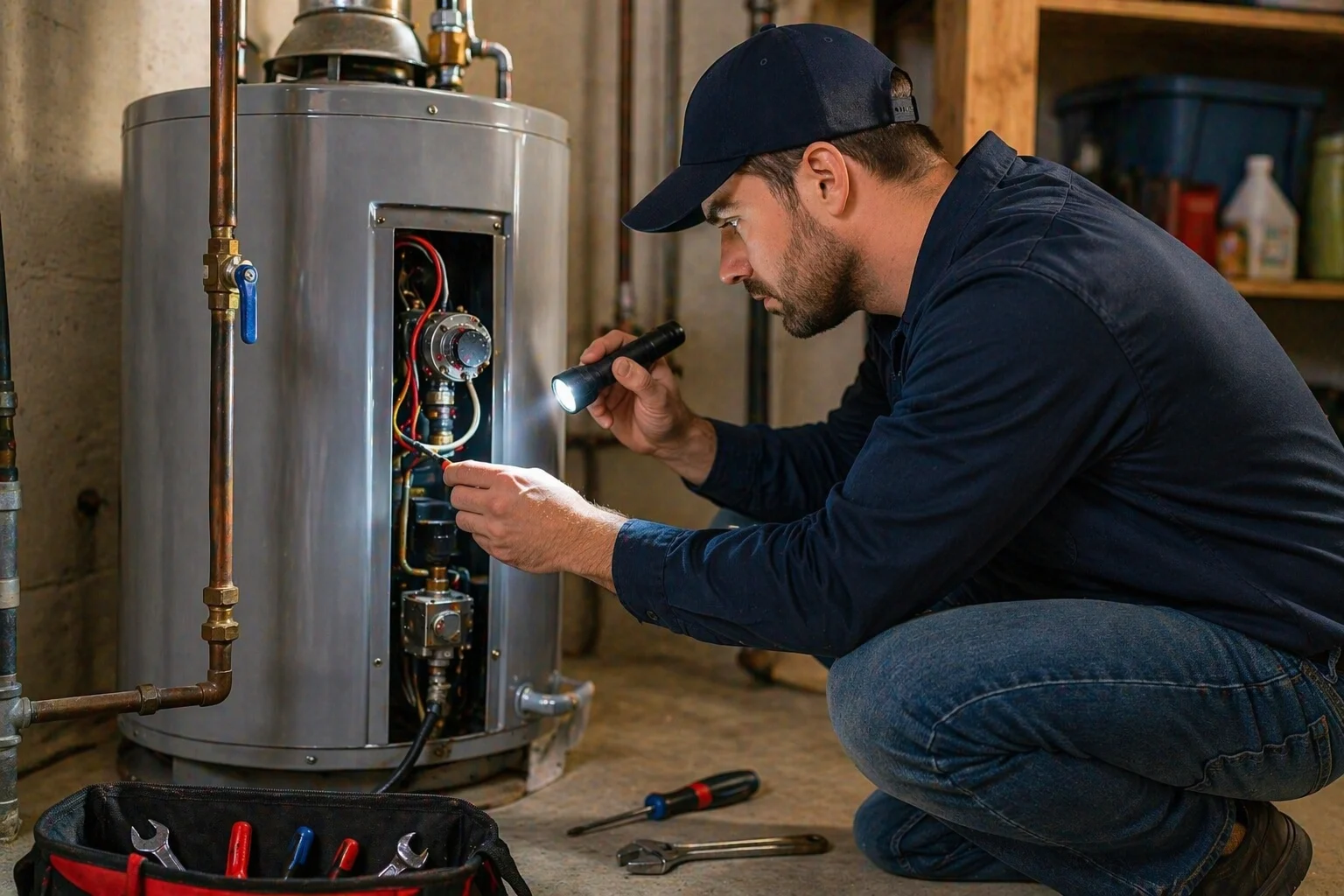

A water heater that isn’t heating properly can disrupt your daily routine—no hot showers, slow heating, or inconsistent temperatures. The good news is that most water heater issues are common and can be fixed with simple troubleshooting.
Common Reasons Your Water Heater Is Not Heating
1. Faulty Heating Element (Electric Heaters)
Heating elements can burn out over time, reducing or stopping heat production.
2. Thermostat Problems
A malfunctioning thermostat may not regulate the temperature correctly.
3. Sediment Buildup
Minerals settle at the bottom of the tank, reducing heating efficiency.
4. Power Supply Issues
Tripped breakers or faulty wiring can prevent electric heaters from working.
5. Gas Supply Problems (Gas Heaters)
Low gas pressure or pilot light issues can stop heating.
6. Broken Dip Tube
This part directs cold water to the bottom of the tank—if damaged, water may not heat properly.
Signs Your Water Heater Has a Problem
- No hot water or lukewarm water
- Water takes too long to heat
- Strange noises from the tank
- Fluctuating water temperature
How to Fix a Water Heater That’s Not Heating
- Check power supply or gas connection
- Reset the thermostat
- Flush the tank to remove sediment
- Replace faulty heating elements
- Inspect and repair valves or pipes
When Should You Call a Professional?
If the issue persists after basic troubleshooting or involves electrical/gas components, it’s best to call a professional technician.
Prevention Tips
- Flush the tank every 6–12 months
- Check thermostat settings regularly
- Inspect for leaks or unusual sounds
- Schedule annual maintenance
FAQs
Why is my water heater not producing hot water?
It could be due to a faulty element, thermostat, or power issue.
Can sediment affect heating?
Yes, it reduces efficiency and heating performance.
Is it safe to fix it myself?
Basic checks are fine, but complex issues need a professional.
How long does a water heater last?
Typically 8–12 years.
Conclusion
A water heater not heating properly is usually caused by common issues like sediment buildup or faulty components. Regular maintenance and timely repairs can keep your system working efficiently and ensure a steady supply of hot water.
