
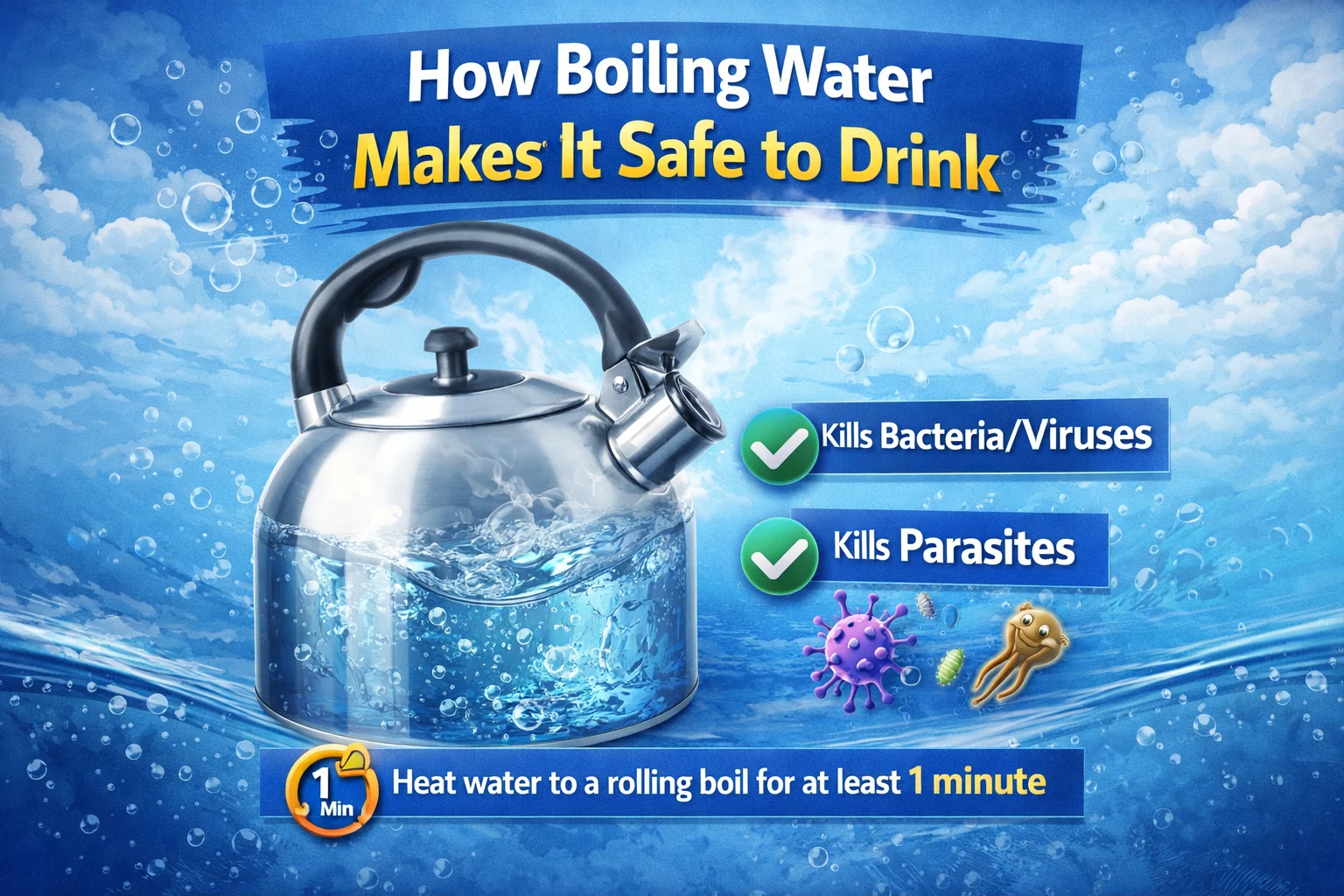

Boiling water is one of the oldest and most reliable methods of making water safe to drink. Whether you’re dealing with uncertain water quality or emergency situations, boiling can effectively eliminate harmful microorganisms. This guide explains how boiling water works and when it should be used.
Why Is Boiling Water Important?
Boiling is a simple yet effective method for purifying water, especially in areas where water treatment systems are unavailable or compromised. It helps protect against waterborne diseases caused by microorganisms.
- Kills harmful germs
- Easy and accessible method
- No special equipment required
How Boiling Water Purifies It
When water is heated to its boiling point (100°C or 212°F), high temperatures destroy the proteins and structures of harmful microorganisms. This process effectively neutralizes pathogens that can cause illness.
What Boiling Removes
- Bacteria (e.g., E. coli)
- Viruses
- Parasites (e.g., Giardia, Cryptosporidium)
What Boiling Does NOT Remove
- Chemicals (like chlorine or pesticides)
- Heavy metals (lead, arsenic)
- Dissolved salts (TDS)
Step-by-Step Guide to Boiling Water Safely
- Pour water into a clean pot
- Heat until it reaches a rolling boil
- Boil for at least 1 minute
- Let it cool naturally
- Store in a clean, covered container
When Should You Boil Water?
- During water contamination alerts
- While traveling or camping
- After natural disasters
- When water source is uncertain
Boiling vs Other Purification Methods
| Method | Removes Microbes | Removes Chemicals |
|---|---|---|
| Boiling | ✔ Yes | ✖ No |
| Filtration | ✔ Partial | ✔ Yes |
| RO | ✔ Yes | ✔ Yes |
Is Boiled Water Always Safe?
Boiled water is safe from microbial contamination, but it may still contain chemical pollutants. For complete purification, combining boiling with filtration or advanced systems is recommended.
FAQs
How long should I boil water to make it safe?
Boil water for at least 1 minute, or 3 minutes at higher altitudes.
Does boiling water remove bacteria?
Yes, boiling kills bacteria, viruses, and parasites.
Can boiling remove chlorine?
Boiling can reduce chlorine but does not remove all chemicals.
Is boiled water better than filtered water?
Boiling is better for killing microbes, while filtration removes chemicals and particles.
Conclusion
Boiling water is a simple and effective way to make it safe for drinking, especially in emergencies. While it doesn’t remove chemicals, it provides strong protection against harmful microorganisms. Combining boiling with other purification methods ensures the highest level of water safety.
