
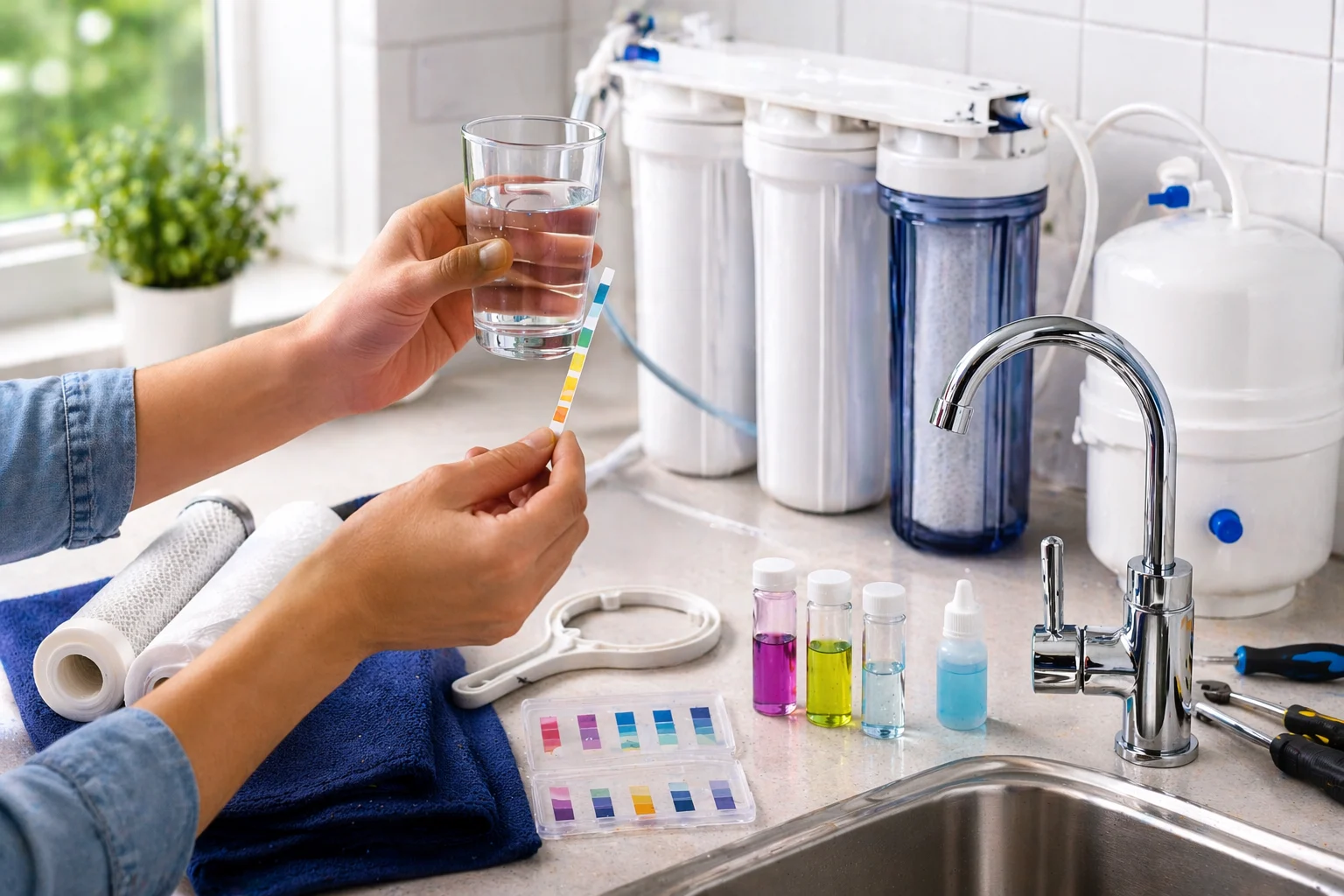

Water contamination can affect the safety, taste, and usability of your drinking water. Whether it’s bacteria, chemicals, or visible impurities, identifying and fixing contamination issues at home is essential for protecting your health.
Step 1: Identify the Type of Contamination
Understanding what’s in your water is the first step to solving the problem. Contaminants can be biological, chemical, or physical.
- Biological: Bacteria, viruses, parasites
- Chemical: Chlorine, pesticides, heavy metals
- Physical: Sediment, rust, dirt particles
Step 2: Test Your Water Quality
Use a home water testing kit or professional lab testing to check TDS levels, pH, and contaminants. This helps you choose the right solution.
Step 3: Choose the Right Treatment Method
| Contaminant Type | Best Solution |
|---|---|
| Bacteria & viruses | UV purifier / boiling |
| Heavy metals | RO system |
| Chlorine & chemicals | Activated carbon filter |
| Sediment & dirt | Sediment filter |
Step 4: Install a Suitable Water Filter System
Based on your water test results, install the appropriate system:
- RO for high TDS and dissolved impurities
- UV for microbial contamination
- Carbon filters for taste and odor improvement
- Combination systems for complete protection
Step 5: Maintain Your Water System
- Replace filters regularly (every 6–12 months)
- Clean storage tanks periodically
- Check for leaks or damage
- Service your purifier annually
Natural vs Advanced Solutions
| Method | Effectiveness | Best For | Cost |
|---|---|---|---|
| Boiling | Moderate | Microbial issues | Low |
| RO / UV systems | High | Comprehensive purification | Medium |
Signs Your Water Is Contaminated
- Unusual taste or odor
- Cloudy or discolored water
- Stains on dishes or fixtures
- Frequent stomach issues
FAQs
How do I know if my water is contaminated?
Look for changes in taste, smell, or appearance, or test your water.
What is the best way to purify water at home?
RO + UV systems offer the most comprehensive purification.
Is boiling enough to clean water?
It removes microbes but not chemicals or heavy metals.
How often should I maintain my filter?
Every 6–12 months depending on usage.
Conclusion
Fixing water contamination problems at home requires proper identification, testing, and the right filtration system. With regular maintenance and the right approach, you can ensure safe and clean drinking water for your family.
