
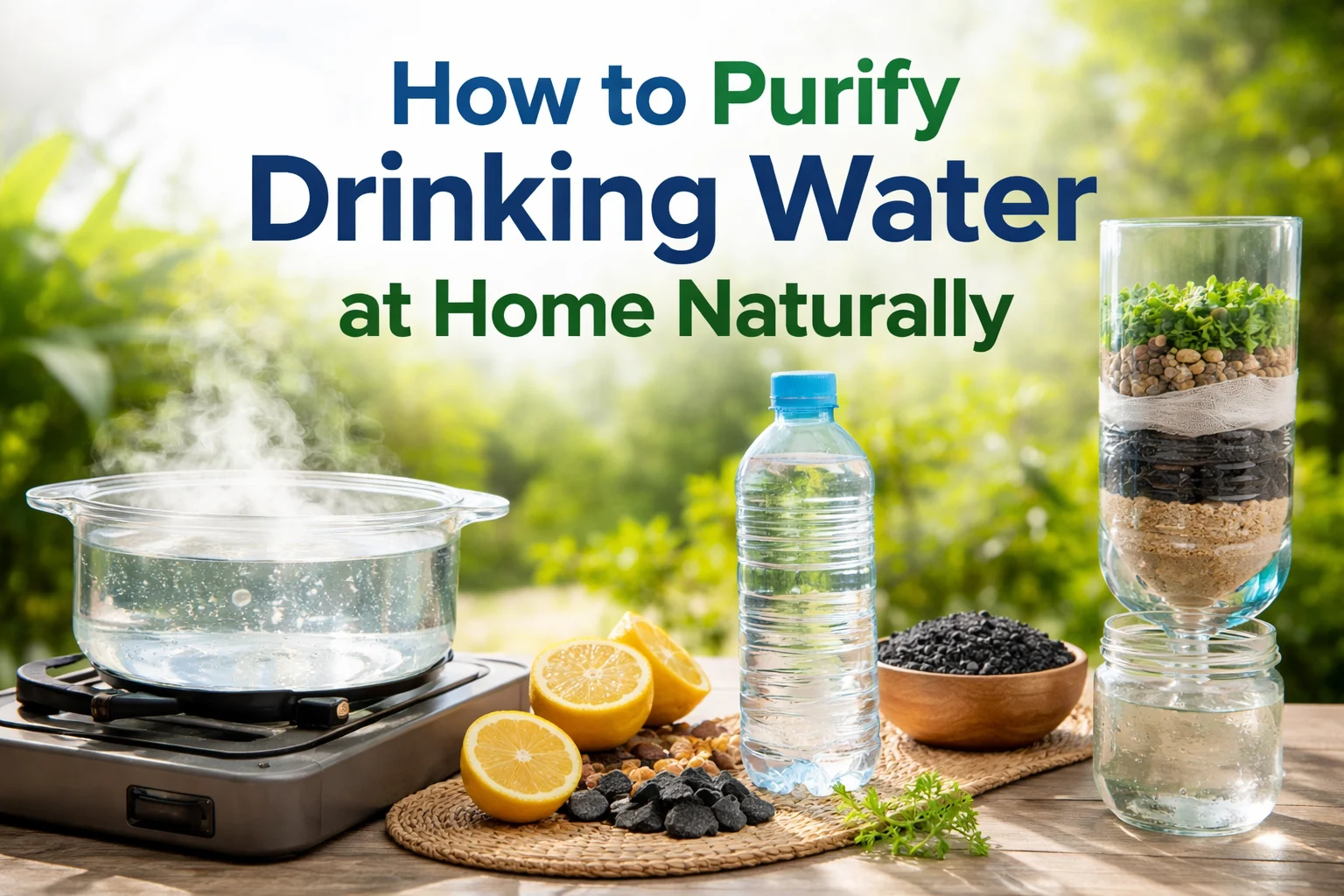

Access to clean drinking water is essential, but not everyone has access to advanced filtration systems. The good news is that you can purify drinking water at home naturally using simple, effective methods. This guide explains how to do it safely and efficiently.
What Does It Mean to Purify Water Naturally?
Natural water purification involves removing contaminants without relying on complex machines or chemical-heavy treatments. Instead, it uses heat, sunlight, and natural materials to improve water safety.
Why Natural Water Purification Matters
- Useful in emergencies or rural areas
- Low-cost and eco-friendly
- Reduces dependency on bottled water
- Helps remove bacteria and visible impurities
Best Natural Methods to Purify Drinking Water
1. Boiling Water
Boiling is one of the simplest and most effective ways to purify water. Heat kills harmful microorganisms like bacteria, viruses, and parasites.
- Bring water to a rolling boil for 1–3 minutes
- Let it cool before drinking
2. Sunlight (Solar Disinfection – SODIS)
Sunlight can naturally disinfect water using UV rays. This method is known as Solar Water Disinfection (SODIS).
- Fill clear plastic bottles with water
- Place them in direct sunlight for 6–8 hours
3. Sand and Charcoal Filtration
A natural filtration system using sand, gravel, and charcoal helps remove sediments and some impurities.
- Layer gravel, sand, and charcoal in a container
- Pour water through slowly
4. Cloth Filtration
Filtering water through clean cloth can remove large particles and debris.
5. Natural Coagulants (Moringa Seeds)
Crushed moringa seeds can help bind impurities and settle them at the bottom.
Natural vs Modern Water Purification
| Method | Effectiveness | Best For |
|---|---|---|
| Natural Methods | Moderate | Emergency, rural use |
| RO / UV Systems | High | Daily long-term use |
Is Naturally Purified Water Safe?
Natural purification methods can make water safer, but they may not remove all contaminants like heavy metals or chemicals. For long-term use, combining methods or using modern filtration is recommended.
Common Uses of Natural Water Purification
- Camping and outdoor survival
- Emergency situations
- Rural or off-grid living
- Backup water purification method
FAQs
What is the safest natural way to purify water?
Boiling is the safest and most reliable natural method to kill harmful microorganisms.
Can sunlight purify water?
Yes, UV rays from sunlight can kill bacteria when water is exposed for several hours.
Does charcoal purify water?
Charcoal helps remove impurities and improves taste, but it does not kill all microbes.
Is natural water purification enough?
It works in many cases, but for complete safety, advanced filtration may be needed.
Conclusion
Knowing how to purify drinking water at home naturally is a valuable skill. While these methods can improve water safety, combining them or using modern systems ensures better long-term health and protection.
