
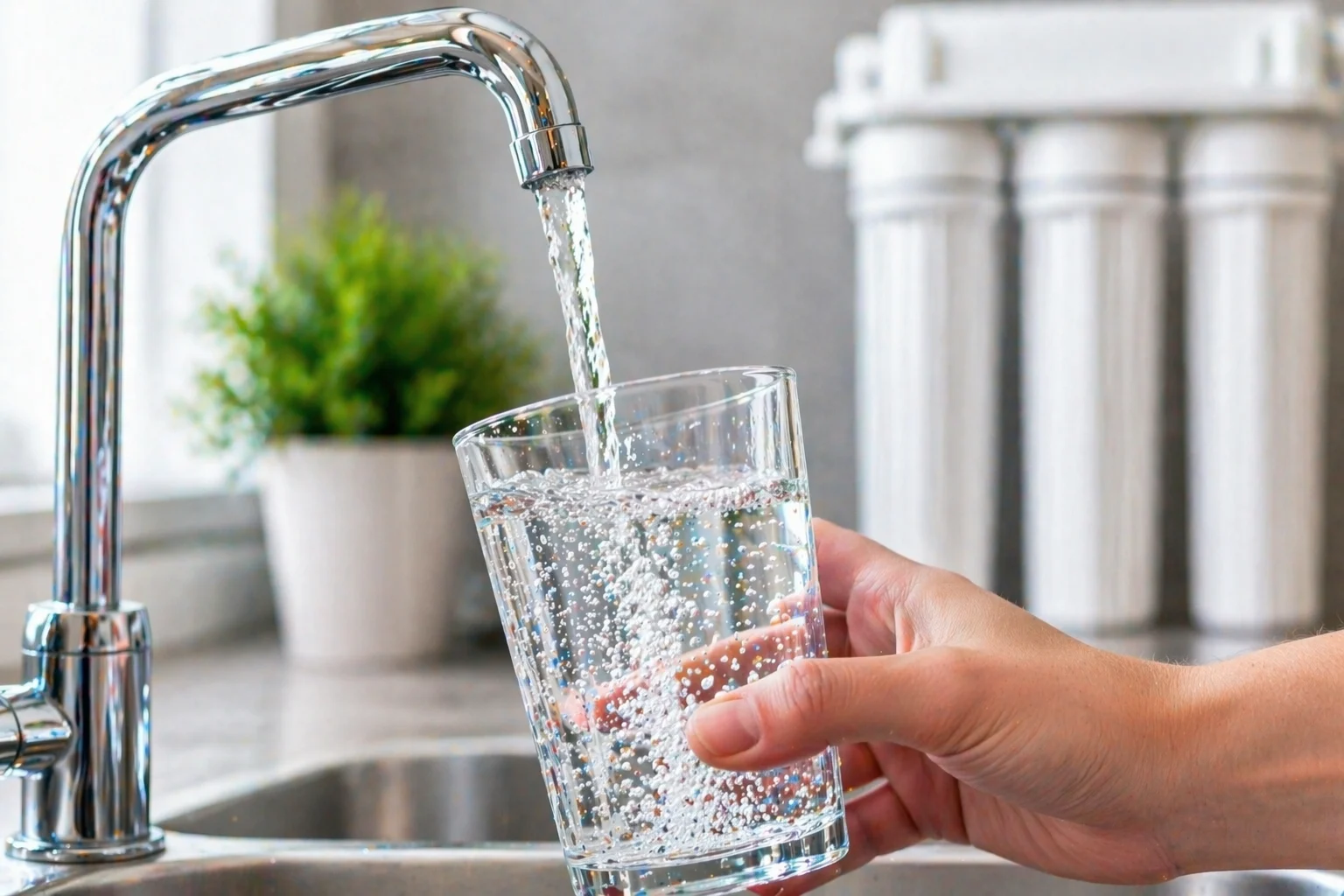

Tap water is the most common source of drinking water in many homes, but is it really safe to drink? While treated water is generally considered safe, it can still contain impurities depending on the source and infrastructure.
What Is Tap Water?
Tap water is supplied through municipal systems and treated to remove harmful contaminants. It undergoes processes like filtration and disinfection before reaching your home.
Is Tap Water Safe to Drink?
In most areas, tap water meets safety standards and is safe for daily use. However, factors like aging pipelines, contamination, or poor maintenance can affect its quality.
Common Contaminants in Tap Water
- Chlorine: Used for disinfection but affects taste and smell
- Heavy metals: Lead, arsenic from old pipes
- Bacteria & viruses: Rare but possible in untreated systems
- Sediment: Dirt, rust particles
- Microplastics: Emerging concern in water sources
Signs Your Tap Water May Not Be Safe
- Unpleasant taste or odor
- Cloudy or discolored appearance
- Stains on fixtures or utensils
- Frequent stomach issues
How to Make Tap Water Safer
- Install a water purifier (RO, UV, or carbon filter)
- Boil water to remove microbes
- Use water testing kits to check quality
- Clean storage tanks regularly
Tap Water vs Filtered Water
| Feature | Tap Water | Filtered Water |
|---|---|---|
| Safety | Generally safe | More reliable |
| Taste | May vary | Improved |
| Contaminants | May remain | Reduced significantly |
FAQs
Is tap water safe everywhere?
No, safety depends on local water treatment and infrastructure.
Can boiling make tap water safe?
It kills bacteria but doesn’t remove chemicals or metals.
Do I need a water filter?
It’s recommended for better safety and taste.
Is tap water better than bottled water?
Filtered tap water is often safer and more cost-effective.
Conclusion
Tap water is generally safe, but its quality can vary. By testing your water and using proper filtration methods, you can ensure clean, safe, and great-tasting drinking water at home.
