
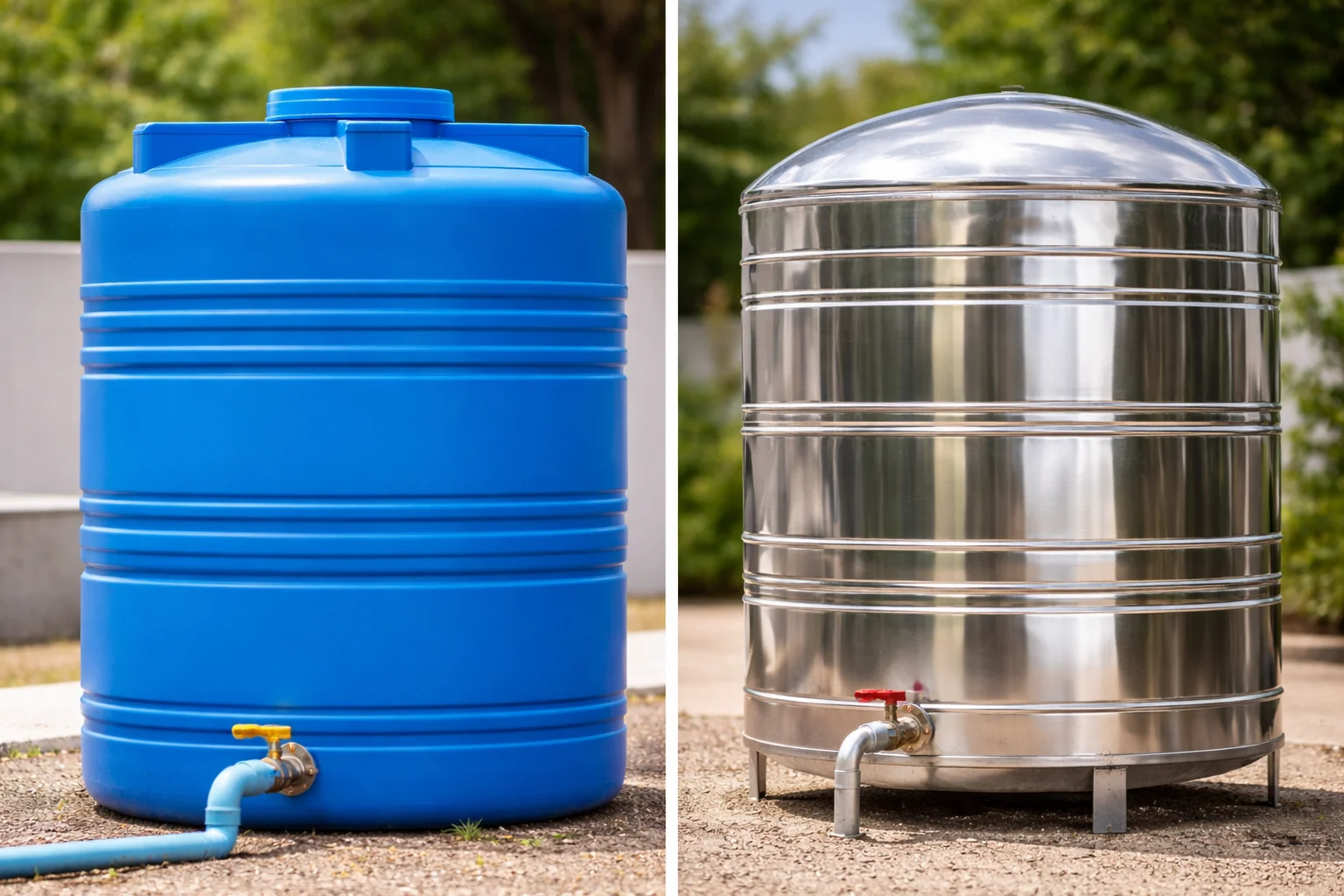

Choosing the right water storage option is important for maintaining water quality and safety. Many households use plastic tanks or steel containers, but which one is actually safer? Let’s compare both options to help you make the right decision.
Plastic vs Steel Water Storage: Key Differences
| Feature | Plastic | Steel |
|---|---|---|
| Safety | Can leach chemicals (low quality) | Highly safe and non-reactive |
| Durability | Moderate | Very high |
| Cost | Low | High |
| Weight | Lightweight | Heavy |
| Maintenance | Easy | Moderate |
Plastic Water Storage: Pros & Cons
Advantages
- Affordable and widely available
- Lightweight and easy to install
- Resistant to rust
Disadvantages
- May release chemicals if low quality
- Can degrade under sunlight (UV exposure)
- Shorter lifespan compared to steel
Steel Water Storage: Pros & Cons
Advantages
- Non-reactive and safe for drinking water
- Highly durable and long-lasting
- Better resistance to bacteria growth
Disadvantages
- Higher cost
- Heavier and harder to install
- Can corrode if not properly maintained
Which One Should You Choose?
- Choose plastic if you want a budget-friendly and easy option
- Choose steel if you prioritize safety, durability, and long-term use
Tips for Safe Water Storage
- Use food-grade plastic tanks only
- Clean storage tanks regularly
- Avoid direct sunlight exposure
- Check for leaks or damage
FAQs
Is plastic water storage safe?
Yes, if it is food-grade and high quality.
Which is better for drinking water?
Steel is generally safer and more hygienic.
Does plastic affect water taste?
Low-quality plastic can sometimes affect taste.
How long do steel tanks last?
They can last many years with proper maintenance.
Conclusion
Both plastic and steel water storage options have their advantages. While plastic is cost-effective and convenient, steel offers superior safety and durability. Choosing the right option depends on your needs, budget, and long-term priorities.
