
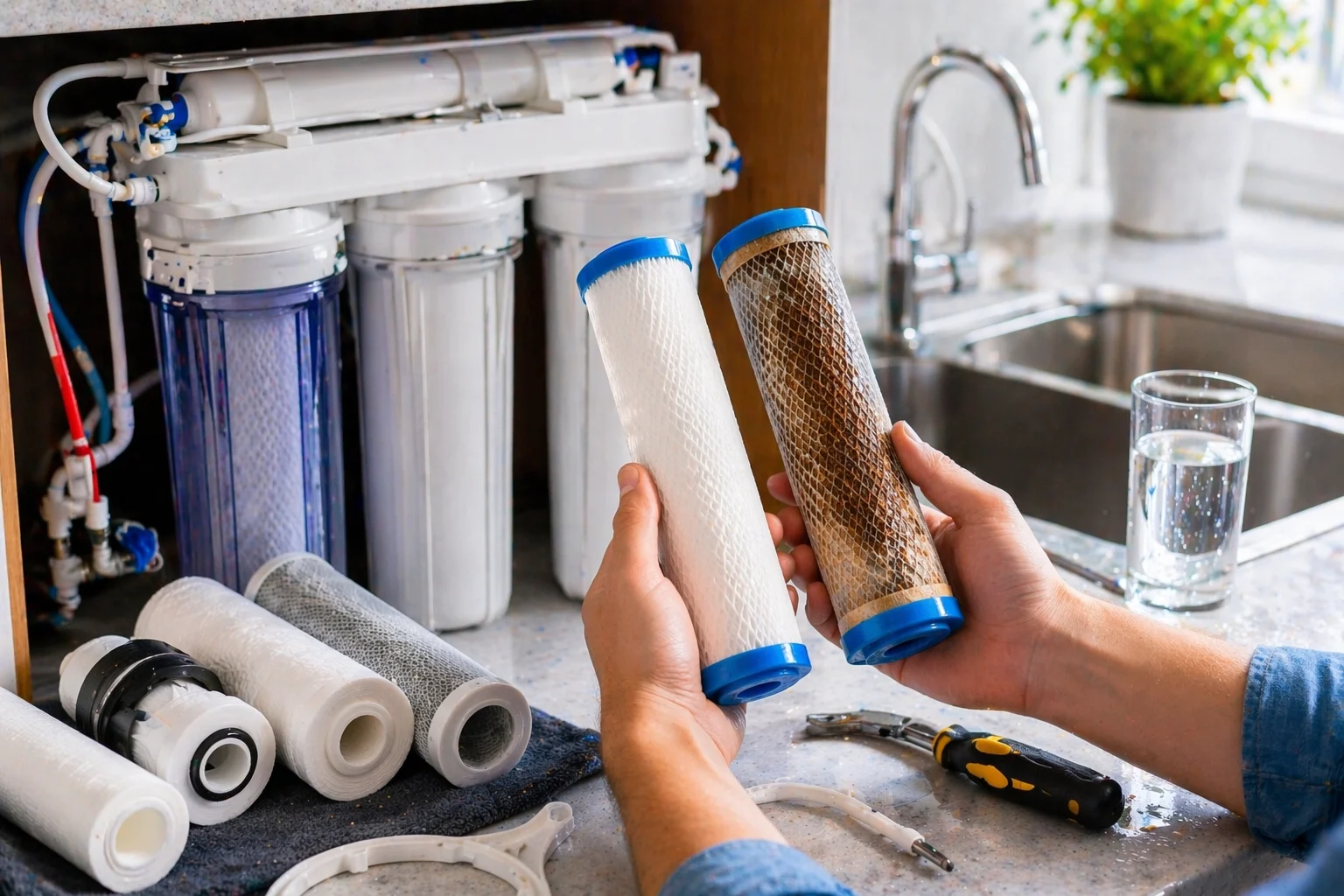

Your water filter plays a crucial role in keeping your drinking water clean and safe. But over time, filters lose their effectiveness. Ignoring the warning signs can lead to poor water quality and potential health risks.
Why Replacing Your Water Filter Is Important
A worn-out filter can no longer remove contaminants effectively. Instead, it may start releasing trapped impurities back into the water, reducing safety and quality.
Top Signs Your Water Filter Needs Replacement
1. Slow Water Flow
A clogged filter restricts water flow, resulting in reduced pressure and slower output.
2. Bad Taste or Odor
If your water starts tasting metallic, bitter, or smells unpleasant, your filter may no longer be working properly.
3. Cloudy or Discolored Water
Visible particles or cloudy appearance indicate the filter is no longer removing impurities.
4. Unusual Noises from the System
Strange sounds can signal blockages or internal issues caused by an old filter.
5. Filter Indicator Light
Modern purifiers have indicator lights that alert you when it’s time to replace the filter.
6. Increased TDS Levels
If your TDS readings rise, your filter or membrane may be worn out.
7. Time-Based Replacement
Even without visible issues, filters should typically be replaced every 6–12 months.
What Happens If You Don’t Replace Filters?
- Poor water quality
- Health risks from contaminants
- Damage to purifier system
- Reduced lifespan of equipment
How Often Should You Replace Your Filter?
| Filter Type | Replacement Time |
|---|---|
| Sediment Filter | 3–6 months |
| Carbon Filter | 6–12 months |
| RO Membrane | 1–2 years |
| UV Lamp | 1 year |
Tips to Extend Filter Life
- Clean your system regularly
- Use pre-filters to reduce load
- Check water pressure and quality
- Follow manufacturer guidelines
FAQs
How do I know my filter is bad?
Look for slow flow, bad taste, or cloudy water.
Can I use a filter longer than recommended?
Not advised—it reduces effectiveness and safety.
Does TDS increase when filters expire?
Yes, especially in RO systems.
Is replacing filters expensive?
It’s affordable compared to health risks and repairs.
Conclusion
Recognizing the signs of a worn-out water filter is essential for maintaining safe drinking water. Regular replacement and proper maintenance ensure your system performs efficiently and protects your health.
