
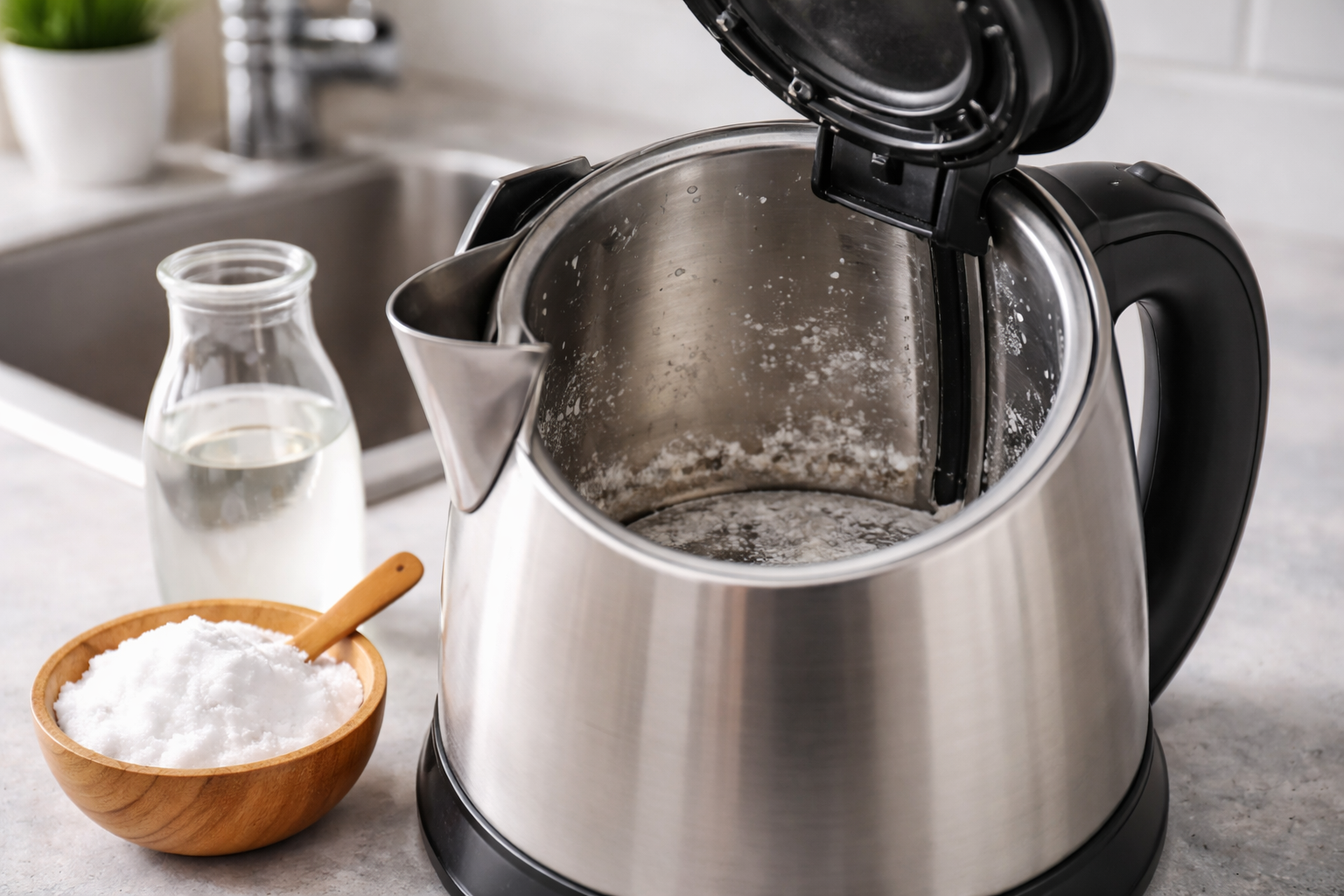

Noticing white, chalky buildup inside your kettle, pipes, or appliances? This is known as limescale, and it’s a common issue caused by hard water. Over time, scale buildup can reduce efficiency and damage appliances if not treated properly.
What Is Limescale?
Limescale is a hard, chalky residue left behind by mineral-rich water. It typically appears as white or off-white deposits in kettles, pipes, and heating appliances.
Main Reasons Water Leaves Scale
1. Hard Water (High Calcium & Magnesium)
Hard water contains dissolved minerals that crystallize when heated, forming scale deposits.
2. Heating Water
Boiling or heating water accelerates mineral precipitation, increasing scale formation in kettles and heaters.
3. Evaporation of Water
When water evaporates, minerals remain behind and accumulate over time.
4. High TDS (Total Dissolved Solids)
Higher TDS levels mean more dissolved minerals, which increases the likelihood of scale buildup.
5. Poor Water Treatment
Lack of proper filtration or softening systems allows minerals to remain in water.
Where Scale Commonly Forms
- Electric kettles and tea makers
- Water heaters and geysers
- Pipes and plumbing systems
- Faucets and showerheads
- Washing machines and dishwashers
Problems Caused by Limescale
- Reduced heating efficiency
- Clogged pipes and reduced water flow
- Increased energy consumption
- Damage to appliances over time
- Unpleasant taste in water
How to Remove and Prevent Scale
- Use vinegar or descaling solutions to clean buildup
- Install a water softener to reduce hardness
- Use RO systems to lower TDS levels
- Clean appliances regularly
- Use filtered water for kettles
Natural vs Advanced Solutions
| Method | Effectiveness | Best For | Cost |
|---|---|---|---|
| Vinegar cleaning | Moderate | Surface scale | Low |
| Water softener / RO | High | Long-term prevention | Medium |
Is Limescale Harmful?
Limescale is not harmful to health, but it can affect appliance performance and water taste. Managing scale buildup helps maintain efficiency and longevity of systems.
FAQs
Why does my kettle get white deposits?
Due to hard water minerals left behind after boiling.
Can I drink water with limescale?
Yes, it is generally safe but may taste unpleasant.
How do I stop scale buildup?
Use water softeners or filtration systems.
Does boiling water cause scale?
Yes, heating accelerates mineral deposition.
Conclusion
Scale buildup in kettles and pipes is a result of hard water minerals. While it’s not harmful, it can impact efficiency and performance. Regular cleaning and proper water treatment can effectively manage and prevent limescale issues.
