

How Long Can You Go Without Water? (What Science Says, and When to Worry)
Updated on • U.S. hydration guide
Water keeps your blood volume stable, your temperature in check, and your cells working. When intake drops, your body compensates—until it can’t. Below is a practical, science-informed guide to how long people can go without water, what changes the timeline, and exactly how to rehydrate safely. If you want everyday hydration planning, start with our Sparkling Water hub or try your daily target on our Water Intake Calculator.
So…How Long Can a Human Go Without Water?
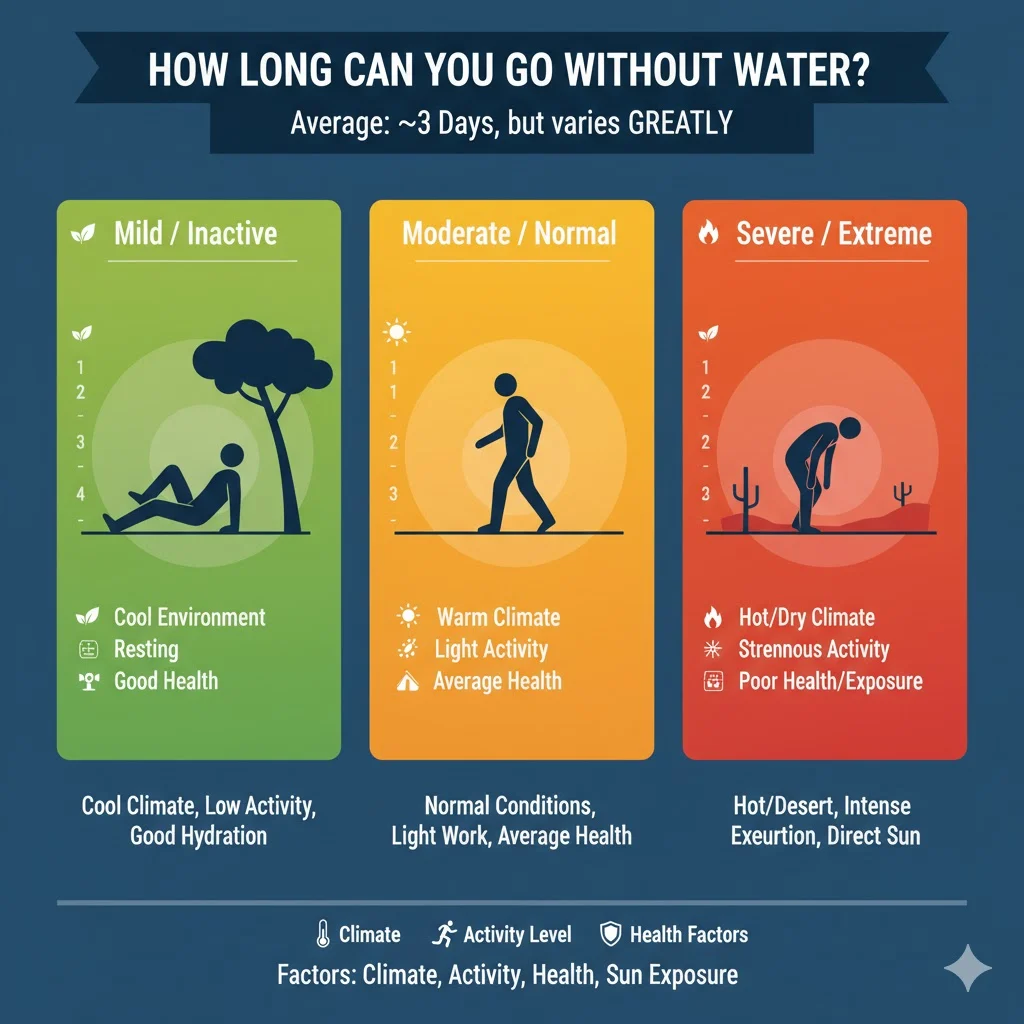
There’s no single “number.” Research and survival case reports suggest a **broad range from ~24 hours to several days**, depending on stress and environment. In realistic, modern scenarios (commuting, outdoor work, workouts, heat waves), functional decline appears quickly.
- Hot/dry + active: Heat and exertion can push you into dangerous dehydration in hours.
- Temperate + resting: Some people may last 2–3 days, but performance and judgment deteriorate long before that.
- Altitude: Faster breathing and dry air increase fluid loss—timelines shorten.
- Kids, older adults, pregnancy, illness: Higher risk and shorter safe windows.
What Changes the Timeline? (The Big Variables)
- Heat & humidity: Sweating drives water loss; high humidity reduces sweat evaporation, stressing cooling.
- Activity level: Hard work/exercise can increase sweat to 0.5–2+ liters/hour.
- Clothing & sun: Dark/heavy clothes and direct sun accelerate heat load.
- Altitude & dry air: Faster breathing and low humidity increase insensible loss.
- Body size/composition: Larger individuals may lose more absolute fluid; lean mass is highly hydrated.
- Health status: Fever, vomiting/diarrhea, diabetes, and certain meds/diuretics increase fluid needs.
Dehydration Stages: What It Feels Like
Symptoms roughly track with percent body-weight water loss. Even mild levels affect thinking and mood.
- ~1–2% body weight: Thirst, dry mouth, darker urine, mild headache, reduced focus.
- ~3–5%: Dizziness, fatigue, faster heart rate, irritability, reduced exercise capacity.
- ~6–10%: Confusion, very low urine, cool/clammy skin, possible fainting.
- >10%: Medical emergency—risk of heat injury, kidney strain, shock. Call emergency services.
How to Rehydrate Safely (Not Just Chugging)
If you’re mildly dehydrated, your gut absorbs fluids best with a bit of sodium and carbs. For moderate to more severe symptoms, prioritize electrolytes and consider medical care.
- Start with water + sodium: A pinch of salt and a small snack (or an oral rehydration solution) improves absorption.
- Avoid “water toxicity” risk: Don’t drink huge volumes at once after heavy sweating; spread intake and include electrolytes.
- Cooling: Get to shade/AC, loosen clothing, use cool towels; treat heat stress seriously.
- Still or sparkling? Both hydrate. If bubbles make you drink more, that’s a win—see our Sparkling Water hub for brand and flavor guidance.
Daily Water Needs (Realistic Targets)
Needs vary, but U.S. guidelines often cite **~3.7 L/day** total water for men and **~2.7 L/day** for women (all beverages + foods). You don’t have to hit the number exactly—use it as a ballpark, then adjust for heat and activity.
- Simple check: Aim for pale-yellow urine most of the day.
- Activity & heat: Add fluids around workouts and outdoor time.
- Make it automatic: Anchor drinking to routines—wake-up, mid-morning, lunch, mid-afternoon, dinner.
- Personalize it: Try our Water Intake Calculator to set a starting target, then fine-tune.
Special Situations (Shorter Safe Windows)
- Illness (vomiting/diarrhea/fever): Fluid and electrolyte losses spike—use oral rehydration solutions, seek care if you can’t keep fluids down or have signs of dehydration.
- Pregnancy & breastfeeding: Higher needs; keep a bottle handy and check urine color frequently.
- Older adults: Thirst cues can be blunted; schedule fluids and track output.
- Kids: Dehydrate faster; offer small, frequent sips and ORS per pediatric guidance.
- High altitude: Expect more frequent urination and dryness; increase intake proactively.
When to Seek Medical Help
Dehydration can escalate quickly—especially in heat. Don’t wait on these signs:
- Confusion or fainting
- Very little or no urine for 8+ hours
- Rapid heartbeat or breathing, chest pain
- Severe weakness, inability to keep fluids down
- Heat cramps progressing to heat exhaustion/heat stroke (hot, dry skin, altered mental status)
FAQs
Is the “3 days without water” rule true?
- It’s a rough anecdote—not a safety guideline. Many people face risk far sooner in heat or during exertion.
What counts as “water” toward my daily goal?
- Plain water (still or sparkling), most unsweetened beverages, and water in foods (soups, fruits/veg) all contribute.
Does sparkling water hydrate like still water?
- Yes. If bubbles help you drink more, that can improve your daily total. Start here: Sparkling Water hub.
References & Further Reading

1 Comment
What Temperature Does Water Boil? - completewaterguide.com
November 27, 2025[…] more about water and its behaviors? You might also like our articles on whether water itself is wet,how long you can go without water,whether sparkling water affects teeth, and recommended daily water […]