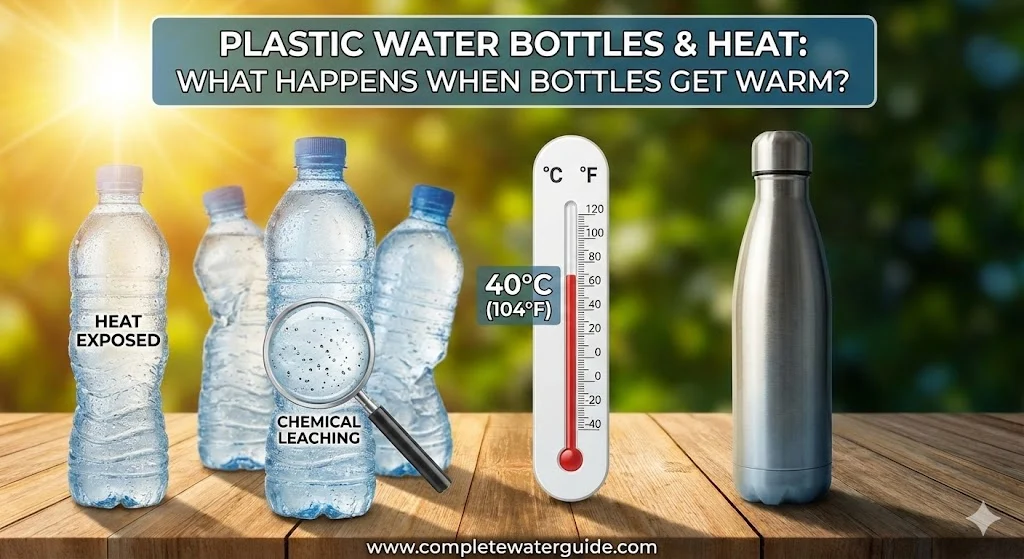
We’ve all done it: left a water bottle in the car on a sunny day and taken a sip later. It tastes warm, maybe a little “plasticky.” But is that weird taste dangerous? This is an answer-first guide to the heat effect on plastic bottles — how warmth accelerates chemical leaching (antimony and microplastics) and turns your hydration into a bacterial breeding ground. We’ll separate what the research actually measured from what gets repeated, and explain which bottle is genuinely worth throwing away.
Quick Answer:
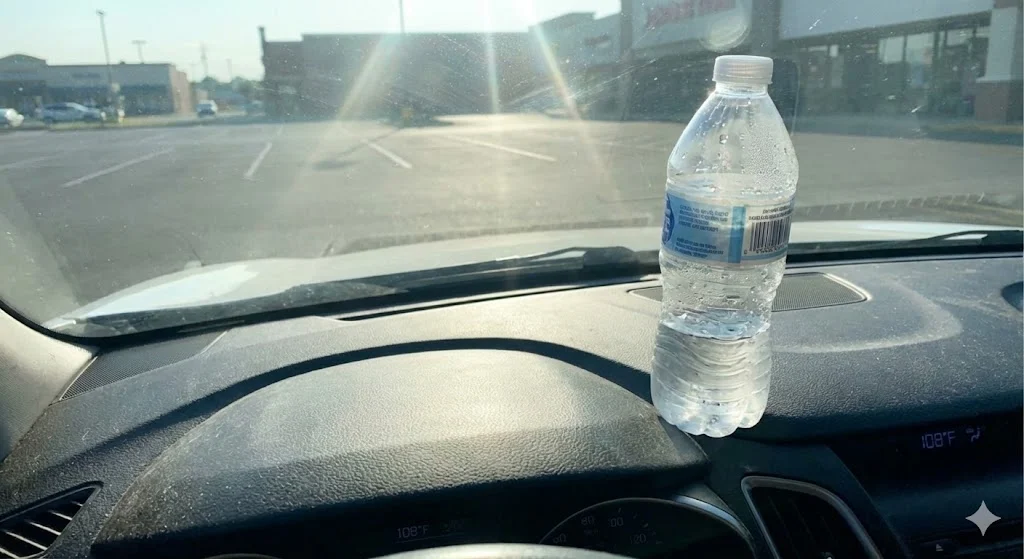
The main heat effect on plastic bottles is faster chemical leaching. When plastic bottles (specifically PET #1) get warm, the chemical bonds loosen, allowing chemicals like antimony and phthalates to leach into the water up to 40 times faster than at room temperature. Heat also promotes rapid bacterial growth if the bottle has been opened. The distinction that matters is whether the bottle was opened. A sealed bottle left in a hot car for a few hours is generally still safe: antimony needs roughly 176 days at 60°C to reach the EPA limit. A bottle you have already drunk from is the real problem, because mouth bacteria multiply in the warmth — discard that one.
What Does Heat Actually Do to a Plastic Bottle?
The heat effect on plastic bottles comes down to three things happening at once: chemicals migrate out of the plastic into the water, the plastic itself starts breaking down into microplastics, and any bacteria already in the bottle multiply faster. The hotter it gets, the faster all three happen — which is why a bottle baking in a car is far riskier than one sitting in a cool room. Below we break each effect down.
The Chemistry: Why Heat is the Enemy
Plastic is not a solid wall; it is a mesh of molecules. Heat acts as energy that shakes this mesh apart.
1. Antimony Leaching
Most single-use bottles are made of PET. A catalyst called antimony is used to make this plastic. At room temperature, measured antimony sits around 0.195 ppb, roughly thirty times below the 6 ppb EPA limit. Heat does increase migration, but the timescales below show how much heat, and for how long, it actually takes to matter. To keep tabs on what’s actually in your water, try our home water quality test guide.
2. The “BPA-Free” Myth Under Heat
You might think you are safe because your reusable sports bottle says “BPA-Free.” Unfortunately, heat doesn’t discriminate. Many alternatives contain BPS or BPF, which can also leach when heated. “BPA-free” does not mean “chemical-free” once a bottle gets hot.
Temperature vs. Safety: A Danger Scale
| Scenario | Approx Temp | Chemical Risk | Action |
|---|---|---|---|
| Refrigerator / Cool Room | 35°F – 70°F | Low (Standard) | Safe to drink. |
| Beach Bag / Direct Sun | 90°F – 100°F | Moderate | Drink quickly or move to shade. |
| Car in Summer | 130°F – 170°F | Moderate (sealed) / High (opened) | Sealed: fine. Opened: discard. |
| Dishwasher (Hot Cycle) | 140°F – 180°F | High (Degrades plastic) | Hand wash plastic only. |
Note: UV rays from the sun damage plastic even faster than ambient heat, causing it to become brittle and release microplastics.
How long heat actually takes to matter
The reassuring part of the antimony research is the timescale, and it is almost never quoted. Westerhoff and colleagues, publishing in Water Research in 2008, measured antimony in PET bottled water at room temperature at 0.195 ppb, roughly thirty times below the 6 ppb EPA limit, and found it barely moved over three months.
They then heated bottles and calculated how long each temperature would take to push antimony past that limit:
| Water temperature | Days to reach the 6 ppb EPA limit |
|---|---|
| 60°C / 140°F | 176 days |
| 65°C / 149°F | 38 days |
| 70°C / 158°F | 12 days |
There is a physical check on the hotter rows. PET begins deforming somewhere around 74 to 80°C, so if your bottles are still bottle-shaped, the water inside them never held that temperature. A car parked in summer sun also cools every night, which resets the clock those figures assume.
Two later studies point the same way. A 2014 paper found antimony stayed under the limit for a full eight weeks at 40°C, which is realistic for most cars. A 2018 study in Environmental Science and Pollution Research stored PET bottles in a car boot through a Chinese summer for four weeks and concluded the health risk was low.
The honest caveat: a 2020 paper from Kuwait reported 8.53 ppb after 24 hours at 50°C, which contradicts all of the above by orders of magnitude. It is one result against several and we have not seen it replicated, but it exists and pretending otherwise would be dishonest.
How hot does a car actually get?
A study published in Pediatrics in 2005 measured a dark car with a grey interior across sixteen cloud-free days. Interior temperature rose about 3.2°F every five minutes, and eighty percent of the total rise happened within the first half hour. Cracking the windows made very little difference.
That gets a car interior well past 60°C on a hot day. It does not get the water inside a sealed bottle to 65 or 70°C, and the table above is what that distinction is worth.
Two myths worth retiring
A water bottle will not start a fire in your car. A bottle can focus sunlight, and an Oklahoma fire department demonstrated it burning a hole through paper at a focal temperature of about 250°F. Car upholstery vinyl ignites around 455°F. The gap between those two numbers is the answer.
A sealed still-water bottle will not explode. Water’s vapour pressure at 60°C is only about 0.2 atmospheres and it reaches equilibrium rather than building indefinitely. Carbonated drinks are the real exception: dissolved CO2 comes out of solution as temperature rises and pressure can reach five to six times atmospheric, which is why cans can fail around 120°F, a temperature car interiors exceed routinely.
The Bacteria Factor
Heat isn’t just about chemicals; it’s an incubator. If you have already taken a sip from your bottle, you have introduced mouth bacteria into the water. In a warm environment (like a gym bag or car), these bacteria can multiply exponentially in just a few hours. Drinking “warm backwash” water is a common cause of upset stomachs. For the full breakdown of the car scenario specifically, see our guide on whether you can leave water bottles in a hot car.
Rules for Heat & Hydration
- The “Touch Test”: If the bottle feels hot to the touch, the water inside has likely already begun to absorb chemicals from the plastic.
- Don’t Refill with Hot Water: Never put tea or coffee in a standard plastic bottle. Use stainless steel or ceramic.
- Rotate Emergency Kits: If you keep a case of water in your trunk for emergencies, swap it out every 3–6 months. Don’t let it bake there for years.
- Glass for the Car: If you must leave water in the car, use a glass bottle or a vacuum-insulated stainless steel bottle. They are heat-stable.
FAQs
What is the heat effect on plastic water bottles?
Heat loosens the chemical bonds in plastic, causing chemicals like antimony and BPA/BPS to leach into the water far faster, breaking the plastic down into microplastics, and letting any bacteria present multiply quickly.
Is it safe to drink water left in a hot car?
For a sealed bottle left a few hours, generally yes. Antimony needs roughly 176 days at 60°C to reach the EPA limit, and a car cools overnight. The bottle worth discarding is one you already drank from, where mouth bacteria multiply in the warmth.
Can I boil water in a plastic bottle?
Absolutely not. Boiling water will melt standard PET bottles and cause rapid, severe chemical leaching in harder plastics.
Does freezing a plastic bottle release chemicals?
Generally, no. Unlike heat, freezing slows down the migration of chemicals. However, water expands when frozen, which might crack the plastic, making it hard to clean later.
Why does warm bottled water taste sweet?
That strange “sweet” or chemical taste is often the taste of the plastic itself (specifically aldehydes or plasticizers) leaching into the water.
References
- National Library of Medicine — Antimony leaching in bottled water
- Poison Control — Plastic Water Bottles in Heat
- Time — Why You Shouldn’t Drink Water Left in a Hot Car
![Is Alkaline Water Good for You? [Benefits, Risks & Science]](https://completewaterguide.com/wp-content/uploads/2025/09/10-768x416.webp)