Want to skip the guesswork entirely? Use our free Water Quality Checker Tool, or jump to the brands that tested non-detect.
Disclosure: As an Amazon Associate we earn from qualifying purchases. If you buy through links on this page, we may earn a small commission at no extra cost to you — it never changes which brands we recommend or the numbers we report.
⚡ Top 3 Non-Detect Alternatives — all returned zero detections in 2025 lab testing, jump to full picks & prices ↓
Liquid Death Sparkling
Non-detect in 2025 testing, and it is a can like Polar rather than a glass bottle.
Check Price
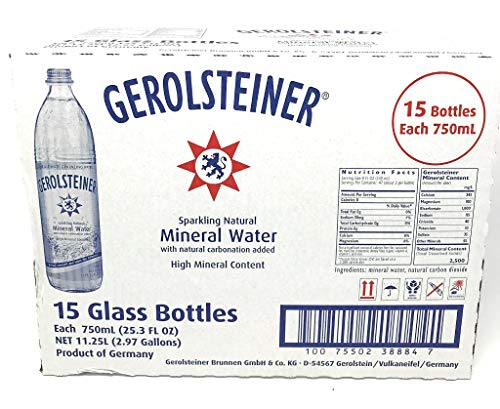
Gerolsteiner (Glass)
Zero detections across 40 PFAS compounds, plus the highest mineral content we track.
Check Price
SodaStream Maker
Both machines tested came back non-detect after 20 rounds. Make it from filtered water.
Check Price
What the Testing Actually Found in Polar Seltzer
In September 2020, Consumer Reports tested 47 bottled waters for heavy metals and PFAS. Sparkling waters came back consistently worse than still waters. Here is where Polar landed against the rest of that study, measured as total summed PFAS across multiple compounds.
| Brand (2020 Consumer Reports) | Total PFAS | Rank |
|---|---|---|
| Topo Chico Mineral Water | 9.76 ppt | Highest |
| Polar Natural Seltzer Water | 6.41 ppt | Second highest |
| Bubly Blackberry | 2.24 ppt | Third |
| Poland Spring Zesty Lime | 1.66 ppt | Fourth |
| Canada Dry Lemon Lime | 1.24 ppt | Fifth |
| LaCroix Natural | 1.16 ppt | Sixth |
| Perrier Natural Mineral | 1.10 ppt | Seventh |
| Schweppes Lemon Lime | 0.58 ppt | Below 1 ppt |
| Dasani Black Cherry | 0.37 ppt | Below 1 ppt |
| Spindrift | 0.19 ppt | Cleanest tested |
| Sparkling Ice Black Raspberry | Non-detect | No detection |
What the 2025 Retesting Found — and the Polar Gap
In September 2025, Mamavation ran a second round of testing in partnership with Environmental Health News. Fifteen products went to an EPA-certified laboratory using EPA method 1633, screening for 40 PFAS compounds. The headline result: 9 of 15 products, or 60 percent, had detectable PFAS, with results ranging from non-detect to 2.62 ppt.
| Product (2025 retest) | Compounds found | Total |
|---|---|---|
| Spindrift Grapefruit | 6:2FTS | 2.62 ppt |
| Topo Chico | PFBA 1.398, 6:2FTS 1.408 | 2.8 ppt (was 9.76) |
| Nixie Strawberry Hibiscus | PFHxA, PFHpA, 6:2FTS | 2.2 ppt |
| Perrier | PFBA 0.5, PFOA 0.253, 6:2FTS 1.064 | 1.8 ppt |
| LaCroix Lime | 6:2FTS | 0.94 ppt |
| Waterloo Strawberry | 6:2FTS | 0.91 ppt |
| San Pellegrino | 6:2FTS | 0.81 ppt |
| Polar Natural Seltzer | Not published | 2020 figure only |
That last row is the whole story of this page. Polar appears on the brand list for the 2025 investigation, but no new quantified result for it was published — the figure carried forward is still the 2020 Consumer Reports number of 6.41 ppt.
Compare that with Topo Chico. It tested worst in 2020 at 9.76 ppt, Coca-Cola upgraded its filtration, and the 2025 retest came back at roughly 2.8 ppt. That is a real, measured, roughly 70 percent reduction — and it proves these numbers are not permanent properties of a brand.
So the honest position on Polar is narrower than most articles admit. We know it tested high in 2020. We do not know whether it has since changed its filtration, and no independent lab result has been published either way. Treating a 2020 figure as current is a guess. So is assuming it improved.
Want to skip the brand question entirely?
Both sparkling water machines sent to the 2025 lab came back non-detect for all 40 PFAS compounds after producing 20 rounds of water. Carbonating filtered tap water sidesteps the batch-variance problem completely, and a certified reverse-osmosis filter removes the large majority of PFAS before the water ever reaches the machine. See our ranking of the best water filters that actually remove PFAS and the best reverse osmosis systems.
Is 6.41 ppt Over the Legal Limit? Not Exactly
This is the single most misreported claim about Polar, and it appears in dozens of articles. You will read that Polar and Topo Chico “exceed the EPA’s 4 ppt limit.” That comparison does not hold, for a specific technical reason.
Two further caveats belong here. The EPA’s drinking water regulations govern public water systems, not bottled beverages — bottled water falls under FDA authority, which has no equivalent enforceable PFAS standard for seltzer. And the Environmental Working Group’s more precautionary 1 ppt guideline, which Polar clearly exceeded in 2020, is a recommendation rather than a legal threshold.
None of that makes 6.41 ppt reassuring. It just means the accurate criticism is “well above the precautionary guideline and second-worst in its category,” not “illegal.”
Which PFAS Compounds Turn Up in Seltzer
The 2025 laboratory found six specific compounds across the products it tested. Knowing which ones matters, because they are not equivalent in what the science says about them.
| Compound | Type | What it is |
|---|---|---|
| PFOA | Long-chain | The most studied PFAS. Classified as carcinogenic to humans by IARC and the EPA. Regulated at 4 ppt. |
| 6:2FTS | Short-chain | A replacement for PFOS used in firefighting foams and chrome plating. The most frequently detected compound in this category. |
| PFBA | Short-chain | A breakdown product of PFAS used in stain-resistant fabrics and food packaging. Animal studies show thyroid and liver effects at high doses. |
| PFHxA | Short-chain | Breakdown product of longer-chain PFAS. Evidence points to liver, developmental and endocrine effects. |
| PFHpA | Short-chain | Used as a surfactant. Linked to developmental and liver harm. |
| PFPeA | Short-chain | Found in firefighting foams and stain-resistant coatings. Animal studies show liver and immune effects. |
Note the pattern: five of the six are short-chain compounds, created specifically as replacements for the long-chain PFAS that were phased out. They are less studied, currently unregulated in drinking water, and every bit as persistent in the environment. Linda Birnbaum, former director of the National Institute of Environmental Health Sciences, reviewed the 2025 study and stated that she does not recommend drinking beverages containing PFAS chemicals at all.
Why Sparkling Water Tests Higher Than Still Water
This is the question that makes Polar’s result less of an outlier than it first appears. Across both studies, carbonated waters tested worse than flat ones as a category, not as individual bad actors.
- The carbonation process itself. Consumer Reports flagged this as a possible route, since CO₂ injection adds equipment, tubing and gas handling that still water never passes through.
- Source water differences. Sparkling brands often draw from springs and municipal supplies that carry their own PFAS load, and carbonation does nothing to remove it.
- Filtration depth. Brands that run reverse osmosis before carbonating consistently test cleaner. Dasani, which is purified municipal water, came in at 0.37 ppt.
- Packaging is not the driver. The 2025 non-detect list includes both glass bottles and aluminum cans, so the container is not what separates clean from contaminated.
Polar is not carbonated from an unusually dirty source as far as anyone has published. It sits in a category that tests worse overall, and it tested near the top of that category once, six years ago.
Sparkling Waters That Tested Non-Detect
If you want to move away from Polar, these are the products that returned zero detections across 40 PFAS compounds in 2025 laboratory testing. This is the strongest available evidence in the category.
| Product | Result | Packaging |
|---|---|---|
| Gerolsteiner Sparkling Mineral | Non-detect | Glass bottle |
| Liquid Death Cherry Obituary | Non-detect | Aluminum can |
| Mineragua (Jarritos) | Non-detect | Glass bottle |
| The Mountain Valley Sparkling | Non-detect | Glass bottle |
| Zevia Lemon Lime Twist | Non-detect | Aluminum can |
| poppi Cherry Cola | Non-detect | Aluminum can |
| Sparkling Ice Black Raspberry | Non-detect (2020) | Plastic bottle |
| SANZO Lychee | Detected below quantifiable limit | Aluminum can |
| OLIPOP Strawberry Vanilla | Detected below quantifiable limit | Aluminum can |
Which Alternative Fits You
Moving off Polar depends on what you actually liked about it. Here is the honest match for each case.
Pick: Liquid Death or Zevia. Both non-detect in 2025, both aluminum, both widely stocked. Closest format swap for a Polar habit.
Pick: Gerolsteiner. Non-detect and the highest calcium and magnesium content of any brand we track. Polar is a plain seltzer with essentially no minerals.
Pick: Sparkling Ice or Zevia. Both non-detect, both flavored. Note that Sparkling Ice uses sucralose, so read the label if sweeteners matter to you.
Pick: A carbonation machine plus a certified filter. Both machines tested non-detect, and per-litre cost drops dramatically at high volume.
Pick: Mountain Valley or Mineragua in glass. Non-detect, zero additives, and the glass format suits the table better than a can.
Pick: Any non-detect option, and prioritise it over flavour preference. PFAS exposure during pregnancy is one of the better-studied concerns in the literature.
Pick: Gerolsteiner, Mountain Valley or Mineragua. All plain mineral waters, non-detect, and nothing added.
Pick: Keep drinking Polar. At 6.41 ppt total across multiple compounds, no individual compound is confirmed above a regulated threshold. The concern is precautionary, not acute.
Where to Buy: Non-Detect Picks
These are the exact products behind the recommendations above, all of which returned non-detect results in 2025 laboratory testing. Prices and availability update on Amazon.
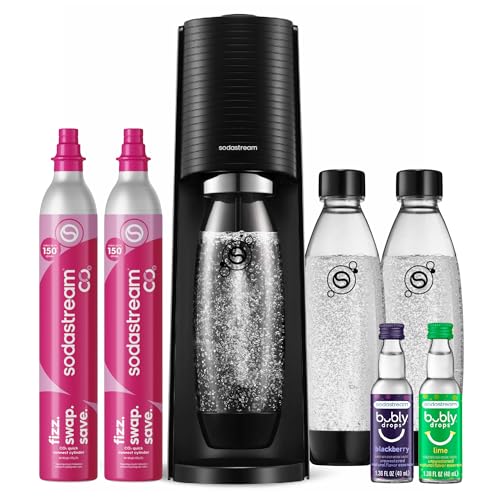
SodaStream TERRA Sparkling Water Maker, Value Bundle, CQC CO2 System, Includes 2 Quick Connect 60L CO2 Cylinders, 3 Dishwasher Safe BPA Free Bottles, 2 bubly Flavor Drops, Make your own Pepsi, Black
- FRESH FIZZ ON DEMAND: The SodaStream TERRA turns plain tap water into fresh sparkling water in seconds, right on your countertop. One slow press gives a light fizz, a few more build a stronger bubble. This carbonated water machine puts every glass exactly where you like it, made by you, every time.
- A SECURE SNAP AND SEAL: The Quick Connect CO2 cylinder clicks in with one push, and the bottle snaps into place before you fizz. The seal is built to keep the bubbles in the bottle and the water off your counter, so even your first drink feels easy.
- THE QUICK CONNECT CO2 SYSTEM: Each 60L Quick Connect cylinder makes up to 60 liters (16 gallons) of sparkling water. When it runs low, return, refill, and reuse it through SodaStream CO2 cylinder exchange at participating retailers. The Quick Connect fit makes every swap simple, so you are back to fizzing fast.
- BUILT FOR DAILY USE: The reusable bottles are BPA free and dishwasher safe, ready for the next round whenever you are. The slim machine sits neatly on the counter and tucks under most upper cabinets, built to keep up with you day after day.
- ONE MACHINE, EVERY KIND OF DRINK: After fizzing your water, add flavor drops for zero sugar sparkling water, stir in Pepsi or Mountain Dew syrups for a classic soda, or add a squeeze of citrus for a fresh twist. One soda maker, every kind of drink, made by you.
- SUBSCRIBE & SAVE ON CO2 REFILLS: Subscribe & Save to get your SodaStream CO2 refills delivered straight to your doorstep. We’ll send full cylinders with a return box and a free mail return label – the return shipment is on us. Your soda streaming machine, always ready to fizz.
As an Amazon Associate we earn from qualifying purchases.
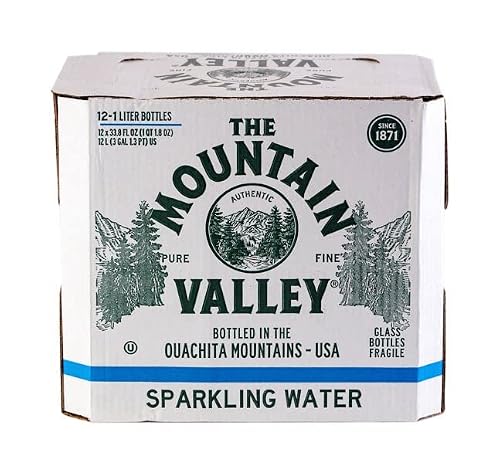
The Mountain Valley 1 Liter Sparkling Water in Glass bottle 1 Liter (Pack of 12)
- Mountain Valley Sparkling Water, Premium Glass, Gluten Free, Non GMO, 1 Liter (Pack of 12)
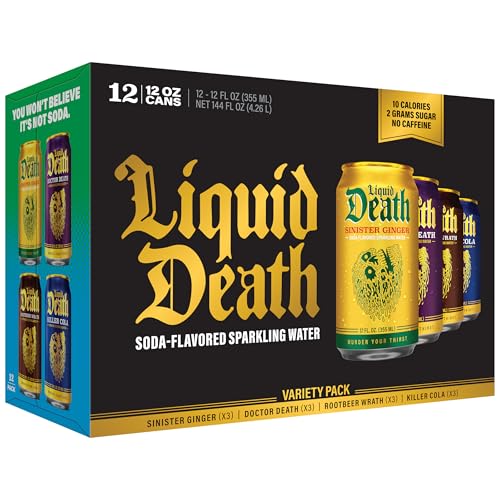
Liquid Death Soda-Flavored Sparkling Water – Classic Variety 2, Less Sugar*, Huge Flavor, No Artificial Sweeteners, 4 Flavors: Sinister Ginger, Doctor Death, Cola, Root Beer, 12 Fl Oz (Pack of 12)
- Less Sugar.* Huge Flavor.
- No Caffeine
- No Artificial Sweeteners
- 2g Sugar
- 10 Calories
- Infinitely Recyclable Cans
Polar Seltzer: Pros & Cons
Pros
- Zero calories, zero sugar, zero sweeteners
- Very low sodium compared with club sodas at 50 to 95mg per can
- Among the cheapest sparkling waters per can
- Huge flavour range and wide retail availability
- No individual compound confirmed above a regulated threshold
- Aluminium cans carry no microplastic risk
Cons
- Second-highest PFAS result in the 2020 Consumer Reports study at 6.41 ppt
- Well above the EWG’s precautionary 1 ppt guideline
- No published independent retest since 2020
- No public commitment to a filtration upgrade, unlike Topo Chico
- Uses undisclosed “natural flavors” rather than named ingredients
- Contains no beneficial minerals, unlike mineral waters at similar prices
Should You Stop Drinking Polar Seltzer?
Here is our honest read, stated as plainly as we can.
If you drink one or two cans occasionally, this is not a crisis. No individual PFAS compound in Polar has been confirmed above a regulated threshold, and 6.41 ppt total is measured in parts per trillion — an extremely small absolute quantity. Panic is not the proportionate response.
If you drink several cans daily, switching is the reasonable call. Not because Polar is dangerous, but because you can get an identical product experience from a brand with a published non-detect result at a similar price. When the alternative costs nothing extra and carries better evidence, there is no argument for staying.
What would change our view: a published, independent 2025 or 2026 lab result for Polar. If the brand has upgraded its filtration the way Topo Chico did, the number could look completely different — and we would update this page the day that data appears. Until then, the most recent evidence available is six years old, and that is the honest state of it.
Frequently Asked Questions
Does Polar Seltzer have PFAS?
Yes. Consumer Reports’ 2020 lab testing found 6.41 parts per trillion of total PFAS in Polar Natural Seltzer Water, the second-highest result of every sparkling water in that study behind Topo Chico at 9.76 ppt. No independent retest of Polar has been published since.
Is Polar Seltzer safe to drink?
For occasional drinking, yes. No individual PFAS compound in Polar has been confirmed above a regulated threshold, and the 6.41 ppt figure is a summed total across multiple compounds rather than a single-compound measurement. For heavy daily consumption, switching to a brand with a published non-detect result is the more cautious choice at no extra cost.
Does Polar Seltzer exceed the EPA’s PFAS limit?
No, and this is the most common misstatement about the brand. The EPA’s 4 ppt maximum contaminant level applies to PFOA and PFOS individually. Polar’s 6.41 ppt was a total summed across multiple compounds, so the two figures are not directly comparable. The EPA limit also governs public water systems rather than bottled beverages, which fall under FDA authority.
Has Polar Seltzer been retested since 2020?
Not with a published quantified result. Polar appears on the brand list for the 2025 Mamavation and Environmental Health News investigation, but the figure carried forward for it is still the 2020 Consumer Reports number. By contrast, Topo Chico was retested and came back at roughly 2.8 ppt, down from 9.76.
Which sparkling water has the most PFAS?
In the 2020 Consumer Reports testing, Topo Chico was highest at 9.76 ppt, with Polar second at 6.41 ppt. Topo Chico has since improved substantially to roughly 2.8 ppt after a filtration upgrade. Because Polar has not been retested, it may now hold the highest published figure in the category by default rather than by measurement.
Which sparkling waters have no PFAS?
In 2025 testing across 40 PFAS compounds, Gerolsteiner, Liquid Death, Mineragua, Mountain Valley, poppi and Zevia all returned non-detect. Sparkling Ice returned non-detect in the earlier 2020 testing. Bear in mind these are single-sample results, so they reflect one batch rather than a permanent guarantee.
Why does sparkling water have more PFAS than still water?
Both studies found carbonated waters tested worse as a category. Consumer Reports pointed to the carbonation process itself and to differences in source water. Brands that run reverse osmosis filtration before carbonating consistently test cleaner, which suggests filtration depth is the main variable rather than the bubbles.
What PFAS compounds were found in seltzer water?
The 2025 laboratory identified six: 6:2FTS, PFOA, PFBA, PFHxA, PFHpA and PFPeA. Five of these are short-chain compounds developed as replacements for the phased-out long-chain PFAS. They are less studied, currently unregulated in drinking water, and equally persistent in the environment.
Is Polar Seltzer healthier than LaCroix?
On PFAS, LaCroix has the better published record: 1.16 ppt in 2020 and 0.94 ppt in the 2025 retest, against Polar’s 6.41 ppt with no retest. Nutritionally the two are near-identical, both zero calorie, zero sugar and zero sweetener, and both use undisclosed natural flavors. LaCroix wins on evidence, not on formulation.
Can pregnant women drink Polar Seltzer?
Plain sparkling water is safe during pregnancy in general, and Polar contains no caffeine, quinine or sweeteners. That said, PFAS exposure during pregnancy is one of the better-studied areas in the literature, so if you are drinking sparkling water daily while pregnant, choosing a brand with a published non-detect result is a low-cost precaution worth taking.
Does a water filter remove PFAS from seltzer?
Not from a sealed can, no. Filtration has to happen before carbonation. The practical route is to filter your tap water with a certified reverse osmosis system and then carbonate it yourself, which is why both machines tested came back non-detect.
Does boiling remove PFAS from water?
No. Boiling concentrates PFAS rather than removing them, because water evaporates and the compounds do not. See our full explanation of why boiling does not remove PFAS.
Who owns Polar Seltzer?
Polar Beverages is an independent, family-owned company based in Worcester, Massachusetts, rather than part of Coca-Cola or PepsiCo like several competitors. That independence is relevant here mainly because it means there is no large parent company publicly committing to filtration upgrades, as Coca-Cola did for Topo Chico.
How much PFAS is safe to drink?
There is no established safe level. The EPA sets enforceable limits of 4 ppt for PFOA and PFOS individually in public drinking water, while the Environmental Working Group recommends a precautionary total below 1 ppt. Scientists reviewing the 2025 testing took a stricter position still, recommending against drinking beverages containing detectable PFAS at all.
Sparkling Water Deep Dives
We have published dedicated guides on the questions that come up most often from this page:
- Bottled Water Brands & PFAS: Every Major Brand Ranked — the full still and sparkling picture in one table
- Sparkling Water Without PFAS — every tested brand ranked, plus the popular ones with no published data
- Healthiest Sparkling Water: 8 Brands Ranked — PFAS, sodium, sweeteners and packaging combined
- Is Topo Chico Bad for You? — the brand that actually did improve, and by how much
- Best Plain Unflavored Sparkling Water — ranked by carbonation, minerals and tested PFAS
- Best Water Filters for PFAS — what certification actually covers PFAS reduction
- How to Test Your Water for PFAS at Home — step by step
References & Sources
- Consumer Reports — What’s Really in Your Bottled Water (2020 PFAS testing)
- Mamavation & Environmental Health News — Sparkling Waters Tested for PFAS (2025)
- US EPA — PFAS National Primary Drinking Water Regulation
- ATSDR — PFAS Health Effects
- FDA — PFAS in Food and Bottled Water
- CBS News — Coverage of the Consumer Reports sparkling water findings
The Bottom Line
Polar Seltzer tested at 6.41 ppt of total PFAS in 2020, second-highest in its category and well above the EWG’s precautionary 1 ppt guideline. Two corrections belong alongside that number: it does not mean Polar exceeds the EPA’s 4 ppt limit, which applies to individual compounds and to public water systems rather than bottled beverages — and it is a six-year-old figure that nobody has independently updated. Topo Chico went from 9.76 ppt to roughly 2.8 after a filtration upgrade, which proves the number can move. Whether Polar’s has, nobody outside the company knows. If you drink it occasionally, that uncertainty is not worth losing sleep over. If you drink it daily, the brands that tested non-detect cost about the same and carry better evidence, so there is little reason not to switch. We will update this page the moment a new independent result is published.