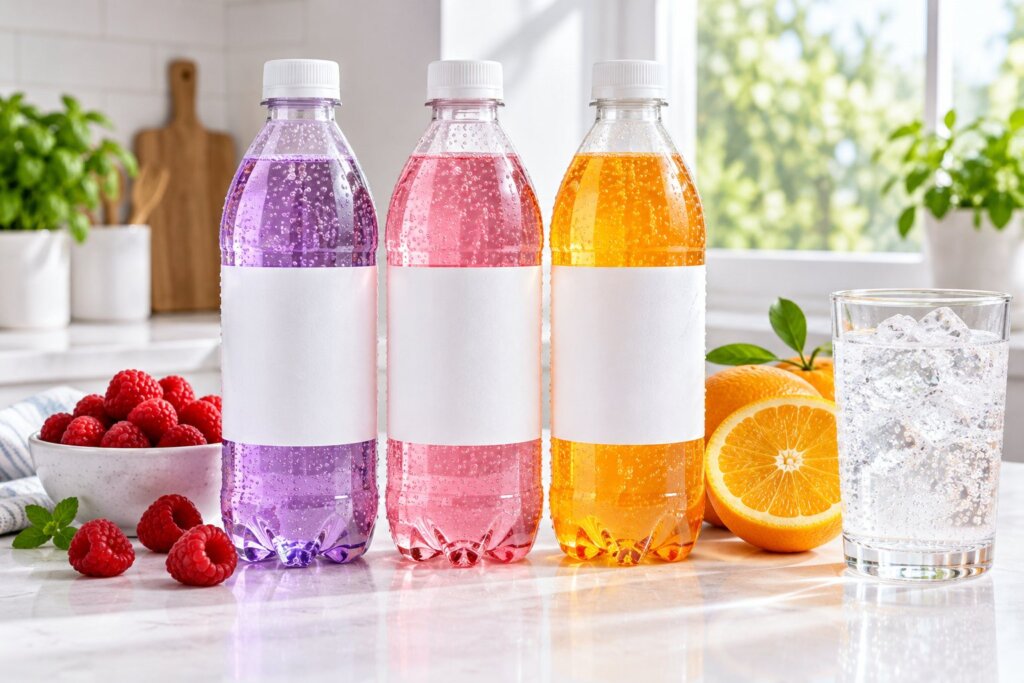
Is Sparkling Ice good for you? As a swap for soda, yes in our view: a 17-ounce bottle has 5 calories and zero sugar, against about 32 grams of sugar in a 12-ounce lemon-lime soda by USDA figures. As a replacement for plain water, it is a step down. It is sweetened with sucralose, flavored with citric acid that is harder on teeth than plain bubbles, and two of its lines add caffeine.
We read the brand’s own ingredient lists and FAQ, then checked each ingredient against what FDA, the World Health Organization and the American Dental Association say. Here is what is in the bottle and who should drink less of it.
What is in Sparkling Ice?
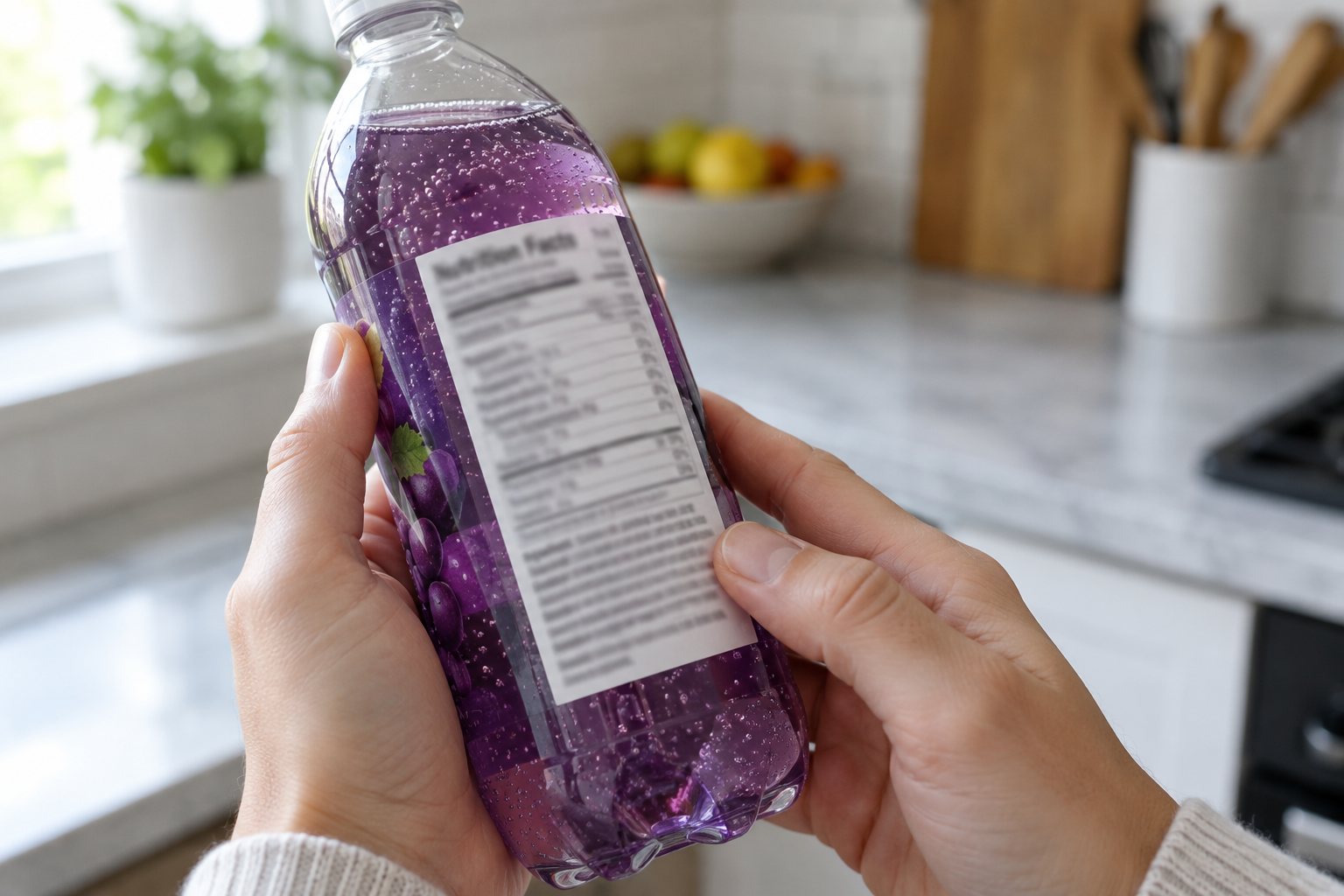
Mostly carbonated water. The Black Raspberry label lists, after carbonated water, “2% or less” of the following:
- Blackberry juice concentrate, plus fruit and vegetable juice for color
- Natural flavors and green tea extract
- Vitamins E, B3 (niacin), B5, B6, B12 and biotin, each at 15% of the Daily Value
- Sucralose, the sweetener
- Citric acid and tartaric acid
- Gum arabic
- Potassium benzoate, a preservative
The brand says the drinks contain 1% juice and no artificial dyes. Its FAQ explains why the label now reads 5 calories: one bottle is labeled as one serving instead of two, so “the calories shown reflect the larger serving size.” The juice used for color brings natural sugars, and the company says it “reduced the juice content” to keep the zero-sugar claim.
Is the sucralose in Sparkling Ice safe?
FDA considers it safe within its limit. Sparkling Ice confirms “we use sucralose in all of our Sparkling Ice products,” and FDA sets an acceptable daily intake for sucralose of 5 milligrams per kilogram of body weight per day. For a 150-pound (68 kg) adult, that is about 340 milligrams a day. The company does not publish how much sucralose is in a bottle, so we cannot tell you how many bottles that equals.
The bigger question is weight. In 2023 the World Health Organization advised against using non-sugar sweeteners to control weight, saying “replacing free sugars with NSS does not help with weight control in the long term.” So Sparkling Ice cuts sugar, but do not count on it to cut pounds.
Is Sparkling Ice bad for your teeth?
More than plain sparkling water, less than soda with sugar. The citric acid is the issue. The American Dental Association’s MouthHealthy site says plain sparkling water is generally fine for teeth, but “citrus-flavored waters often have higher acid levels that does increase the risk of damage to your enamel,” and suggests drinking them in one sitting or with meals. Sparkling Ice lists citric acid in its flavors, so we would follow that advice: drink it with food rather than sipping a bottle all afternoon. Our page on whether sparkling water is good for you covers the teeth research for plain bubbles.
How much caffeine is in Sparkling Ice?
None in the classic flavors, which are labeled caffeine free. Two lines add it. The brand’s FAQ says Sparkling Ice Caffeine has 70 mg per 16 ounce can and Sparkling Ice Energy has 160 mg per 12 ounce can. For comparison, FDA cites 400 milligrams a day as an amount not generally linked to negative effects for most adults. The company’s own FAQ says Sparkling Ice Energy “is not recommended for children, pregnant or nursing women,” or people sensitive to caffeine. Check the can before you hand one to a kid.
Does Sparkling Ice have PFAS?
In the only published lab test we know of, no. Consumer Reports’ 2020 tests of carbonated water found no detectable PFAS in Sparkling Ice Black Raspberry, the lowest result of any sparkling water in that test. That was one flavor, tested once, in 2020. Our page on sparkling water without PFAS has the full results for every brand.
Is it okay to drink one Sparkling Ice a day?
For most healthy adults, yes, in our view. One bottle a day adds 5 calories, no sugar, and an amount of sucralose FDA considers within its safety limit. We would still make plain water the main drink of the day, keep the caffeinated lines away from kids, and drink it with a meal to go easier on teeth. If one a day is replacing a soda, that is a clear improvement on sugar.
What we would buy for this job
- Sparkling Ice Purple Variety Pack, 17 fl oz, 12 count: includes Black Raspberry, the one flavor Consumer Reports tested for PFAS in 2020, plus Cherry Limeade, Orange Mango and Kiwi Strawberry. All caffeine free.
As an Amazon Associate, Complete Water Guide earns from qualifying purchases. Prices change, so check the listing.
Is Sparkling Ice okay for your kidneys?
We found no study on Sparkling Ice and kidney health, so we cannot give you a yes or no. Two things on the labels matter if you are on a kidney diet. The ingredient lists we read contain no phosphoric acid, the acid used in many colas. Some flavors do list potassium on the nutrition panel, for example 355 mg on one Starburst-flavored variety. If your doctor or dietitian limits potassium, check the label of the flavor you buy and ask them.
Is Sparkling Ice good for you compared with soda and plain sparkling water?
| Plain sparkling water | Sparkling Ice (classic) | Lemon-lime soda, 12 oz | |
|---|---|---|---|
| Calories | 0 | 5 per 17 oz bottle | about 130 |
| Sugar | 0 g | 0 g | about 32 g |
| Sweetener | None | Sucralose | Sugar |
| Added acids | None | Citric, tartaric | Citric |
| Caffeine | None | None (classic line) | None in most lemon-lime |
The soda figures come from USDA FoodData Central’s entry for Sprite at 8.98 grams of sugar per 100 grams; the calorie figure is our estimate from sugar alone at 4 calories per gram. If you want the cleanest option, plain sparkling water with a squeeze of fruit wins, and unsweetened brands such as the one in our Spindrift review use real juice instead of a sweetener; our ranking of the best zero calorie sparkling water and the healthiest sparkling water for daily drinking compare the options.
Frequently asked questions
Is Sparkling Ice good for you?
It is a better choice than sugary soda, with 5 calories and zero sugar per 17 ounce bottle, but not as good as plain water. It is sweetened with sucralose, contains citric acid that can wear enamel, and two lines contain caffeine.
Is it okay to drink one Sparkling Ice a day?
For most healthy adults, yes. One bottle is 5 calories with no sugar, and its sucralose is within FDA’s acceptable daily intake. Drink it with a meal and keep plain water as your main drink.
Does Sparkling Ice have caffeine?
The classic flavors are caffeine free. Sparkling Ice Caffeine has 70 mg per 16 ounce can and Sparkling Ice Energy has 160 mg per 12 ounce can, according to the brand.
What sweetener is in Sparkling Ice?
Sucralose. The brand says it uses sucralose in all of its Sparkling Ice products. FDA’s acceptable daily intake for sucralose is 5 milligrams per kilogram of body weight per day.
Is Sparkling Ice okay for your kidneys?
We found no study on it. The labels we read contain no phosphoric acid, but some flavors list potassium, so anyone on a potassium-restricted diet should check the label and ask their doctor.
Does Sparkling Ice have PFAS?
Consumer Reports’ 2020 testing found no detectable PFAS in Sparkling Ice Black Raspberry. That was one flavor tested once, and no newer published test exists that we know of.
Sources
- Sparkling Ice, Black Raspberry product page (ingredients, Daily Values) and FAQ (sucralose, 5 calorie relabel, juice content, caffeine in Caffeine and Energy lines, Energy not for children or pregnant or nursing women); Starburst variety nutrition panel (potassium).
- U.S. Food and Drug Administration, Aspartame and Other Sweeteners in Food: sucralose acceptable daily intake 5 mg/kg body weight per day.
- U.S. Food and Drug Administration, Spilling the Beans: How Much Caffeine Is Too Much: 400 mg a day for most adults.
- World Health Organization, May 15, 2023: WHO advises not to use non-sugar sweeteners for weight control.
- American Dental Association, MouthHealthy: The truth about sparkling water and your teeth.
- Consumer Reports, carbonated water PFAS testing, 2020, as compiled on our sparkling water without PFAS page.
- USDA FoodData Central: Sprite lemon-lime (FDC 173206).