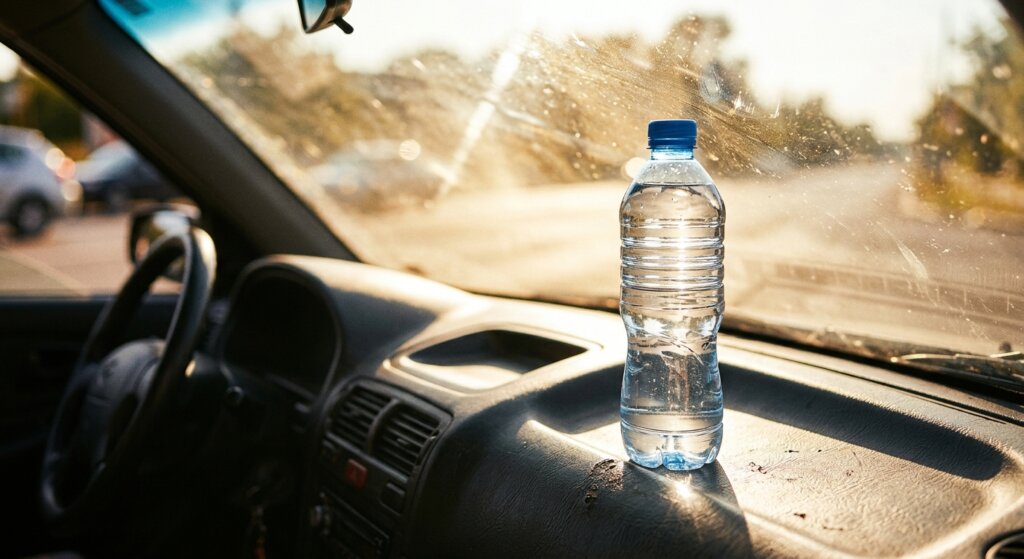
It is a familiar summer scene: a plastic water bottle rolling around the car floor for days, baking in the heat. Then you get thirsty and wonder — is that still safe to drink?
The concern is real but often exaggerated online. Here is what actually happens to water bottles left in a hot car, what the science says about chemicals like BPA and microplastics, and when you genuinely should not drink it.
How Hot Does a Car Actually Get?
A parked car in summer becomes an oven surprisingly fast. On a warm day, the interior can climb far above the outside temperature within an hour, and the dashboard and floor areas get hotter still under direct sun.
The numbers are more extreme than most people expect. Vehicle-heat research consistently finds the same pattern:
| Outside temp | Cabin after 60 min | Dashboard surface |
|---|---|---|
| 70°F (21°C) | ~115°F (46°C) | ~130°F (54°C) |
| 80°F (27°C) | ~123°F (51°C) | ~150°F (66°C) |
| 90°F (32°C) | ~140°F (60°C) | ~172°F (78°C) |
| 100°F (38°C) | ~145°F (63°C) | ~180°F (82°C) |
Roughly 80% of that temperature rise happens in the first 30 minutes, and cracking the windows barely changes it. A bottle on the dashboard or passenger seat in direct sun is the worst spot; the floor and trunk stay meaningfully cooler.
That heat is the driver behind every concern in this article — it accelerates chemical migration from plastic and creates ideal conditions for bacteria in an opened bottle. Understanding the actual magnitude of each risk is what separates useful caution from internet panic.
What Heat Does to the Plastic
Most disposable water bottles are made from PET plastic (marked with recycling code 1). PET is generally considered safe for single use and does not contain BPA.
When plastic is heated, the rate at which trace compounds can migrate into the water increases. This is basic chemistry — higher temperatures speed up migration. The key questions are which compounds, and how much.
For PET bottles, the compounds of interest are mainly antimony (a catalyst used in manufacturing) and, in some plastics, trace BPA. Studies that heat bottles to high temperatures do detect increases in these substances — but the amounts, and whether they cross safety thresholds, are what matter.
BPA, Antimony & the Real Numbers
Here is the reassuring part, with the actual figures. The EPA limit for antimony in drinking water is 6 ppb (parts per billion). A fresh bottle of water typically measures around 0.2-0.4 ppb — roughly 15 to 30 times below the limit.
Heat does push that number up, but the scale matters. Studies that store PET bottles at around 140°F (60°C) — realistic hot-car conditions — find antimony climbing to roughly 0.6-1.5 ppb after several days. That is a real increase, and still comfortably under 6 ppb. To actually breach the limit, researchers generally need sustained temperatures above 150°F for weeks or months, which is closer to a storage-container scenario than an afternoon commute.
The scary studies usually involve extreme conditions — very high temperatures sustained over many days or weeks — which is quite different from grabbing a bottle that spent an afternoon in your car. Duration and temperature together determine the exposure, and brief heating produces small increases.
Most modern water bottles are also BPA-free by design, since PET does not use BPA. The BPA concern is more relevant to older hard polycarbonate bottles (recycling code 7), which is why those are far less common now.
Microplastics & Heat
Microplastics are a newer and still-developing area of research. Bottled water already contains some microplastic particles, and there is evidence that heat and physical stress can increase how many particles shed from the plastic into the water.
What is not yet well established is exactly how much a hot-car exposure adds, or what the health implications of these levels are for humans. The science is genuinely unsettled here, so honest caution rather than alarm is the right stance.
The practical takeaway: if you want to minimise microplastic intake, avoiding repeatedly heat-cycled single-use bottles is sensible, and a reusable metal or glass bottle sidesteps the question. Our guide to plastic water bottles and heat goes deeper on this.
The Bigger Risk: Bacteria
Ironically, the risk people worry about least is often the most real. Once you drink from a bottle, you introduce bacteria from your mouth into the water. In a warm car, that water becomes an ideal incubator.
The mechanism is simple and fast. Bacteria in the 40-140°F (4-60°C) “danger zone” can double roughly every 20 minutes. A car interior sits squarely in that range for most of the day. A single backwash sip introducing even a small colony can multiply into millions of cells within a few hours — which is why food-safety guidance caps perishables at 2 hours above 90°F, and why an opened bottle in a hot car deserves the same treatment.
This is a far more common cause of an upset stomach than any plastic chemical, and it is the part of the question the internet almost always gets backwards.
A sealed, never-opened bottle is much safer in this respect, because no mouth bacteria have been introduced. The bacterial risk is overwhelmingly about opened bottles that have been sitting warm for hours or days.
When It’s Fine vs When to Toss It
Putting it together, here is a simple framework for the everyday decision.
Generally fine: a sealed, unopened bottle that spent a day or two in a warm car. The water may taste warm or slightly plastic-y, but it is very unlikely to harm you. If it tastes off, that is aesthetic, not necessarily dangerous.
Best avoided: an opened bottle you have been sipping from that has sat warm for many hours (bacteria); any bottle that has been heat-cycled in the car for weeks or months (cumulative migration and degradation); and any bottle showing cloudiness, odd smell, or visible residue.
When genuinely unsure, the cost of pouring it out and refilling is tiny compared to the discomfort of a stomach upset, so err toward tossing questionable bottles.
| Scenario | Verdict | Why |
|---|---|---|
| Sealed bottle, 1 day in car | Drink it | Antimony well under 6 ppb; no bacteria entry |
| Sealed bottle, 2-7 days | Usually fine | May taste plastic-y; still below limits |
| Opened bottle, under 4 hours | Drink it | Bacteria have not had time to build up |
| Opened bottle, 4+ hours warm | Toss it | Backwash bacteria double every ~20 min |
| Any bottle, weeks or months | Toss it | Cumulative migration plus plastic degradation |
| Cloudy, odd smell, residue | Toss it | Visible spoilage regardless of timeline |
Which Bottles Handle Heat Best
If hot cars are a regular part of your life — commuting, road trips, work vehicles — the container you choose makes the whole question easier.
- Stainless steel: the best all-round choice. No plastic chemistry concerns, and insulated versions keep water cool for hours even in a hot car.
- Glass: chemically inert and taste-neutral, though heavier and breakable — better for daily carry than rough car use.
- BPA-free reusable plastic (Tritan and similar): designed to tolerate more heat than single-use PET, a reasonable middle ground.
- Single-use PET: fine for one-off use, but not designed for repeated heat cycling and reuse.
For anyone who keeps water in the car routinely, an insulated stainless steel bottle removes both the chemical and the warm-water problems in one move.
As an Amazon Associate we earn from qualifying purchases. It never changes what we recommend.
Hydro Flask Wide Mouth (32 oz)
Double-wall vacuum insulation keeps water cold up to 24 hours, even in a 140°F cabin. Stainless steel means zero antimony or microplastic questions.
Iron Flask Sports Bottle (32 oz)
Same double-wall insulation at roughly half the price, with three lids included. 18/8 stainless, BPA-free, and fits most car cupholders in the 24 oz size.
Practical Summer Tips
A few simple habits keep your car water safe and drinkable through the hottest months.
- Keep spare water in the trunk or a cooler rather than on a sun-baked dashboard.
- Use an insulated reusable bottle for anything you will actually drink.
- Do not reuse the same single-use bottle for days in a hot car — grab a fresh one or switch to reusable.
- Toss any opened bottle that has been warm for hours, especially if you have sipped from it.
- If a sealed bottle tastes strongly of plastic, it is safe but unpleasant — use it for washing hands rather than drinking.
Frequently Asked Questions
Is it safe to drink water from a bottle left in a hot car?
For a sealed bottle drunk once or occasionally, yes — it is very unlikely to harm you. Heat causes only tiny amounts of chemicals to migrate, far below safety limits from a single exposure. The bigger concerns are bacterial growth in opened bottles and drinking unpleasantly warm water.
Does heat release BPA into bottled water?
Most disposable water bottles are made from PET plastic, which does not contain BPA. BPA is associated with older hard polycarbonate bottles. Heat can increase migration of trace compounds like antimony from PET, but occasional exposure keeps levels below drinking-water safety thresholds.
Can a water bottle in a hot car make you sick?
The most likely way is bacterial, not chemical. Once you drink from a bottle, mouth bacteria enter the water, and a warm car lets them multiply. An opened bottle left warm for many hours is the real sickness risk — far more than any plastic chemical from occasional heating.
How long can water sit in a hot car before it’s unsafe?
A sealed bottle is safe for 1-2 days in a hot car, though it may taste warm or plastic-y. An opened bottle you have sipped from should be discarded after about 4 hours, because backwash bacteria double roughly every 20 minutes in the 40-140°F range. Any bottle heat-cycled for weeks or months should be thrown out regardless.
Do microplastics increase when bottles get hot?
Evidence suggests heat and physical stress can increase the number of microplastic particles shedding into water. However, exactly how much a hot-car exposure adds, and the health implications, are still being researched. Avoiding repeatedly heated single-use bottles is a sensible precaution.
Is it bad to refreeze or reuse a hot-car bottle?
Single-use PET bottles are not designed for repeated reuse, especially after heat cycling, which can degrade the plastic and encourage bacteria in the threads and mouthpiece. For repeated use, choose a reusable stainless steel or BPA-free bottle instead.
Why does hot-car water taste like plastic?
Heat speeds up the migration of trace compounds from the plastic, which can produce a faint plastic taste. This is usually an aesthetic issue rather than a danger from a single exposure, but a strong plastic taste is a good reason to choose a fresh bottle.
What is the safest bottle to keep in a car?
An insulated stainless steel bottle is the safest choice: no plastic chemistry concerns and it keeps water cool for hours even in a hot car. Glass is also inert but breakable. These remove both the chemical and the warm-water problems that come with single-use plastic.
Related Guides
- What Heat Does to Plastic Water Bottles
- Bottled Water and PFAS: Which Brands to Know
- Does Water Expire? Bottled Storage Facts
- Best Insulated Water Bottles (Beyond Stanley)
- How to Clean a Stainless Steel Water Bottle
References & Sources
- FDA — Bisphenol A (BPA) Information
- EPA — Ground Water and Drinking Water
- CDC — Water and Healthier Drinks
The Bottom Line
Drinking from a bottle that spent an afternoon in a hot car once in a while is not going to hurt you — the chemical migration from a single exposure sits well below safety limits, and most bottles are BPA-free PET to begin with.
The smarter worries are bacteria in an opened bottle you have sipped from and left warm, and the cumulative effect of reusing heat-cycled single-use bottles. Keep water out of direct sun, switch to an insulated reusable bottle for anything you will actually drink, and toss questionable bottles without a second thought.