

Sparkling Water and Kidney Stones: What the Science Suggests (2025 Guide)
Updated on • For U.S. readers
Kidney stones are common in the U.S., and the biggest lifestyle lever is simple: drink enough fluids. Many people find they drink more when water is bubbly and flavorful, which is why the sparkling question comes up. Let’s break down what actually affects stone risk—and how to use seltzer smartly in your routine.
Kidney Stone Basics (Fast Primer)
Not all stones are the same, but most U.S. cases are calcium oxalate. Others include calcium phosphate, uric acid, cystine, and struvite stones. Fluid and diet tips can differ by stone type, so if you have a history of stones, ask your urologist for a metabolic evaluation (urine testing, stone analysis).
- Universal theme: More fluid → more urine volume → fewer crystals can form.
- Calcium oxalate: Citrate (in urine) is protective; sodium excess can raise urinary calcium (not ideal).
- Uric acid: Concentrated, acidic urine drives risk; volume and alkalinization help.
Does Carbonation Increase Kidney Stone Risk?
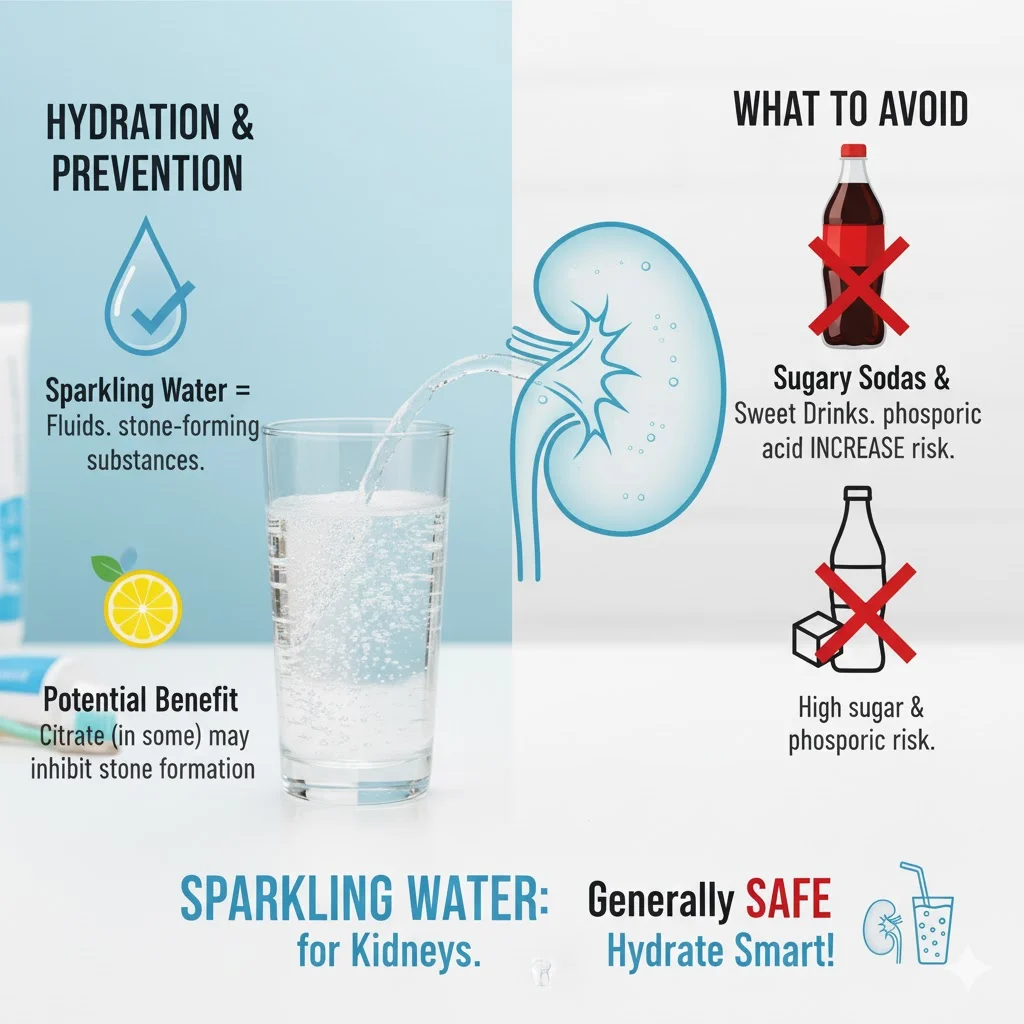
For plain seltzer (carbonated water with natural flavors, no sugar), there’s no strong evidence that carbonation alone raises stone risk. The generated carbonic acid is weak and does not add meaningful “stone-forming” load in typical drinking patterns.
- Different from colas: Some studies link cola beverages (often with phosphoric acid and sugar) to higher stone risk. That’s a different category from plain seltzer.
- Watch the label: If “sparkling” means soda with sugar or syrups, treat it like a sugary drink—not kidney-stone-friendly.
Sodium, Minerals, and Your Sparkling Picks
Some sparkling waters add a pinch of sodium for taste. It’s small, but if you drink many cans daily, sodium can add up—and higher sodium intake may increase urinary calcium, a consideration for calcium stone formers.
- Choose low-sodium: Look for “0 mg” or “very low” sodium on the Nutrition Facts.
- Mineral waters: Natural sparkling mineral waters vary (calcium, magnesium, bicarbonate). These minerals aren’t inherently bad; the overall diet pattern still rules.
- Balance matters: If your clinician asked you to moderate sodium, let the label guide your sparkling picks.
Citrus and Citrate: A Helpful Angle
Citrate in urine binds calcium, helping keep crystals from forming. That’s why clinicians sometimes recommend lemon or lime in water. With sparkling water, you can:
- Add a squeeze: Fresh lemon or lime to plain seltzer (no sugar) can boost citrate intake.
- Choose citrus flavors: Unsweetened lemon/lime seltzers are convenient. Taste first—no sugar or juice added.
- Avoid sweetened “sparkling lemonades”: Sugar can increase risk for certain stones and adds calories.
Side note for enamel: citrus flavorings are more acidic on teeth. If that’s a concern, read our dentist-informed guide Sparkling Water and Teeth for safe sipping tips.
Hydration Targets (What Counts and How Much?)
Clinicians often aim for urine output around 2–2.5 liters/day to reduce recurrence risk. Your exact goal can vary (ask your provider), but here’s how sparkling fits:
- Yes, it counts: Plain, unsweetened sparkling water counts toward total fluids.
- Mix it up: Combine still water and seltzer so you comfortably hit your volume target.
- Make it routine: Anchor drinks to habits—wake-up, with meals, mid-afternoon—to avoid long dry gaps.
What to Limit (for Stone Prevention)
Your urologist’s plan should lead, but these general guardrails help many calcium-oxalate stone formers:
- High-sugar beverages: Sugary sodas/teas/juices can worsen risk and add calories.
- Cola intake: Colas (phosphoric acid + sugar or sweeteners) have been associated with higher stone risk—limit or avoid.
- Excess sodium: Too much salt can raise urinary calcium. Choose low-sodium foods and beverages.
- Overdoing vitamin C supplements: Very high doses can convert to oxalate—ask your clinician before megadosing.
- Alcohol and dehydration: Alcohol is diuretic; chase drinks with water and watch total hydration.
The Bigger Picture: Diet Patterns that Help
Beverages are one piece. Many U.S. clinicians recommend a “stone-smart” eating pattern resembling DASH/Mediterranean styles:
- Normal calcium intake from food: Don’t cut dietary calcium unless your clinician says to; calcium binds oxalate in the gut.
- More fruits/vegetables/legumes: These boost potassium and citrate and may help keep urine less stone-forming.
- Protein balance: Moderate animal protein; include plant proteins.
- Sodium control: Season with herbs/spices; check labels to keep daily sodium in a healthy range.
- Oxalate strategy (if advised): If you were told to moderate high-oxalate foods (e.g., spinach, almonds), pair them with calcium foods at meals.
Practical Sparkling Tips (Do This, Not That)
- Do: Keep plain seltzer cold and handy; you’ll drink more.
- Do: Add lemon/lime (fresh) for citrate; avoid added sugars.
- Do: Rotate with still water to meet daily volume targets.
- Don’t: Assume all “sparkling” is healthy—skip soda-style and tonic waters with sugar/syrups.
- Don’t: Ignore sodium; pick low-sodium labels if you’re a frequent seltzer drinker.
Related Reading
Concerned about enamel while you increase citrus or bubbles? See our dentist-informed guide Sparkling Water and Teeth. For broader education on brands, nutrition, and hydration, visit the Sparkling Water hub.
FAQs
Is sparkling water bad for kidney stones?
- Plain, unsweetened seltzer is generally fine and helps you hit hydration goals.
- Risks rise with sugary sodas and high-sodium patterns—not with carbonation itself.
Does lemon seltzer help?
- Citrus can increase urinary citrate (protective for calcium oxalate stones).
- Pick unsweetened lemon/lime flavors or add fresh lemon to plain seltzer.
How much should I drink daily?
- Enough to produce pale-yellow urine; many clinicians aim for ≈2–2.5 L urine/day.
- Mix still and sparkling to make the target realistic and sustainable.
Which sparkling waters should I avoid?
- Soda-style “sparkling” drinks with sugar/syrups.
- High-sodium seltzers if you’re drinking many cans per day.
