


Does Boiling Water Remove Chlorine or Fluoride? A Practical 2025 Guide
Updated on
Boiling removes free chlorine, but it does not remove chloramine or fluoride. Fluoride can even become slightly more concentrated as water evaporates.
- Free chlorine: Yes, boiling evaporates it.
- Chloramine: No, it is heat-resistant.
- Fluoride: No, it stays in the water.
Boiling water kills germs effectively, but chemicals react differently. Below is a simple explanation of what boiling does to chlorine, chloramine, and fluoride, and which filtration methods work better.

What Boiling Does to Chlorine
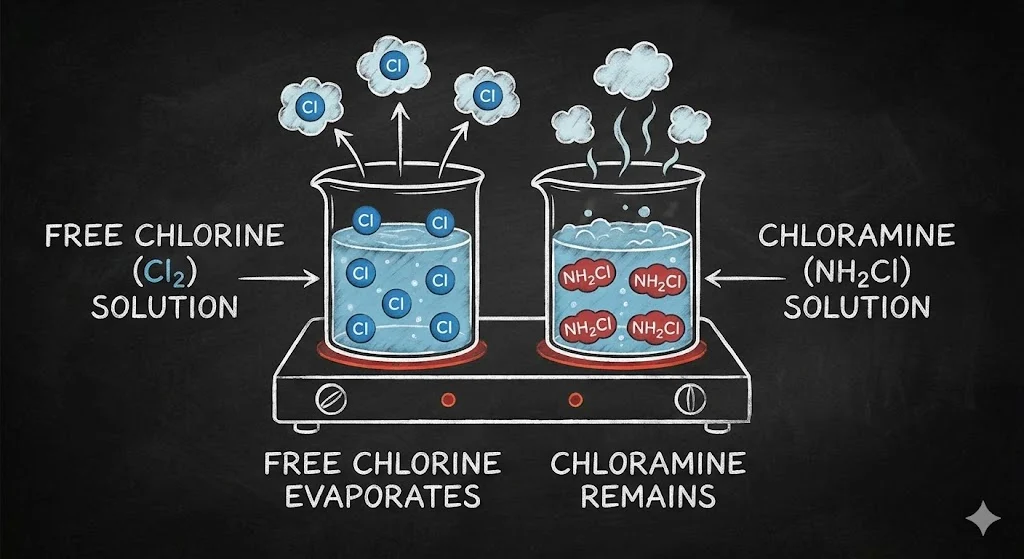
Free chlorine evaporates when water is heated. A short boil reduces chlorine taste and smell. A 10 to 15 minute boil removes most free chlorine.
Chloramine, which many U.S. cities use, does not evaporate during boiling because it is chemically stable. It requires catalytic carbon filtration or RO to break down.
What Boiling Does to Fluoride
Boiling does not remove fluoride. Since water evaporates but fluoride stays behind, the concentration can increase slightly. Removing fluoride requires reverse osmosis, distillation, or activated alumina filtration.
Better Water Treatment Options
If your goal is to remove chemicals instead of microbes, these methods work best:
| Contaminant | Effective Removal Method |
|---|---|
| Free chlorine | Carbon filters, RO systems |
| Chloramine | Catalytic carbon, RO with catalytic carbon |
| Fluoride | Reverse osmosis, distillation, activated alumina |
FAQs
Can leaving water out remove chlorine?
- Yes, free chlorine will evaporate naturally. Chloramine will not.
Does boiling get rid of fluoride?
- No, boiling does not reduce fluoride levels.
How long should I boil water to reduce chlorine?
- Boiling for about 10 to 15 minutes removes most free chlorine. This will not remove chloramine.
Does boiling make water safe from microbes?
- Yes, boiling kills bacteria, viruses, and protozoa. Bring water to a rolling boil for at least 1 minute (or 3 minutes at high altitude) during boil-water advisories.
Can household filters remove fluoride?
- Most carbon filters do not remove fluoride. Use reverse osmosis, distillation, or activated alumina to reduce fluoride.
Will boiling change the taste of water?
- Yes, boiling often reduces chlorine taste and smell, but it may concentrate minerals slightly, which can alter flavor.
References and Further Reading
{ "@type": "FAQPage", "@id": "https://completewaterguide.com/boiling-water-chlorine-fluoride#faq", "mainEntity": [ { "@type": "Question", "name": "Can leaving water out remove chlorine?", "acceptedAnswer": { "@type": "Answer", "text": "Yes, free chlorine will evaporate naturally when water is left out or boiled. However, chloramine does not evaporate and requires catalytic carbon or RO filtration to be removed." } }, { "@type": "Question", "name": "Does boiling get rid of fluoride?", "acceptedAnswer": { "@type": "Answer", "text": "No, boiling does not remove fluoride. Since only water evaporates and fluoride stays behind, its concentration can slightly increase during boiling." } }, { "@type": "Question", "name": "How long should I boil water to reduce chlorine?", "acceptedAnswer": { "@type": "Answer", "text": "Boiling for about 10 to 15 minutes removes most free chlorine. This will not remove chloramine." } }, { "@type": "Question", "name": "Does boiling make water safe from microbes?", "acceptedAnswer": { "@type": "Answer", "text": "Yes, boiling kills bacteria, viruses, and protozoa. Bring water to a rolling boil for at least 1 minute, or 3 minutes at high altitude, during boil-water advisories." } }, { "@type": "Question", "name": "Can household filters remove fluoride?", "acceptedAnswer": { "@type": "Answer", "text": "Most common carbon filters do not remove fluoride. Reverse osmosis, distillation, or activated alumina are effective options for reducing fluoride." } }, { "@type": "Question", "name": "Will boiling change the taste of water?", "acceptedAnswer": { "@type": "Answer", "text": "Boiling often reduces chlorine taste and smell, but it can slightly concentrate minerals and change flavor. Filtering can improve taste without reducing fluoride." } } ] } ] }
