
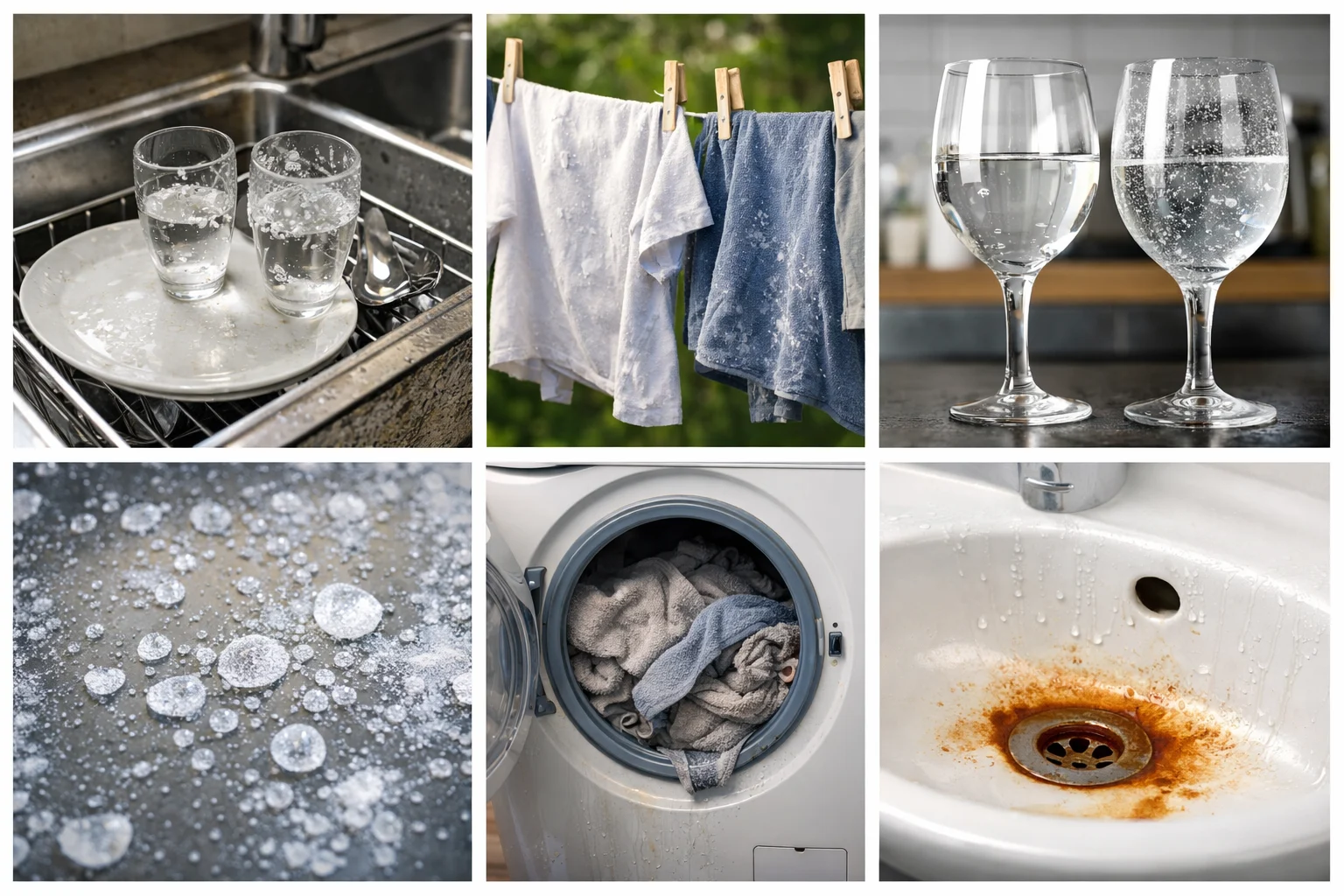

Noticing white spots on dishes or dull stains on clothes after washing? This is a common problem in many households and is usually caused by water quality issues. Understanding why your water leaves stains can help you fix the problem and protect your appliances, clothes, and utensils.
What Causes Water Stains?
Water stains occur when dissolved minerals and impurities remain on surfaces after water evaporates. Instead of drying clean, these particles settle and form visible marks on dishes, glassware, and fabrics.
Main Reasons Your Water Leaves Stains
1. Hard Water (Calcium & Magnesium)
Hard water contains high levels of calcium and magnesium. When water dries, these minerals leave behind white, chalky spots on dishes and make clothes feel stiff and dull.
2. High Iron Content
If your water contains iron, it can leave reddish-brown stains on clothes, sinks, and utensils. This is especially common in groundwater sources.
3. High TDS (Total Dissolved Solids)
Water with high TDS contains a large number of dissolved particles. These particles remain after evaporation, causing spots and residue on surfaces.
4. Detergent Residue
Using too much detergent or low-quality products can leave residue on clothes and dishes, especially when combined with hard water.
5. Improper Rinsing
Insufficient rinsing leaves behind soap and mineral deposits, leading to visible stains and streaks.
Types of Stains and What They Mean
| Stain Type | Cause | Solution |
|---|---|---|
| White spots | Hard water minerals | Use softener / rinse aid |
| Yellow/Brown stains | Iron in water | Iron filter |
| Cloudy glassware | High TDS / detergent | Better rinsing |
| Stiff clothes | Hard water | Use conditioner / softener |
How to Prevent Water Stains
- Install a water softener to remove hardness
- Use proper detergent quantity
- Add rinse aids for dishwashers
- Use vinegar occasionally to remove mineral buildup
- Dry dishes and clothes properly after washing
Natural Ways to Reduce Stains
- Use white vinegar as a natural rinse agent
- Add baking soda to improve cleaning efficiency
- Boil water (reduces temporary hardness slightly)
Natural vs Advanced Solutions
| Method | Effectiveness | Best For | Cost |
|---|---|---|---|
| Natural Methods | Low to Moderate | Temporary fix | Low |
| Water Softener / RO | High | Long-term solution | Medium to High |
Is Stained Water Harmful?
In most cases, water stains are not directly harmful, but they indicate high mineral content or impurities. Over time, this can damage appliances, reduce fabric life, and affect water taste.
FAQs
Why are my dishes cloudy after washing?
Cloudy dishes are usually caused by hard water minerals or detergent residue.
How do I remove hard water stains from clothes?
Use vinegar during rinse cycles or install a water softener for long-term results.
Can boiling water remove hardness?
Boiling can reduce temporary hardness but not permanent hardness.
Is a water softener necessary?
If you frequently see stains, a water softener is the most effective long-term solution.
Conclusion
Water stains on dishes and clothes are a sign of underlying water quality issues like hardness, high TDS, or iron content. While natural methods can help temporarily, investing in proper water treatment solutions ensures better cleaning results and long-term protection for your home.
