


Before I dive into my whole backstory with water and trust me, I have a history with trying to stay hydrated let me save you some time if you are just here for the facts.
The short answer is: Yes, sparkling water hydrates you just as well as regular water.
I used to worry about this too. I thought maybe the carbonation those bubbles that make it so satisfying—somehow “canceled out” the water part or acted as a diuretic. But after looking into it and testing it on myself, the reality is pretty simple: sparkling water is just water with carbon dioxide gas added.
Once the gas is gone (either absorbed or… well, burped out), your body treats the remaining liquid exactly the same as tap water.
So, if you are holding a can right now wondering if you should drink it go ahead. You are hydrating. However, while the water is fine, I’ve learned there are a few traps with certain brands and bottles that you need to watch out for.
The Struggle with “Boring” Water
Let’s be real for a second: drinking eight glasses of plain water a day is harder than it sounds.
For years, I treated hydration like a chore. I would stare at my water bottle on my desk, knowing I should drink it, but feeling absolutely zero motivation to do so.
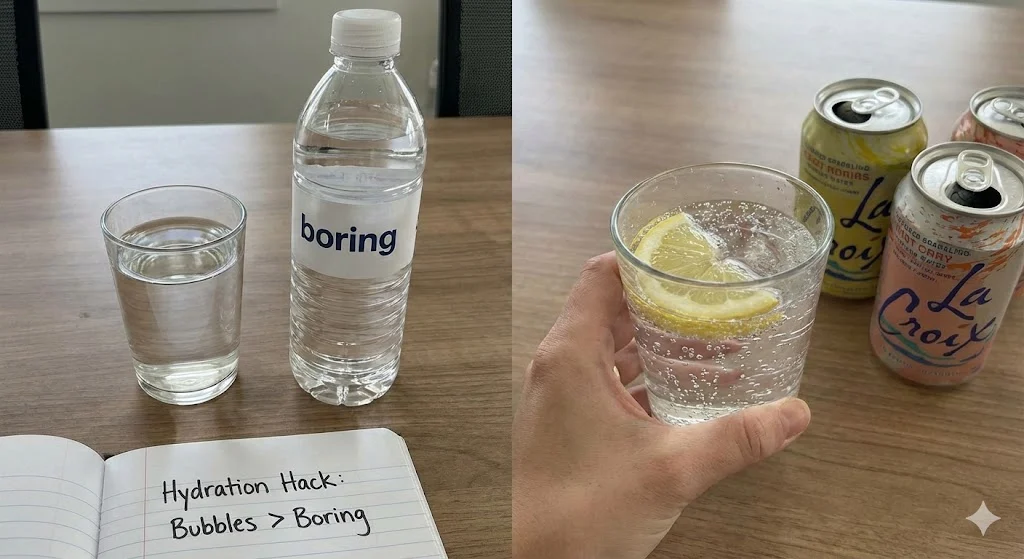
Tap water can taste flat, sometimes metallic depending on where you live, and honestly, it just lacks excitement. I found myself reaching for sodas or juices just because I wanted something with a bit of texture and flavor.
That’s when sparkling water became a game-changer for me.
It wasn’t just about the hydration; it was about the mouthfeel. That crisp bite of carbonation tricked my brain into thinking I was drinking a soda, but without the sugar crash.
Suddenly, I wasn’t forcing myself to sip; I was actually enjoying it. I went from struggling to finish a single bottle of water to easily downing two or three liters a day, purely because I switched to the fizzy stuff.
If you find plain water “boring,” you aren’t broken. You just haven’t found the right delivery system yet. For me, the bubbles were the hack I needed to finally take hydration seriously.
The “Bloat” Factor: The One Downside I Found
While I love my fizz, I have to be honest about the one drawback I discovered pretty quickly: the “False Fullness.”
Technically, sparkling water hydrates you just as well as still water ounce for ounce. The problem is, it is much harder to drink the same amount of ounces when your stomach is full of gas.
There have been times when I felt completely full and hydrated, only to realize I’d only managed to drink half a can. The carbonation expands in your stomach, which can make you feel bloated or satiated way before you’ve actually taken in enough fluids.
I learned this the hard way after a workout. I came home sweaty and thirsty, cracked open a sparkling water, and tried to chug it. Big mistake. The fizz made it impossible to gulp down, and I ended up burping more than hydrating.
My Rule of Thumb:
-
For sipping at the desk: Sparkling is perfect. It keeps things interesting.
-
For actual thirst quenching (like after the gym): I stick to still water. You just can’t beat the drinkability of plain water when your body is screaming for rapid hydration.
The Hidden Trap – Not All Bubbles Are Created Equal
This is where I almost messed up my health journey without realizing it. I used to think anything clear and bubbly was the same thing. I’d grab whatever was on the shelf Club Soda, Tonic Water, Sparkling Water—assuming it was all just H2O with gas.
I was wrong.
There is a massive difference between these drinks, and if you aren’t careful, you might be drinking a lot of things you didn’t sign up for. Here is what I learned from reading the labels:
-
Sparkling Water / Seltzer: This is what you want. It is typically just carbonated water and maybe some natural essence (flavor). No calories, no sodium.
-
Club Soda: This was a surprise to me. Club soda usually has added minerals, specifically sodium salts (like baking soda) to reduce acidity. It tastes saltier. I realized that by drinking 3-4 of these a day, I was unintentionally loading my body with extra salt, which actually made me more thirsty.
-
Tonic Water: The biggest trap of all. It looks clear like water, but it is basically a soda. It is loaded with sugar (or high fructose corn syrup) to offset the bitterness of the quinine. It has almost as many calories as a Coke.
My takeaway: Always flip the bottle over. If the ingredients list is longer than two items (Water, Carbon Dioxide), or if I see “Sodium” or “Sugar” on the nutrition label, I put it back. I want hydration, not a salt lick or a sugar crash.
Flavored vs. Plain – Walking the Fine Line
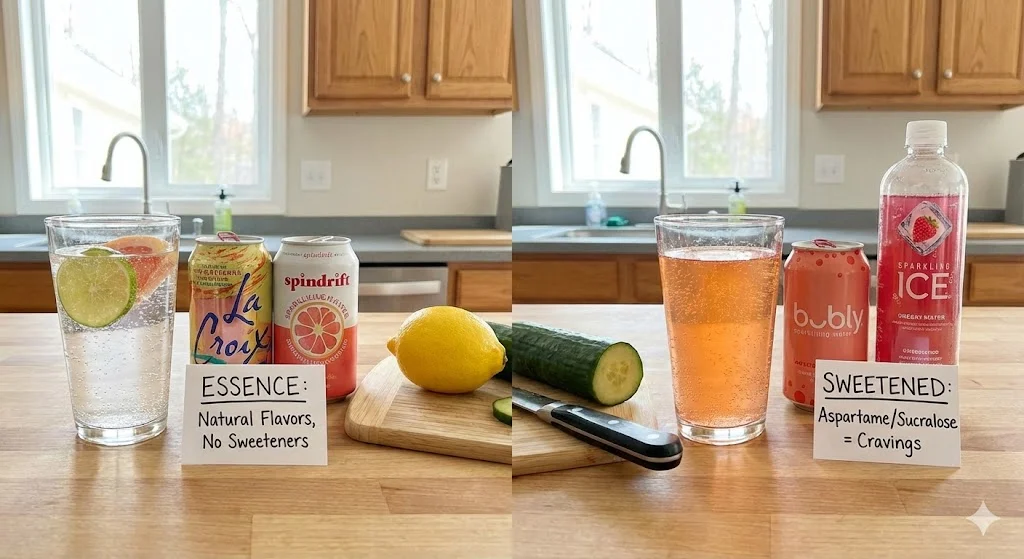
Once I got hooked on the fizz, I naturally started exploring the flavored aisle. Let’s be honest: sometimes plain sparkling water just tastes like “TV static.” A little hint of lime or grapefruit makes it way easier to down a liter in one sitting.
But I quickly realized that “flavored” is a broad term that covers a lot of sins.
I found there are two very different camps of flavored sparkling water, and my body reacts differently to them:
-
The “Essence” Ones: These are the cans that say “Natural Flavors” and contain zero sweeteners. They smell like fruit but taste mostly like water. These are my go-to. They hydrate me without tricking my brain.
-
The “Sweetened” Ones: These claim to be sparkling water, but they include aspartame, sucralose, or stevia. When I drink these, I noticed a pattern: I start craving real sugar an hour later. The sweetness tricks my brain into expecting calories that never come, which leaves me feeling hungry and unsatisfied.
My Personal Rule: If it tastes sweet, I treat it like a treat, not water. I stick to the brands that have zero sweeteners listed. If I really want flavor without the chemical aftertaste, I’ve started just squeezing a real lemon or dropping a few cucumber slices into plain sparkling water. It tastes fresher, and I know exactly what’s in it.
Wait, Is This Ruining My Teeth?
This was the final hurdle for me. Once I convinced myself that the hydration was real, a new worry popped up. A friend (who happens to be a dental hygienist) saw me nursing a can and dropped a truth bomb: “You know that stuff is acidic, right? It can wear down your enamel.”
Panic set in. Was I trading dehydration for bad teeth?
I dug into this, and here is the deal: Sparkling water is slightly more acidic than tap water because of the carbonation process (it creates mild carbonic acid). But—and this is a huge “but”—it is nowhere near as bad as soda, energy drinks, or even orange juice.
How I Manage the Risk: I didn’t stop drinking it, but I did change how I drink it based on my dentist’s advice:
-
Don’t Sip All Day: I used to nurse one can over three hours. Apparently, this keeps your mouth in a constant state of acidity. Now, I drink it with meals or finish a can in 15-20 minutes, then switch to plain water to rinse my mouth out.
-
The “No Brush” Rule: I learned you shouldn’t brush your teeth immediately after drinking something acidic because your enamel is temporarily softer. I wait at least 30 minutes.
-
Plain Over Citrus: Citrus flavors (lemon/lime) add extra citric acid on top of the carbonation. I mix it up so I’m not hitting my teeth with a double-whammy of acid every single time.
For me, the trade-off is worth it. Drinking water is healthy; not drinking water is bad. If sparkling water gets me to drink, I’ll take the slight acidity over being dehydrated any day.
The Final Verdict – My Hydration Routine
So, after all the research, the label-reading, and the occasional burping incident, where do I stand?
I still drink sparkling water every single day.
It hasn’t dehydrated me, I haven’t shriveled up like a raisin, and I honestly feel better because I’m consistently hitting my fluid goals. But I have adjusted my routine to find a healthy middle ground. I treat sparkling water as a supplement to my hydration, not the only source.
Here is what my daily routine looks like now:
-
Morning & Workout: I stick to plain, still water. When I wake up or when I’m sweating, I need volume fast, and flat water is just easier to chug.
-
The “Work Slump”: Around 2:00 PM, when I usually crave a soda or a snack, I crack open a cold sparkling water. The fizz wakes me up, and the carbonation kills the snack cravings.
-
Dinner: I usually have a sparkling water with dinner. It feels a bit fancier than tap water and slows down my eating pace.
The Bottom Line: The best water is the water you will actually drink. If the bubbles help you get your 8 glasses a day, don’t let anyone shame you out of it. Just watch the sodium, skip the added sugar, and maybe swirl some plain water around your mouth afterward.
Your body (and your hydration app) will thank you.
