Quick answer: Water exists in three states: solid (ice), liquid (water), and gas (water vapor or steam). It changes between them with temperature: ice melts to water at 0 degrees C (32 degrees F), and water boils to steam at 100 degrees C (212 degrees F) at sea level. Freezing, melting, evaporation, and condensation move water between these states. Uniquely, water expands when frozen, which is why ice floats.
Ice, water, and steam — the three states of matter for water — are all the same substance, H2O, just in different physical forms. Understanding how and why water shifts between solid, liquid, and gas is one of the clearest examples of states of matter in everyday life. Here’s a simple explanation.
The three states of water
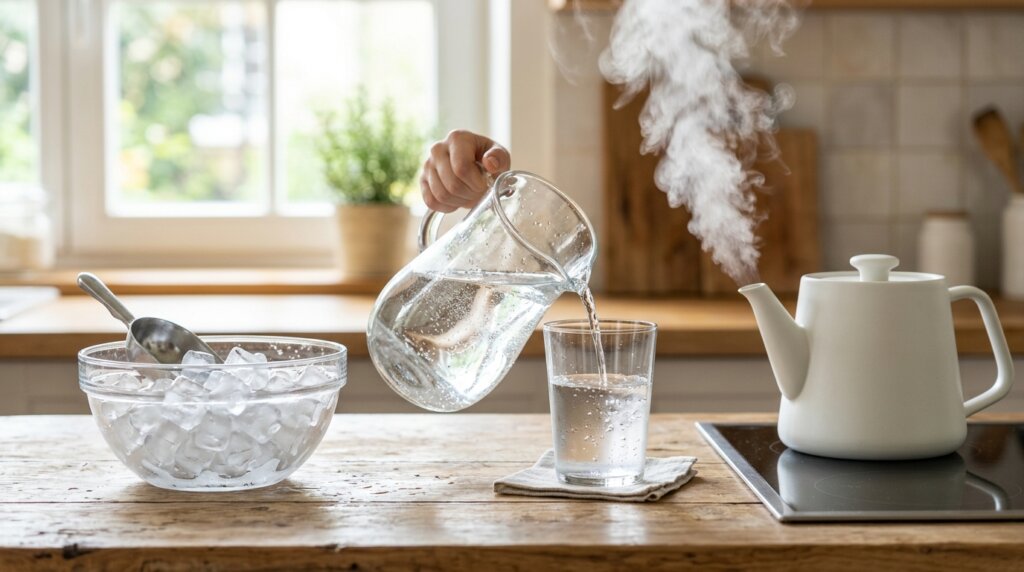
- Solid (ice): Water molecules lock into a rigid, ordered structure. Ice holds its shape.
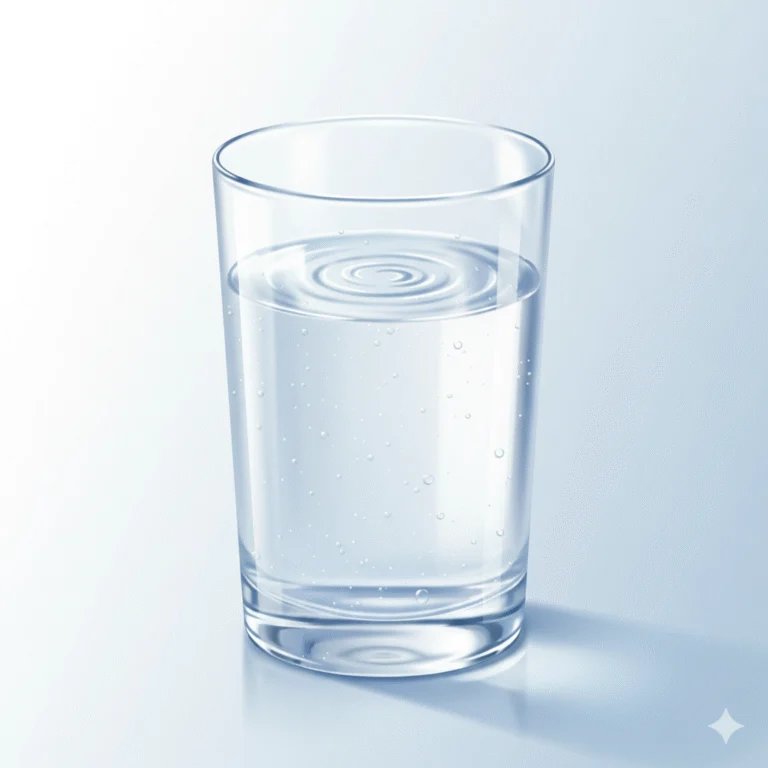
- Liquid (water): Molecules move freely but stay close together. Water flows and takes the shape of its container.
- Gas (water vapor / steam): Molecules spread far apart and move rapidly, filling any space available.
The temperatures that trigger each change
At standard sea-level pressure:
- Freezing / melting point: 0 degrees C (32 degrees F). Below this, water freezes into ice; above it, ice melts.
- Boiling / condensation point: 100 degrees C (212 degrees F). At this temperature liquid water turns to steam; when steam cools it condenses back to water.
Pressure changes these points — water boils at a lower temperature at high altitude, for example.
The changes of state, named
- Melting: solid to liquid (ice to water).
- Freezing: liquid to solid (water to ice).
- Evaporation / boiling: liquid to gas (water to steam).
- Condensation: gas to liquid (steam to water — forms clouds and fog).
- Sublimation: solid straight to gas (ice to vapor, as with dry-ice-like behavior in some conditions).
Why steam looks visible — and why ice floats
True water vapor is invisible. The white cloud you see above boiling water is actually the vapor condensing into tiny droplets as it hits cooler air — technically already partway back to liquid. And unlike almost every other substance, water expands when it freezes, making ice less dense than liquid water. That’s why ice cubes and icebergs float, and why lakes freeze from the surface down.
Why it matters
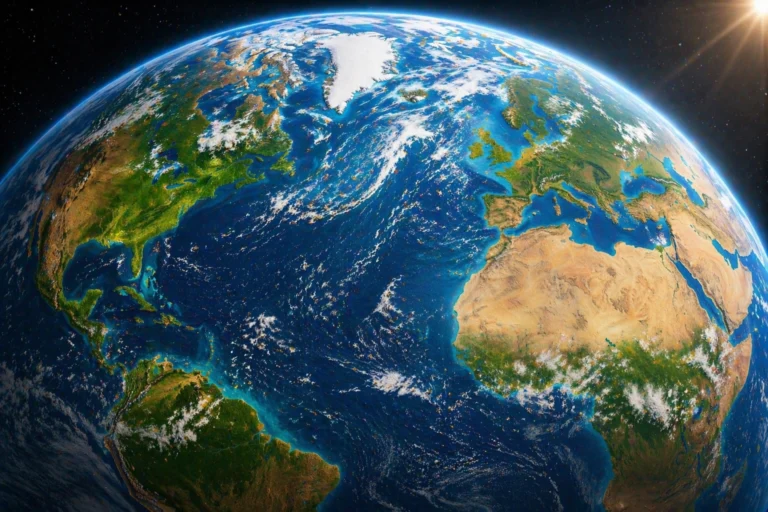
These state changes drive the entire water cycle — evaporation lifts water into the sky, condensation forms clouds, and freezing creates snow and ice. It’s the same physics whether you’re boiling a kettle or watching a glacier. Curious about water itself? Read is water wet? and what is still water?
Frequently asked questions
What are the three states of water?
Water exists as a solid (ice), a liquid (liquid water), and a gas (water vapor or steam). These are the three common states, and water can change between them through freezing, melting, evaporation, and condensation.
At what temperature does water change state?
At standard sea-level pressure, water freezes into ice at 0 degrees C (32 degrees F) and boils into steam at 100 degrees C (212 degrees F). Pressure changes these points.
Is steam the same as water vapor?
They’re related but not identical. Water vapor is the invisible gaseous form of water. Steam usually refers to the visible cloud that forms when hot vapor condenses into tiny droplets in cooler air.
Why does ice float on water?
Water is unusual: it expands when it freezes, so ice is less dense than liquid water and floats. This is why lakes freeze from the top down.
What is it called when steam turns back into water?
Condensation. When water vapor cools, it condenses back into liquid water — the same process that forms clouds, fog, and the droplets on a cold glass.
Reviewed by the Complete Water Guide team. This article is for general information and is not a substitute for professional water-quality or medical advice. We may earn a commission from some links on this page.