
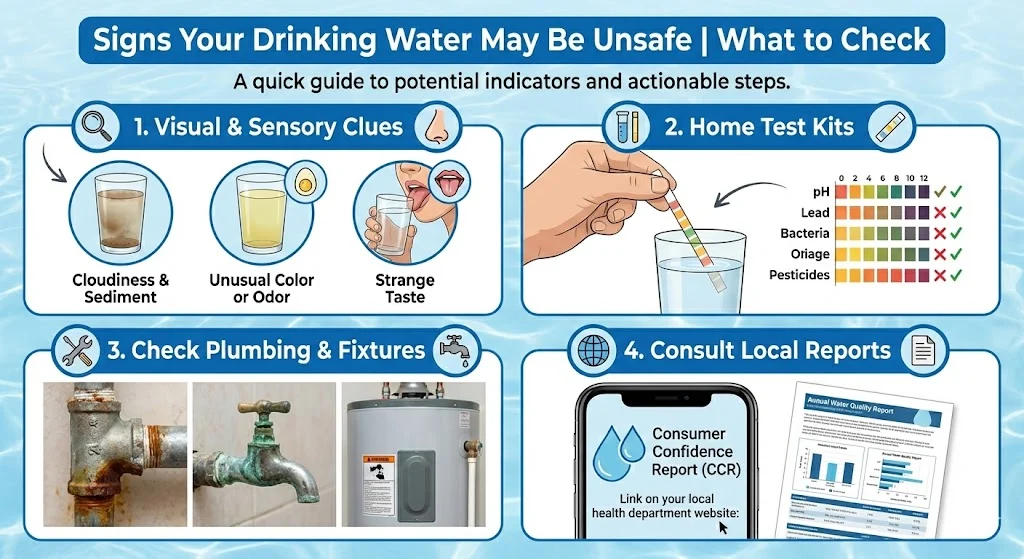

Signs Your Drinking Water May Be Unsafe (Comprehensive Guide)
Updated on
Quick Summary: Drinking water that looks, smells, or tastes unusual is a primary indicator of contamination, but some dangerous contaminants are invisible. Immediate action is required if you notice:
- Visual changes: Cloudy, brown, yellow, or blue-green tints.
- Smell or taste: Rotten eggs, chlorine, metallic, or earthy flavors.
- Health signs: Recurring stomach issues, skin irritation, or fatigue.
- Physical signs: Scale buildup on fixtures or corroded pipes.
If you suspect contamination, stop drinking the water immediately and get it tested.
Water is essential for life, but when it’s contaminated, it becomes a silent threat to your health. Most people assume that if their water comes from a municipal tap, it is automatically safe. However, the journey from the treatment plant to your glass is long and fraught with potential hazards.
Aging infrastructure, corroding pipes, main breaks, and even natural disasters can introduce harmful bacteria, heavy metals, and chemicals into your supply. While municipal water systems are heavily regulated, issues often arise in the “last mile” the service lines connecting to your home or the plumbing inside your walls.
Recognizing the warning signs is your first line of defense. While some contaminants like lead and arsenic are tasteless and odorless (requiring lab testing), many other dangers present themselves through changes in color, smell, and taste. This guide covers everything you need to check at home to ensure your family’s safety.
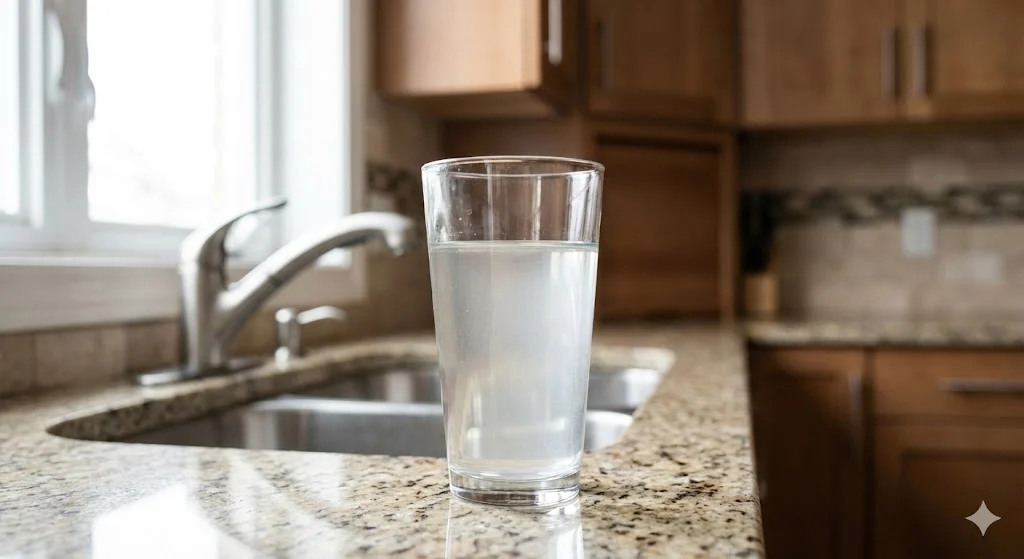
1. Unusual Color or Cloudiness
Safe drinking water should be crystal clear. When you fill a clear glass, there should be no floating particles, haziness, or discoloration. If your water looks different, it is trying to tell you something about its chemical composition or the state of your pipes.
Brown, Red, or Yellow Water
This is one of the most common complaints and usually points to rust and iron. It often happens when:
- There is a break in the water main nearby.
- The fire department is flushing hydrants (stirring up sediment).
- Your home’s galvanized iron pipes are corroding from the inside.
Is it safe? While iron itself is not toxic, it can carry bacteria and often indicates that the integrity of the pipe is compromised, potentially allowing other contaminants in.
Milky or Cloudy Water
Cloudiness (turbidity) can be tricky. Perform the “Settling Test”: fill a glass and let it sit for a few minutes.
- If it clears from the bottom up: It is likely just trapped air bubbles. This is harmless and common in cold weather.
- If the particles settle at the bottom or it stays cloudy: You have sediment, dirt, or silt in your water. This requires filtration, as bacteria and viruses often attach themselves to these particles.
Blue or Green Tint
This is a specific warning sign of copper corrosion. If your home has copper plumbing and the water is slightly acidic (low pH), it eats away at the pipes, leasing copper into the water. High levels of copper ingestion can lead to gastrointestinal distress and kidney damage.
2. Strange Smell from Tap Water
Your sense of smell is a powerful tool for detecting water quality issues. Since the human nose can detect certain compounds at very low concentrations, an odor is often the precursor to a taste issue.
The “Rotten Egg” Smell
This distinct sulfur odor is caused by hydrogen sulfide gas. It can occur naturally in groundwater, but it also signals the presence of sulfur bacteria.
- Check if it’s hot water only: If the smell only comes from the hot tap, bacteria might be growing in your water heater. flushing the heater tank usually solves this.
- If it’s in both taps: The contamination is likely in the well or the main supply.
Chlorine or Bleach Smell
Municipal water treatment plants use chlorine to kill parasites and bacteria. A faint whiff is normal. However, an overpowering smell reminiscent of a swimming pool can irritate the skin and eyes. While generally “safe” from a bacterial standpoint, high chlorine levels can create harmful byproducts called trihalomethanes (THMs) when mixed with organic matter.
Musty, Earthy, or Fishy Odors
These smells usually indicate organic material. It could be decaying vegetation in the water source or an algal bloom. While often harmless, a fishy smell can sometimes be linked to Barium or Cadmium, which are dangerous heavy metals. Never ignore a fishy odor.
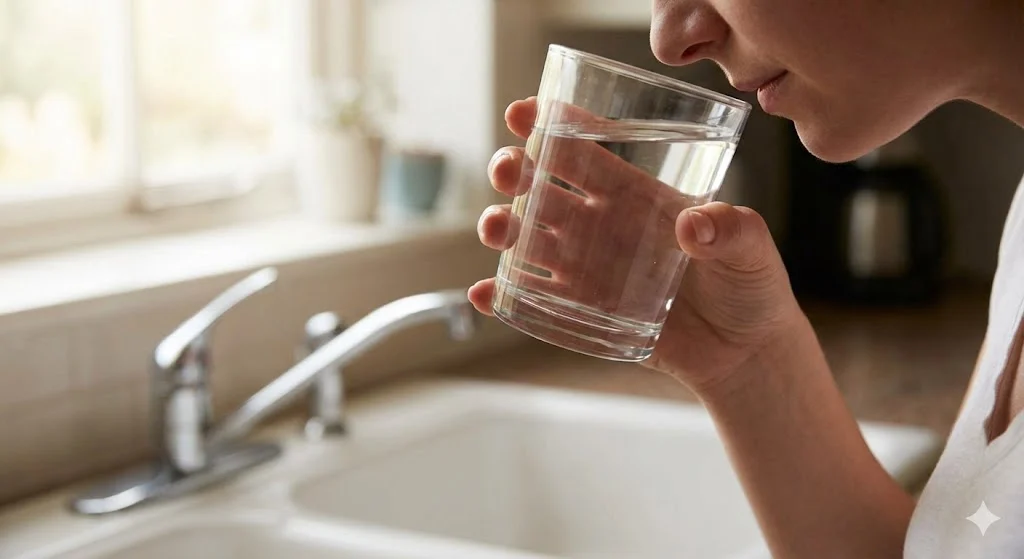
3. Bad or Metallic Taste
Water should be tasteless. If your morning glass of water tastes like a coin, salt, or medicine, your water chemistry is off.
- Metallic Taste: This strongly suggests the presence of iron, copper, manganese, or zinc. It confirms that your pipes (or the city’s pipes) are leaching metals into the water supply.
- Salty Taste: In coastal areas, this can mean seawater is intruding into the freshwater supply. In other areas, it indicates high sulfates or chlorides from industrial runoff or road salts used in winter.
- Bitter or Medicinal Taste: This is a warning sign for high Total Dissolved Solids (TDS) or excessive copper.
4. Physical Symptoms After Drinking Water
Sometimes water looks and tastes fine, but your body reacts to it. Symptoms can be acute (happening immediately) or chronic (happening over time).
Gastrointestinal Issues
The most immediate sign of unsafe water is stomach distress. Contaminants like E. coli, Giardia, and Cryptosporidium can cause:
- Nausea and vomiting
- Severe stomach cramping
- Diarrhea
If multiple family members or guests experience these symptoms simultaneously, the water is a prime suspect.
Skin Irritation
Does your skin feel itchy, dry, or red after a shower? High levels of chlorine can strip natural oils from the skin. Additionally, “hard water” (high mineral content) can exacerbate eczema and leave a film on the skin that clogs pores.
5. Plumbing Stains and Scale Buildup
Your home’s fixtures act as a long-term testing kit. Observe your sinks, toilets, and faucets for clues:
- White Scale Buildup: Indicates “Hard Water” (high calcium and magnesium). While not toxic, it ruins appliances and reduces soap efficiency.
- Red or Orange Stains: Indicates high Iron.
- Blue-Green Stains: A major red flag for Copper corrosion (acidic water).
- Black stains: Often caused by Manganese.
The Invisible Dangers: Contaminants You Can’t Sense
It is crucial to understand that not all unsafe water looks or smells bad. Some of the most dangerous contaminants are completely invisible to the human senses.
- Lead: Leaches from old pipes. Causes developmental delays in children and kidney issues in adults. Zero taste or smell.
- Arsenic: Naturally occurring in groundwater. Linked to cancer and skin lesions.
- Nitrates: Common in rural areas due to fertilizer runoff. Extremely dangerous for infants (“Blue Baby Syndrome”).
- PFAS (Forever Chemicals): Industrial chemicals that persist in the body and environment.
What to Do If You Notice These Signs
If you identify any of the signs above, do not panic, but take immediate steps to verify the quality of your water.
Step 1: Check Your CCR
If you are on municipal water, access your local Consumer Confidence Report (CCR). Utilities are required by law to publish this annually. It details detected contaminants and compliance with EPA standards.
Step 2: Test Your Water
Do not guess. You have two options:
- DIY Test Strips: Good for a quick check of pH, hardness, and chlorine. They are affordable but less accurate for heavy metals.
- Certified Lab Testing: The gold standard. You send a sample to a lab, and they provide a detailed report on bacteria, lead, arsenic, and VOCs. This is highly recommended for well water users.
Step 3: Filter Correctly
Once you know the problem, choose the right filter. Not all filters remove all contaminants:
- Activated Carbon (Pitchers/Fridge): Great for taste, smell, and chlorine. Does NOT remove bacteria or minerals.
- Reverse Osmosis (RO): The most effective method. Removes heavy metals (lead, arsenic), bacteria, viruses, and salt.
- UV Purifiers: Specifically designed to kill bacteria and viruses (ideal for well water).
For more detailed guides, you may also want to read: Is tap water safe in the USA? and daily water intake guidelines.
Frequently Asked Questions (FAQs)
- No. If the water clears up after sitting for a minute, the cloudiness is just trapped air bubbles (common in winter). If the cloudiness settles as sediment at the bottom, it should be filtered and tested.
- Not necessarily. It indicates the water is treated. However, if the smell is overpowering or causes skin irritation, the levels may be too high, or the chlorine is reacting with organic contaminants.
- You cannot see, smell, or taste lead. The only way to know for sure is to have your water professionally tested by a certified laboratory.
- Boiling kills bacteria, so it works for “Rotten Egg” smells caused by biology. However, boiling concentrates heavy metals like lead and nitrates. If you suspect chemical or metal contamination, do NOT boil the water; switch to bottled water.
