
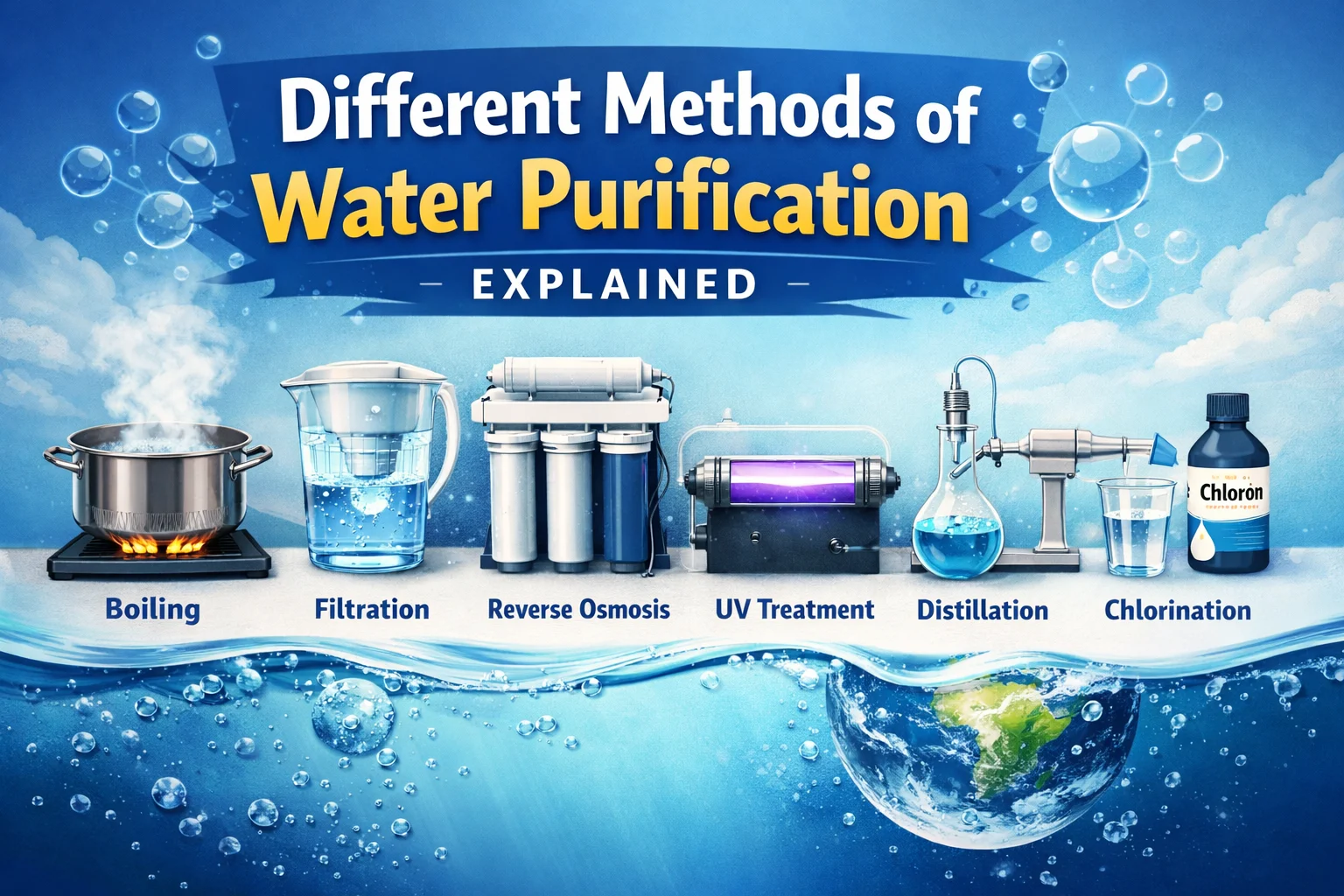

Clean drinking water is essential for health, but not all water sources are safe. Different water purification methods are used to remove contaminants, improve taste, and make water safe to drink. This guide explains the most common water purification methods and how they work.
What Are Water Purification Methods?
Water purification methods are techniques used to remove harmful substances like bacteria, viruses, chemicals, and sediments from water. These methods range from simple home techniques to advanced industrial systems.
Why Water Purification Is Important
- Removes harmful microorganisms
- Reduces chemicals and heavy metals
- Improves taste and odor
- Ensures safe drinking water
Main Methods of Water Purification
1. Boiling
Boiling water kills bacteria, viruses, and parasites using heat. It is one of the simplest and most reliable methods.
- Effective for microbes
- Does not remove chemicals
2. Filtration
Filtration uses physical barriers like carbon or ceramic filters to remove impurities, sediments, and some chemicals.
3. Reverse Osmosis (RO)
RO systems use a semi-permeable membrane to remove dissolved salts, heavy metals, and contaminants.
4. UV Purification
Ultraviolet light kills bacteria and viruses without using chemicals.
5. Distillation
Distillation involves boiling water and condensing the steam, leaving contaminants behind.
6. Chlorination
Chlorine is added to water to kill harmful microorganisms and disinfect it.
Comparison of Water Purification Methods
| Method | Removes | Best Use |
|---|---|---|
| Boiling | Bacteria, viruses | Emergency use |
| Filtration | Sediments, chlorine | Daily use |
| RO | Heavy metals, salts | High purification |
| UV | Microorganisms | Chemical-free disinfection |
| Distillation | Most contaminants | Lab/medical use |
| Chlorination | Bacteria, viruses | Municipal water systems |
Which Method Is Best?
The best method depends on your water source and needs. For complete purification, combining methods such as RO + UV or filtration + boiling is often most effective.
Common Uses of Water Purification Methods
- Household drinking water
- Industrial and medical applications
- Emergency and disaster situations
- Travel and outdoor activities
FAQs
What is the most effective water purification method?
Reverse osmosis is considered one of the most effective methods for removing a wide range of contaminants.
Is boiling enough to purify water?
Boiling kills microorganisms but does not remove chemicals or heavy metals.
Which method removes chemicals from water?
Reverse osmosis and activated carbon filtration are effective for removing chemicals.
Is UV purification safe?
Yes, UV purification is safe and effective for killing bacteria and viruses.
Conclusion
Different water purification methods serve different purposes. Understanding how each method works helps you choose the best solution for safe and clean drinking water at home or in emergencies.
