

How Much Water Should a Person Drink a Day? (Simple Math for Real Life)
Updated on • U.S. hydration guide
You don’t need a perfect number—you need a number that you’ll actually hit. Below we show easy math for daily targets, how to adjust for exercise and heat, signs you need more (or less), and a safe plan for rehydration. Want a personalized estimate? Try our Water Intake Calculator.
Why Daily Water Intake Matters
Water carries nutrients, cushions joints, supports temperature control, and keeps digestion and cognition on track. Even mild dehydration can affect focus, mood, and exercise performance.
- Energy & focus: Light dehydration (≈1–2% body weight) can bump fatigue and reduce attention.
- Exercise: Performance drops as sweat losses mount—especially in heat and humidity.
- Kidneys & digestion: Fluids help regulate waste removal and bowel regularity.
How Much Should You Drink? (Simple Numbers)
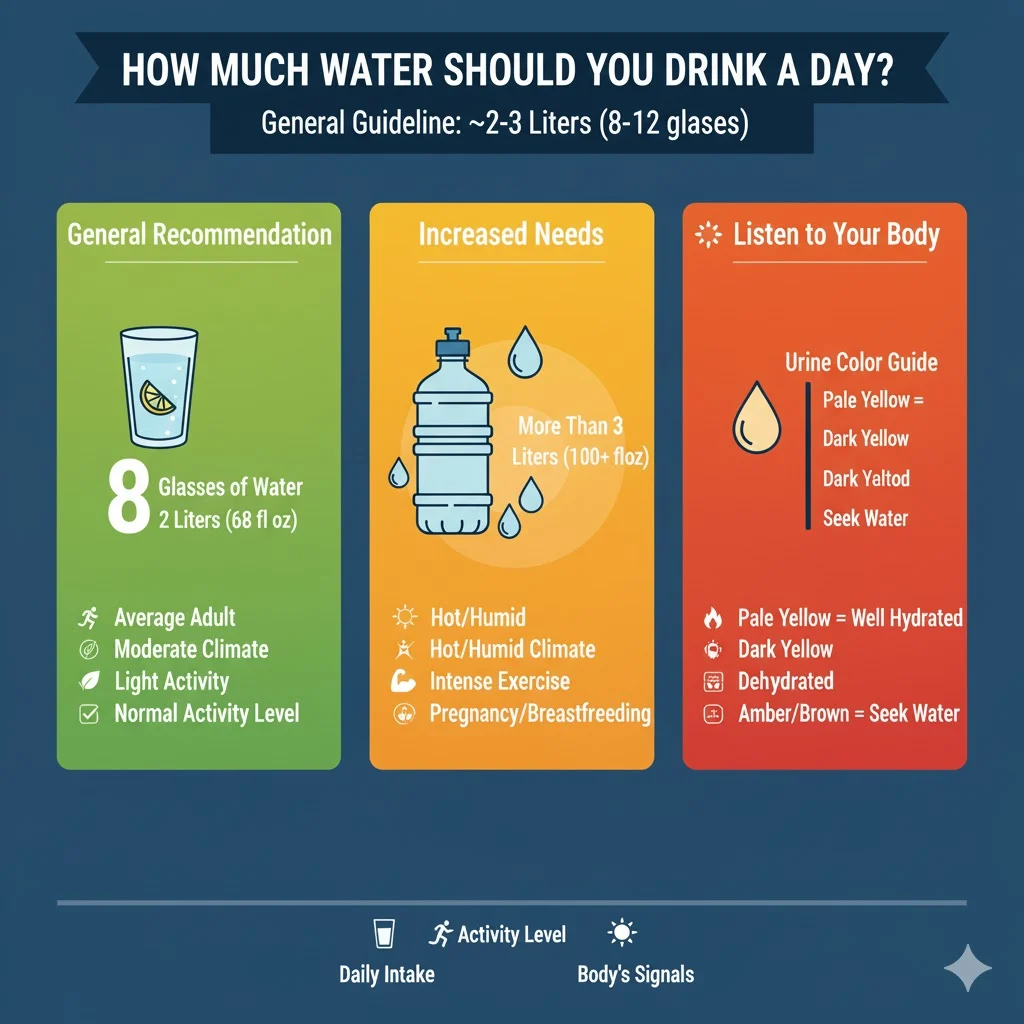
The National Academies’ benchmark is a useful start: about 3.7 L/day for men and 2.7 L/day for women—including all beverages and water in foods. That’s not a strict quota, just a ballpark.
- All sources count: Plain water (still or sparkling), unsweetened tea/coffee, milk, and water-rich foods (soups, fruits, veg).
- Listen to your body: Thirst + urine color are reliable day-to-day checks.
- Use anchors: Drink at wake-up, mid-morning, lunch, mid-afternoon, dinner.
How to Adjust for Exercise, Heat, and Altitude
Sweat loss can range from ~0.5 to 2+ liters/hour depending on intensity, heat, humidity, clothing, and individual sweat rate. That’s why your “real” target is higher on active or hot days.
- Before activity: Arrive hydrated; sip ~8–16 oz (240–470 ml) in the hour before.
- During: Small, regular sips. In long/hot sessions, include electrolytes (sodium) to maintain balance.
- After: Replace ~150% of weight lost in sweat (e.g., 1 lb lost ≈ 16 oz; drink ~24 oz / 700 ml over a few hours).
- Altitude: Dry air + faster breathing increase fluid needs—plan extra.
Signs You Need More (or Less) Water
Your body gives quick feedback. Use these cues to steer intake without obsessing over ounces.
- Probably need more: Thirst, darker urine, infrequent urination, dry mouth/lips, headache, fatigue.
- Probably need less (rare): Clear urine all day plus heavy, rapid drinking without electrolytes during long, sweaty efforts. Include sodium to avoid over-dilution, and space intake.
What Should You Drink: Still, Sparkling, or Something Else?
The best hydration is the one you’ll actually follow. If bubbles help you drink enough, that’s a win—unsweetened seltzer hydrates like still water. For brand and flavor guidance, browse our Sparkling Water hub, and if you’re curious about overall health effects, see Is Sparkling Water Good for You?.
- Zero-sugar first: Plain water or unsweetened sparkling; limit sugary drinks.
- Electrolytes when needed: Long/hot workouts or heavy sweaters may need sodium.
- Caffeine? Moderate coffee/tea still count toward hydration for most adults.
Rehydration 101: Do It Safely
After heavy sweating, your gut absorbs fluids better with some sodium and carbs. Don’t chug gallons at once—spread intake and include electrolytes.
- Lightly dehydrated: Water + salty snack (or a low-sugar oral rehydration option).
- Moderate symptoms: Add electrolytes; cool down; seek care if you can’t keep fluids down.
- Emergencies: Confusion, fainting, no urine for 8+ hours, rapid pulse/breathing—call emergency services.
Special Situations: When Targets Change
- Pregnancy & breastfeeding: Higher needs—keep a bottle in reach and check urine color.
- Older adults: Thirst cues can be blunted; schedule fluids and track output.
- Kids & teens: Offer small, frequent sips; build habits around meals, school, and sports.
- Illness (fever, vomiting, diarrhea): Use oral rehydration solutions; seek care if symptoms persist.
- Kidney stones history: Your clinician may target higher urine output; see prevention basics in our hydration articles.
Build a Routine You’ll Stick To
Forget perfection. Put water where you need it and pair drinking with habits you already do. Small automations beat big intentions.
- Keep a bottle at your desk, car, and gym bag.
- Set calendar nudges during heat waves or travel days.
- Use a marked bottle (or app) to track progress by noon and 5 p.m.
- Add variety: room temp, cold, sparkling, a squeeze of lemon (no sugar).
FAQs
Do I really need 8 glasses?
- “8×8” (eight 8-oz glasses) is a simple reminder, not a rule. Many adults need more on active or hot days.
Does sparkling water count toward my daily total?
- Yes—unsweetened seltzer hydrates like still water. If bubbles help you drink enough, use them.
What color should my urine be?
- Pale yellow most of the day. Consistently dark = likely need more fluids; crystal clear all day may mean overdoing it.
References & Further Reading
