
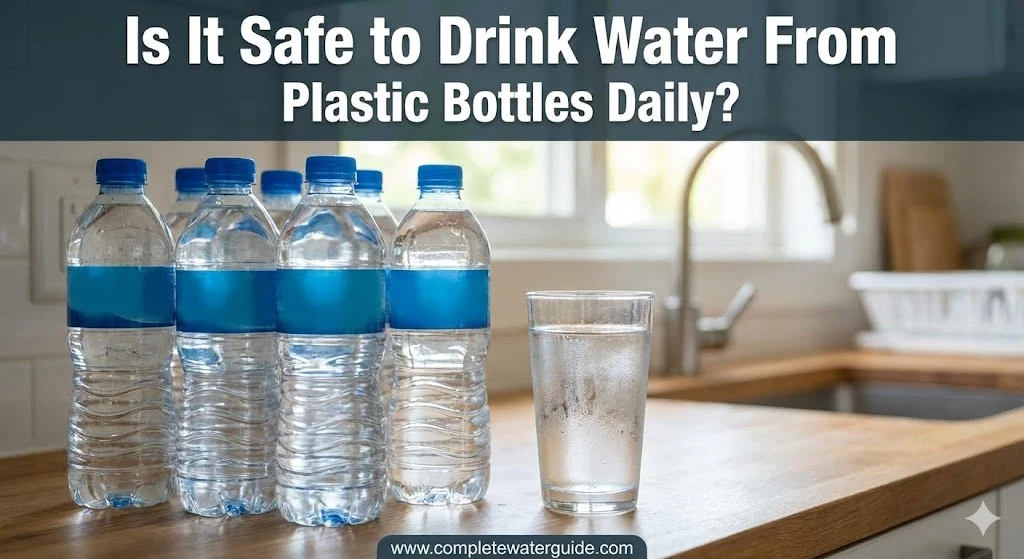

Grab-and-go hydration is convenient, but is your daily habit of drinking from plastic bottles silently harming your health? Here’s an answer-first guide exploring the risks of microplastics, chemical leaching (like BPA and Antimony), and bacterial growth. We’ll compare single-use vs. reusable plastics, look at safer alternatives like glass or stainless steel, and help you decide if it’s time to switch to tap.
The 3 Hidden Risks of Daily Plastic Use
While a random bottle here and there won’t hurt you, making it your primary source of water carries cumulative risks.
1. Microplastics & Nanoplastics
Recent research suggests that a single liter of bottled water can contain hundreds of thousands of tiny plastic particles. These enter your body and can potentially carry endocrine-disrupting chemicals. If you are tracking your intake with a water intake calculator, consider that hitting your daily goal exclusively with bottled water increases this exposure significantly.
2. Chemical Leaching (Heat Matters)
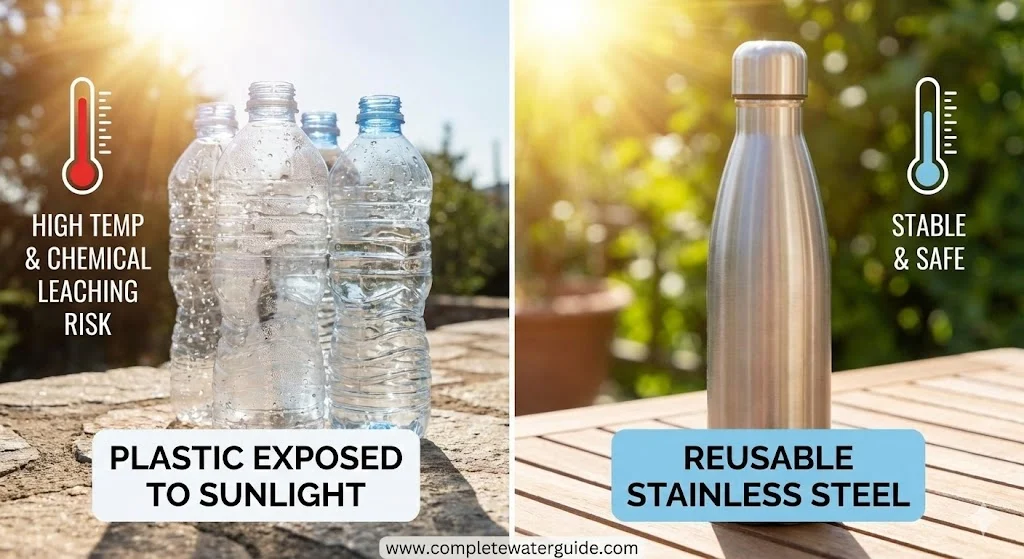
Most single-use bottles are made of PET (Polyethylene Terephthalate). While BPA-free, PET can leach Antimony (a heavy metal used in production) when exposed to heat. Leaving a case of water in a hot car or garage turns your water into a chemical cocktail. If you are carrying water for hiking, use a water weight converter tool to plan your load, but pack it in a metal container to avoid heat degradation.
3. Bacterial Breeding Ground
Trying to be eco-friendly by refilling that disposable Poland Spring bottle for weeks? Don’t. The soft plastic develops microscopic cracks where bacteria thrive. It’s safer to buy a dedicated reusable bottle. Check out our reviews on the best bottles for safe, long-term reuse.
Know Your Plastic Codes (Recycling Symbols)
| Code | Plastic Name | Common Use | Safety Verdict |
|---|---|---|---|
| #1 (PET) | Polyethylene Terephthalate | Soda/Water bottles | Safe for one-time use only. Avoid heat. |
| #2 (HDPE) | High-Density Polyethylene | Milk jugs, stiff jugs | Safe. Low leaching risk. |
| #4 (LDPE) | Low-Density Polyethylene | Squeezable bottles | Safe, but less durable. |
| #7 (Other) | Polycarbonate (mix) | Large 5-gallon jugs | Risky. Often contains BPA. Avoid if possible. |
Always check the bottom of your bottle for the triangle code. #1 is fine for today, but not for tomorrow.
Tap Water vs. Bottled Water: Which is Safer?
Many people switch to bottled water because they fear tap water contaminants. However, in many developed nations, tap water is more strictly regulated than bottled water. If you are unsure about your local supply, you can use a free water quality checker to see local reports.
For a deeper dive into municipal water safety, read our guide: Is Tap Water Safe to Drink in the USA?. If your tap water is hard (leaving scale deposits), it might taste bad but is usually safe. You can fix the taste and save money compared to buying bottles—use our water softener cost estimator to see if a home system is within budget.
Does It Affect Your Hydration?
Ultimately, water is water, and hydration is critical. Dehydration is a bigger immediate risk than microplastics. To ensure you are drinking enough to maintain healthy levels, check your stats with a body water percentage calculator.
The Verdict: Drink water. If plastic is your only option, it’s better than soda or dehydration. But for a daily habit, switch to a reusable bottle to reduce chemical load and environmental waste.
Practical Tips for Safer Drinking
- Don’t Reuse #1 Bottles: Recycle them after one use. The plastic is too porous for proper cleaning.
- Keep It Cool: Never drink water from a bottle that has been sitting in a hot car for days.
- Switch to Glass or Steel: These materials are inert and won’t leach chemicals, no matter the temperature.
- Check Expiration Dates: Yes, water bottles expire. The date is for the plastic degrading, not the water spoiling.
FAQs
Does bottled water contain BPA?
Most single-use bottles (PET #1) do not contain BPA. However, they may contain other chemicals like phthalates. BPA is more common in hard polycarbonate plastics (#7).
Is it safe to refill a disposable water bottle?
Not recommended. Disposable bottles are hard to clean and can harbor bacteria in tiny cracks. They also degrade physically over time, releasing more microplastics.
Can plastic water bottles cause cancer?
There is no direct evidence that drinking from plastic causes cancer immediately. However, chemicals like Antimony (found in PET) are potential carcinogens in high concentrations. Minimizing exposure is a smart preventative measure.
How long can you keep water in a plastic bottle?
FDA considers it safe for an indefinite period if stored properly (cool, dark place). However, most manufacturers recommend consuming it within 2 years to avoid “plastic taste.”
References
- FDA — Chemicals in Food Packaging
- NIH — Microplastics in Water and Health
- WHO — Microplastics in Drinking-water
What Readers Say (Verified)
Verified
Scary to read about the heat issue. I used to leave cases of water in my trunk all summer!
Verified
The breakdown of plastic codes was super helpful. Tossed my old scratched #7 jug immediately.
Verified
Good balance. Doesn’t fear monger but gives real reasons to switch to tap/filtered.
Verified
Finally a clear answer on reusing bottles. I’m buying a glass one today.
