

Are Sparkling Water and Seltzer the Same? What to Know Before You Buy
Updated on • U.S. guide to bubbly water terms
Labels can be confusing. One aisle says “sparkling,” another says “seltzer,” and a third says “club soda.” Below, we explain the naming, how to read the label, and which one to choose for daily hydration or mixing drinks. If you’re just getting started with bubbly water, skim our Sparkling Water hub for brand and flavor basics.
What Each Term Usually Means
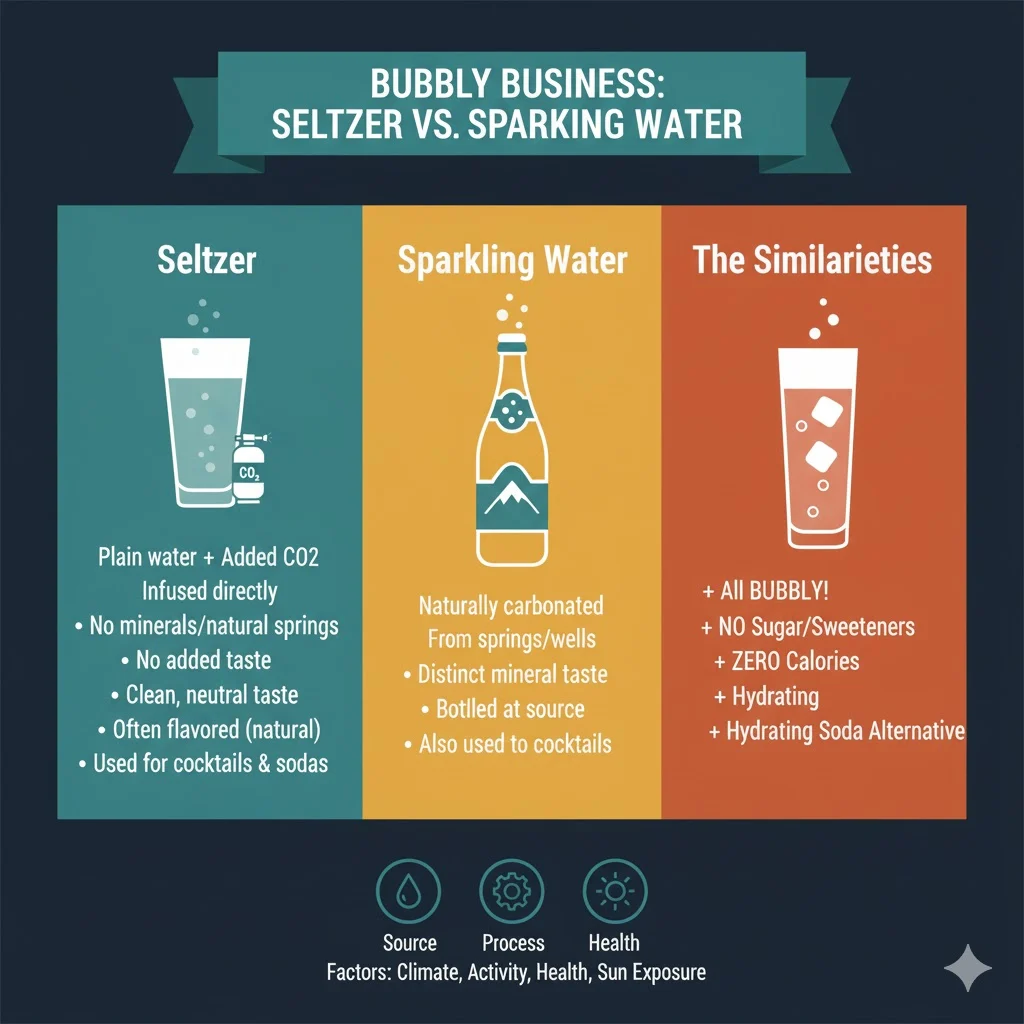
- Seltzer: Purified water + CO₂. Often available in unsweetened fruit flavors. Typically no minerals are added.
- Sparkling water: Can be a generic term for carbonated water or refer to naturally carbonated mineral water (contains minerals from its source). Read the ingredient list to see if minerals are present.
- Club soda (for comparison): Carbonated water with added mineral salts (e.g., sodium bicarbonate, potassium sulfate) to create a rounder, slightly saline taste—great for mixing, not always ideal for all-day sipping if you’re watching sodium.
How to Read the Label (So You Get What You Want)
The name on the front can be marketing. The truth is on the ingredients and Nutrition Facts panel.
- Ingredients: “Carbonated water” = basic seltzer/sparkling. “Natural flavors” is common for unsweetened aromas. “Sodium bicarbonate/potassium sulfate” = more like club soda.
- Calories & sugar: Should be 0 for standard seltzer/sparkling. If you see calories or juice, it’s a flavored drink (still fine, but not “zero”).
- Sodium: Many seltzers are 0 mg; club soda often has more. If you drink several cans/day and track sodium, choose lower-sodium labels.
- Minerals: Natural mineral waters list calcium, magnesium, bicarbonate on brand sites or sometimes labels; taste can feel “harder” or more mineral.
Taste & Use Cases (When to Pick Which)
All three hydrate, but minerals and flavoring change the experience. Match the can to the moment.
- Everyday sipping: Plain seltzer or plain “sparkling water” (low/zero sodium; clean taste).
- Food pairing: Mineral sparkling waters offer bigger bubbles and a distinct minerality that some people love with meals.
- Cocktails/mocktails: Club soda’s mineral salts make citrus and bitters pop.
- Health angle: For the pros/cons of fizz and flavorings, see Is Sparkling Water Good for You?.
Health & Teeth: Quick Notes
Plain seltzer/sparkling is naturally 0 sugar, which is great. Acidity comes from carbonation and, more so, from citrusy flavors. For enamel-friendly habits—avoid all-day sipping, enjoy flavors with meals, and brush 30–60 minutes later—see our dentist-informed tips inside the hub.
At-a-Glance Comparison
| Feature | Seltzer | Sparkling Water | Club Soda (ref.) |
|---|---|---|---|
| Core definition | Water + CO₂ | Water + CO₂ or naturally carbonated mineral water | Carbonated water + added mineral salts |
| Typical sodium | Usually 0 mg | Varies (mineral waters can have some) | Often higher |
| Flavors | Common (unsweetened) | Common (unsweetened) + natural mineral versions | Less flavored; used as mixer |
| Best for | Daily hydration; clean taste | Daily hydration or mineral experience with meals | Cocktails/mocktails; spritzers |
Buyer Tips (Save Time in the Aisle)
- Zero sugar first: If calories matter, stick to “unsweetened” seltzer/sparkling.
- Check sodium: Choose low/zero if you drink multiple cans per day.
- Want bold aroma? Look for unsweetened “flavored” lines—great for habit building. Start with the sparkling water hub to compare styles.
FAQs
Are sparkling water and seltzer the same?
- Everyday use: mostly yes. Technical nuance: sparkling may also mean mineral water; seltzer is just water + CO₂.
Which is better for daily hydration?
- Plain seltzer or plain “sparkling water” (low sodium) are easy daily choices. Mineral versions are nice with meals.
Is club soda the same as either?
- No—club soda has added mineral salts (often more sodium). It’s popular as a mixer.
