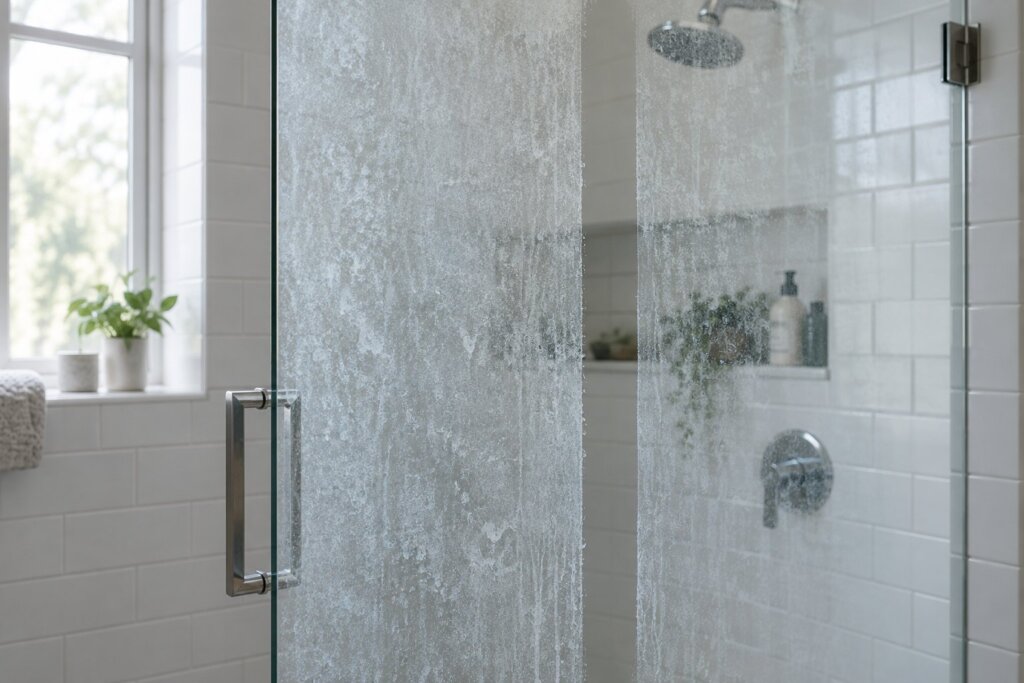
Hard water soap scum is the gray, filmy layer that forms when the calcium and magnesium in hard water react with soap and turn into a solid that sticks to glass, tile and fixtures. Because it is a solid, wiping with more soap just spreads it. You need the right cleaner for the surface, and the wrong one can do more damage than the scum: Kohler, for example, says never to use acids on its faucet finishes.
We read the care guides from Kohler, Moen and DreamLine, the Natural Stone Institute, the product pages for Bar Keepers Friend and CLR, Penn State and Nebraska Extension, and two poison-safety sources. Here is what removes scum on each surface, what to keep away from it, and how to stop it coming back.
What is hard water soap scum?
It is a chemical reaction, not dirt. Chemistry LibreTexts, a university-run chemistry textbook, explains that the minerals in hard water “form precipitates with soap molecules, and this precipitate is often seen as a gray line on a bathtub or sink and is often called ‘soap scum.'” One of its main parts is calcium stearate. University of Nebraska Extension describes the same thing: “Soap used in hard water combines with the minerals to form a sticky soap curd,” which can “deposit on dishes, bathtubs and showers, and all water and plumbing fixtures.”
Detergents behave differently. LibreTexts says synthetic detergents “do not form precipitates with magnesium, iron or calcium ions, which means that they work in both soft and hard water.” That is the chemistry behind a common tip: switching from bar soap to a body wash or a synthetic “syndet” bar may leave less scum. We have not found a study that tested this in real showers, so treat it as worth trying, not a guaranteed fix.
What is the difference between soap scum and hard water stains?
They often show up together, but they are different deposits:
- Soap scum is a gray, slightly greasy film that forms where soap splashes: the lower half of a shower door, the tub ring, the soap dish.
- Hard water stains are white, chalky spots left when water dries and leaves its minerals behind. They show up everywhere water lands, including places soap never reaches, like the faucet spout.
Both get worse when water dries on the surface. DreamLine, which makes shower doors, warns that “hard water can etch the surface of the glass over time if left to dry.” If your problem is mostly white spots, our guide on how to remove hard water stains covers that side.
How to remove hard water soap scum, surface by surface
Check what the surface is before you pick a cleaner. This is where most damage happens.
| Surface | What the maker allows | What to avoid |
|---|---|---|
| Glass shower door | Bar Keepers Friend’s oxalic acid cleanser, left for up to one minute, then a gentle scrub, rinse and dry | Kohler: “bristle brushes, abrasive sponges or cleaners, or sharp instruments.” DreamLine: “abrasive cleaners or cleaning products that contain scouring agents.” |
| Kohler faucets and fixtures | “a mild detergent such as dishwashing soap” | “abrasive cleansers, ammonia, bleach, acids, or chemicals that can damage the finish” |
| Moen faucets | “A 50/50 blend of household vinegar and water … for a limited amount of time, followed by rinsing with water and drying” | Abrasives, ammonia, bleach, solvents and lime scale removers on Spot Resist finishes |
| Ceramic tub and tile | Vinegar on a sponge, then baking soda, then a thorough rinse (Mid-America Regional Council) | CLR on natural stone, brass, copper, aluminum, galvanized metal, or coated and sealed surfaces |
| Marble, travertine and other natural stone | “a non-acidic soap scum remover or a solution of ammonia and water (about 1/2 cup ammonia to a gallon of water)” (Natural Stone Institute) | “lemon, vinegar or other acids,” which “may dull or etch calcareous stones” |
Two of these surprised us. First, Kohler and Moen disagree: Moen allows diluted vinegar for a short time, while Kohler bans acids outright and says that ignoring its cleaning instructions “may void Kohler’s warranty obligations.” Look up your faucet brand before you spray anything on it. Second, the stone experts recommend ammonia, not vinegar, for marble. Vinegar is a popular home remedy, and on marble it is exactly the wrong one.
What dissolves hard soap scum?
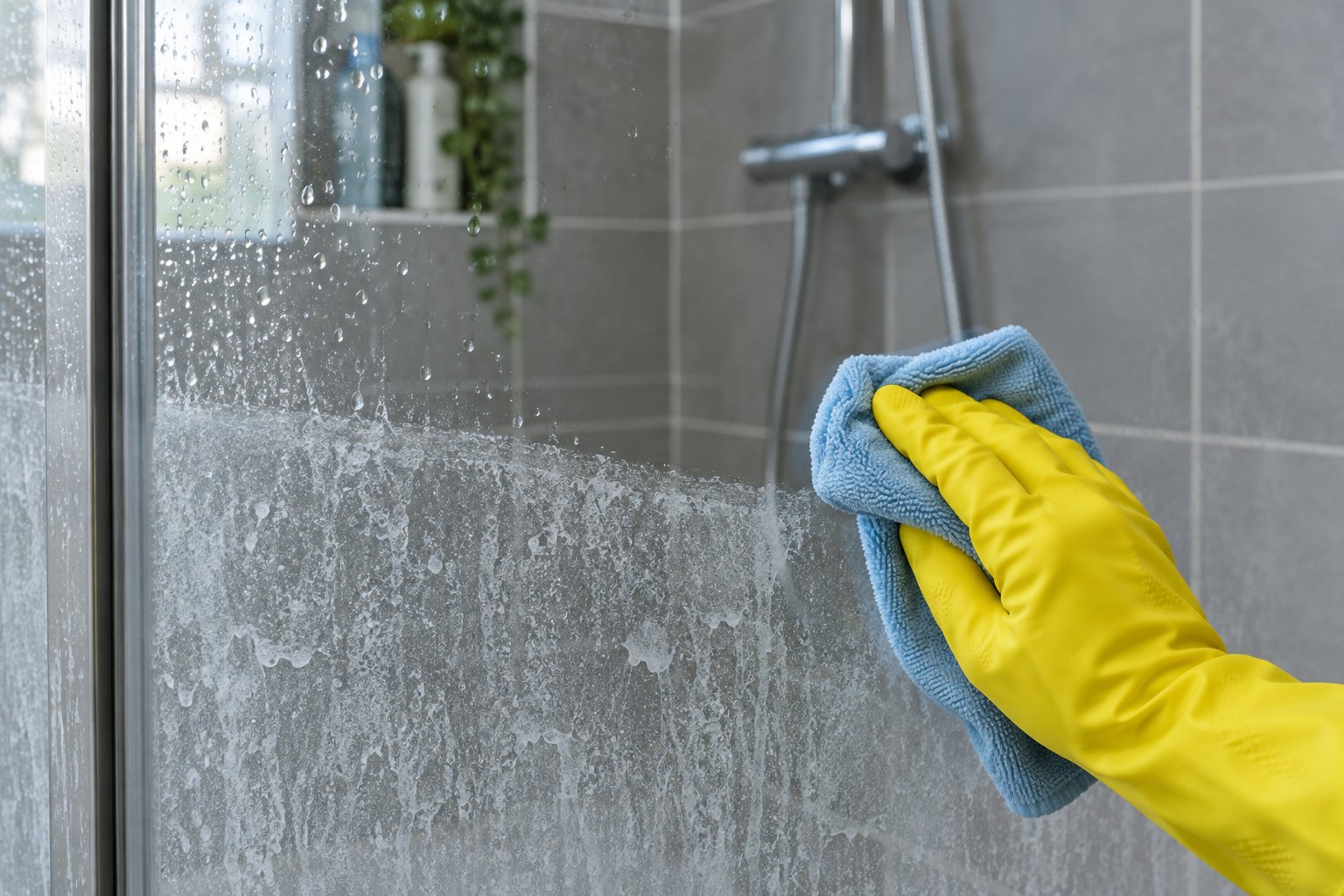
On surfaces that can take it, acid does most of the work. Bar Keepers Friend says its cleanser is “an acidic cleaner, whereas most other powdered cleansers are alkaline (bleach-based),” and its glass door instructions say to “allow up to one minute for the cleanser’s oxalic acid to penetrate the grime, then gently scrub the door, rinse well and dry it with a soft cloth.” Vinegar is a weaker acid that works more slowly. On natural stone, where acid is off limits, the Natural Stone Institute’s ammonia solution is the option.
Whatever you use, rinse it off completely and dry the surface. In our experience, cleaner left to dry on glass leaves a haze of its own.
How do you get years of soap scum off a shower?
Patience, not force. Here is the order we work in on a badly scummed shower:
- Identify every surface. Glass, the door frame, the faucet finish and the tile may each need a different cleaner from the table above.
- Test a small spot in a corner first.
- Let the cleaner sit for the time the label allows, then scrub with a non-scratch sponge. Never use steel wool, scouring pads or a razor on the glass: Kohler and DreamLine both rule out abrasives.
- Repeat rather than scrub harder. Thick scum comes off in layers.
- Rinse and dry everything.
Set your expectations on old glass. If the haze stays after the scum is gone, the glass may be etched, which DreamLine says hard water can do “over time if left to dry.” Etching is damage to the glass itself, and no cleaner reverses it.
Never mix cleaners. The Tennessee Poison Center at Vanderbilt says, “Combining bleach and an acid, such as vinegar or multipurpose bathroom cleaners, causes a chemical reaction that creates chlorine gas,” and that combining bleach and ammonia “creates chloramine gas.” The CDC says, “Never mix household bleach (or any disinfectants) with any other cleaners or disinfectants.” If you use ammonia on stone, keep bleach out of the room entirely.
What we would buy for this job
- Bar Keepers Friend Soft Cleanser, 13 oz: the oxalic acid cleanser the maker recommends for glass shower doors. Not for marble or natural stone, by its own FAQ.
- Hiware 10 inch stainless steel shower squeegee: the one-minute daily habit Kohler and the Natural Stone Institute both recommend.
- Varify water hardness test strips: reads 0 to 25 gpg, so you can check yourself against Penn State’s 7 gpg line.
As an Amazon Associate, Complete Water Guide earns from qualifying purchases. Prices change, so check the listing.
How do you stop soap scum from coming back?
The cheapest fix is a squeegee. Kohler’s shower door care sheet says, “Use a shower squeegee to clean glass doors after showering to help prevent water spots,” and, “To avoid soap deposits or lime buildup in hard water areas, wipe the door dry after each use.” The Natural Stone Institute says soap scum on stone “can be minimized by using a squeegee after each use.” It takes about a minute, and it removes the water before the minerals can dry.
The lasting fix is softer water. Penn State Extension says, “Soap film and detergent curds in bathtubs and appliances indicate that you are not getting the maximum cleaning action from these products. Soft water not only eliminates these nuisances but also protects appliances and saves cleaning time.” It also gives a useful threshold: “levels below 7.0 gpg will probably not cause major scaling and soap film.”
Here is Penn State’s hardness scale, so you can read a test result:
| Classification | Grains per gallon | mg/L (ppm) |
|---|---|---|
| Soft | Less than 1.0 | Less than 17 |
| Slightly hard | 1.0 to 3.5 | 17 to 60 |
| Moderately hard | 3.5 to 7.0 | 60 to 120 |
| Hard | 7.0 to 10.5 | 120 to 180 |
| Very hard | Greater than 10.5 | Greater than 180 |
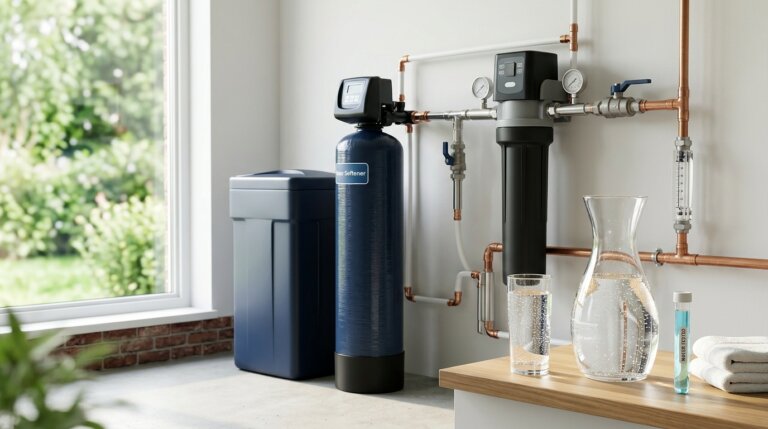
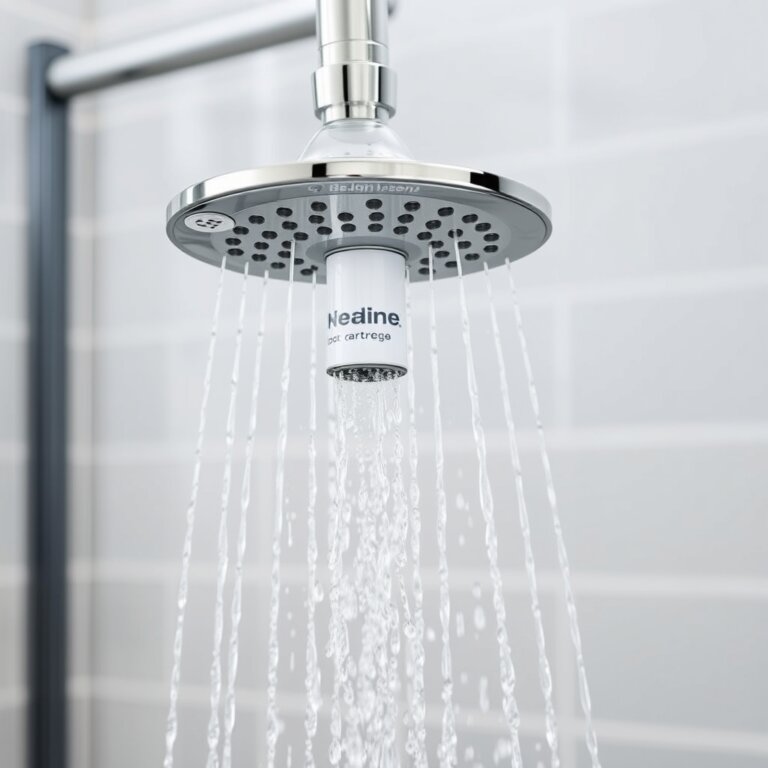
Penn State notes that one grain per gallon “equals approximately 17 mg/l or ppm.” If your test comes back over 7 gpg and you are fighting scum every week, a softener is worth pricing. Our guides on hard water vs soft water, signs you need a water softener and what size softener you need walk through the decision. If you rent and cannot install one, a shower filter for hard water is the usual workaround, though our softener vs filter guide explains why a filter does a different job.
Frequently asked questions
Does vinegar remove hard water soap scum?
It can on ceramic tile and tubs, where the Mid-America Regional Council suggests vinegar followed by baking soda and a thorough rinse. Do not use it on marble or other natural stone, which the Natural Stone Institute says acids can dull or etch, or on Kohler faucet finishes, where Kohler bans acids.
Can I use vinegar on a glass shower door?
The Kohler and DreamLine glass care guides we read ban abrasives but do not list vinegar. Keep any acid off the metal frame and hardware, though: DreamLine says not to use cleaners containing acid on its hardware. Bar Keepers Friend recommends its oxalic acid cleanser for glass doors.
How do you remove soap scum from marble?
Use a non-acidic soap scum remover or about 1/2 cup of ammonia in a gallon of water, as the Natural Stone Institute recommends. Never use vinegar or lemon on marble, and never mix ammonia with bleach.
Why does soap scum come back so fast?
Because the hard water keeps supplying calcium and magnesium every time you shower. Penn State Extension says water below 7 grains per gallon will probably not cause major soap film. A daily squeegee helps until you soften the water.
Does a water softener get rid of soap scum?
It stops most new scum from forming. Penn State Extension says soft water eliminates soap film and detergent curds. You still need to clean off the scum that is already there.
Can I mix soap scum removers to make them stronger?
No. Bleach mixed with an acid such as vinegar makes chlorine gas, and bleach with ammonia makes chloramine gas, according to the Tennessee Poison Center. Use one product, rinse it off completely, then use the next.
Sources
- Chemistry LibreTexts, 27.2 Soap, and Soaps and Detergents.
- University of Nebraska-Lincoln Extension, publication G1274 on water hardness.
- Penn State Extension, Water Softening.
- Kohler, Maintenance Guide K-7401, Homeowners Guide K-922 and shower door care sheet.
- Moen, Faucet Finish Care and Cleaning.
- DreamLine, Product Maintenance.
- Natural Stone Institute, Care and Cleaning.
- Bar Keepers Friend, How to Clean Glass Shower Doors, and FAQ.
- CLR, Calcium, Lime and Rust Remover product page.
- Mid-America Regional Council, Safe Alternatives to Dangerous Chemicals.
- Vanderbilt University Medical Center, Tennessee Poison Center, on mixing household chemicals.
- CDC, Cleaning and Disinfecting with Bleach.