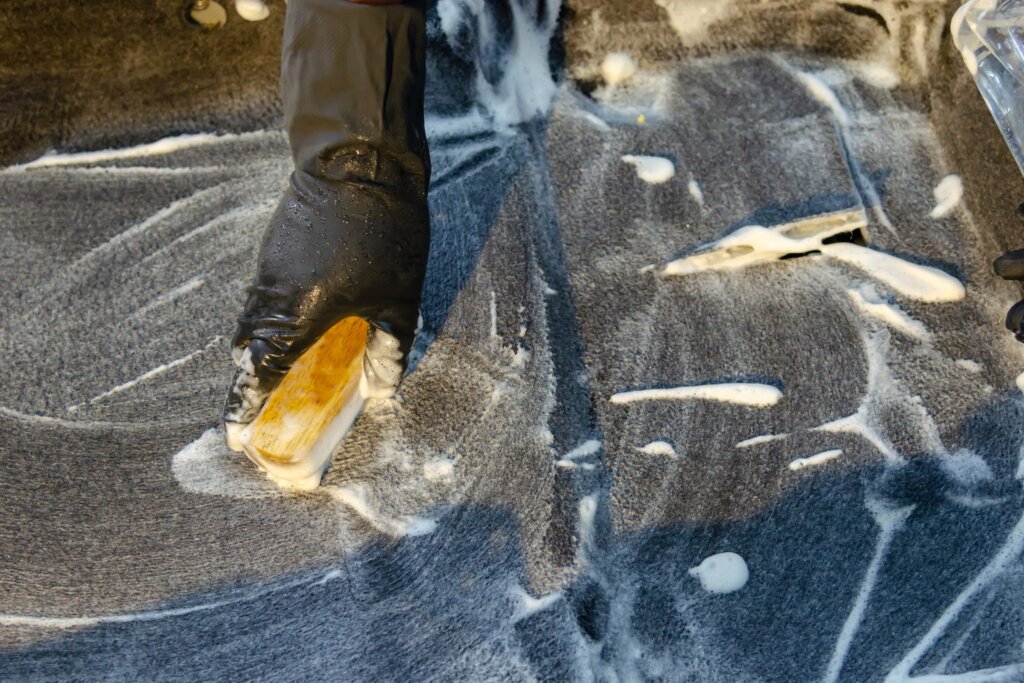
Here is how to clean a water softener brine tank of sludge and salt build-up: put the softener in bypass, empty out the salt and water, take out the brine well, scrub the tank with a few tablespoons of dish soap in a gallon or two of water, rinse, then wipe it with a weak bleach solution and rinse again. Refill with a few gallons of fresh water and new salt, and take the softener out of bypass. Rheem’s support guide and a water treatment dealer’s guide from WaterTech both follow this order. The dealer guide says a thorough clean is needed about once a year, and more often if you see build-up.
Below are the full steps, the amounts, how often to do it, and what not to put in the tank.
When does a brine tank need cleaning?
WaterTech says a brine tank needs a thorough clean once a year, and more often if you notice build-up. Rheem adds two common triggers: after a long vacation, and after a salt bridge. Signs we look for:
- Sludge or “mush” at the bottom when the salt runs low.
- A hard crust or salt bridge that keeps coming back.
- Water standing above the salt. See brine tank full of water for the other causes.
- A musty or sour smell from the tank. If the tap water smells too, see water softener smells.
- Dirt or debris mixed into the salt.
What do you need?
- A wet/dry vacuum, or a bucket and a scoop or small shovel.
- Dish soap and a long-handled scrub brush.
- Plain household bleach, for the final rinse.
- Rubber gloves and old towels.
- Fresh softener salt to refill.
How to clean a water softener brine tank, step by step
- Put the softener in bypass. Rheem does this by pushing the bypass handle in at the back. Other valves use knobs or a three-valve setup; our guide on how to bypass a water softener covers each one. If your brine tank is a separate tank, unplug the softener as well so it cannot start a regeneration while the tank is empty.
- Loosen any hard salt. Rheem says to confirm the salt is soft and movable first, and to break up a salt bridge before you try to empty the tank.
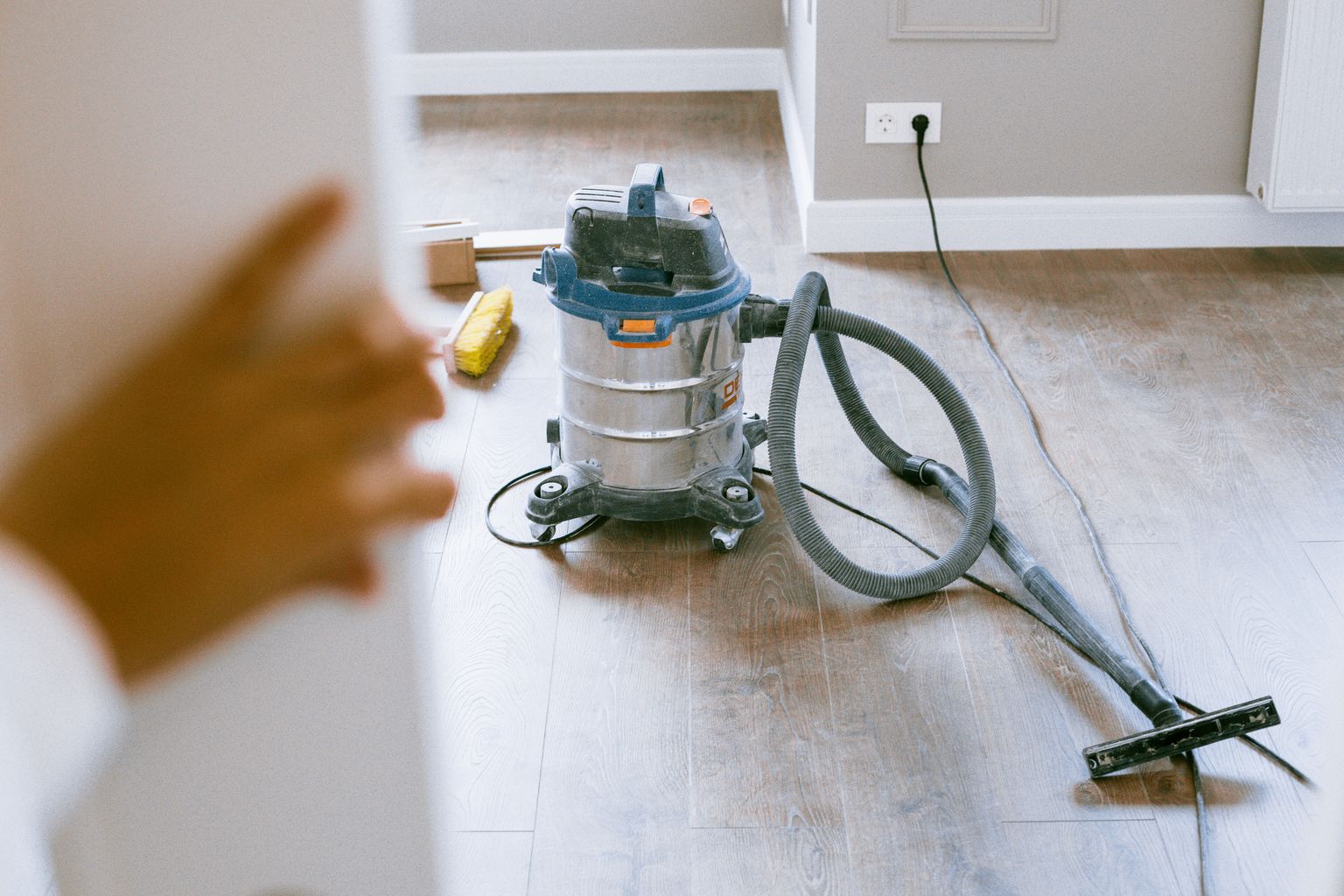
- Empty the tank. Rheem says to remove the salt with a wet/dry vacuum or by hand with a container or shovel. Clean, dry pellets or crystals can be kept and reused. Scoop out the water and sludge last.
- Take out the brine well. This is the tall tube inside the tank that holds the float. On Rheem models you remove its cap, undo a screw and wingnut, and lift the tube and float out together. If your tank has a brine grid, the platform at the bottom, WaterTech says to pull that out too.
- Scrub with soapy water. WaterTech mixes a few tablespoons of dish soap into 1 to 2 gallons of water, pours it into the tank and scrubs the inside with a long-handled brush. Dump it and rinse with clean water. Rinse the brine well and grid as well.
- Sanitize. WaterTech then pours 2 to 3 gallons of clean water with a quarter cup of household bleach into the tank, stirs it, lets it sit for 15 minutes, scrubs again, then dumps and rinses it. Rheem’s own guide simply wipes the tank with a damp cloth, so follow your maker’s instructions if they differ.
- Put the parts back. Refit the brine grid and the brine well, reconnect the brine line, and make sure the float moves freely.
- Add water, then salt. Rheem says to add 3 gallons of fresh water, then the salt, and never to put salt inside the brine well tube.
- Take the softener out of bypass and plug it back in. Check the clock.
How full should you fill the salt after cleaning?
About halfway. Rheem recommends filling its tanks with salt no higher than level 4 or 5, which is about halfway, to reduce salt bridging, and letting it drop to level 2 before you refill. Other makers mark their tanks differently, so use the level your manual gives. Our guide to water softener salt level explains how to read it.
If you keep finding sludge, the salt itself may be the cause. Our comparison of softener salt pellets and crystals covers the purity differences.
What we would buy for this job
- Amazon Basics 4 gallon wet/dry shop vacuum: Rheem suggests a wet/dry vacuum to empty the salt, and it pulls out the water and sludge at the bottom too. Small enough to store, stainless tank. $62.99 when we checked. Rinse it out afterward, because salt water corrodes metal parts.
As an Amazon Associate, Complete Water Guide earns from qualifying purchases. Prices change, so check the listing.
Should you regenerate after cleaning the brine tank?
The salt needs time to dissolve into brine before a regeneration does any good, so you can let the softener run on its normal schedule. If the tank was empty for a long time or the water already feels hard, start a manual regeneration a few hours after refilling. If you sanitized the tank with bleach, a regeneration also carries any leftover bleach out to the drain.
Can you clean a brine tank with vinegar?
We did not find a softener maker that recommends vinegar for the brine tank. The two guides we followed use dish soap to clean and bleach to sanitize. Vinegar is an acid and is sold for limescale, which is not what builds up in a brine tank; the problem there is salt, dirt and sludge. Stick to soap and water, and check your manual before using anything else.
Do you need to clean the resin tank too?
The resin tank is sealed, so you do not scrub it. You clean the resin by running a softener cleaner through a regeneration, and you sanitize it by putting bleach in the brine well before a regeneration, following your manual. Whirlpool’s WHES40 and WHES44 manual, for example, uses about 3 ounces of household bleach in the brine well and says to use its softener cleanser every four months.
Frequently asked questions
How often should you clean a water softener brine tank?
About once a year, according to WaterTech, and more often if you see sludge or build-up. Rheem also suggests cleaning after a long vacation or a salt bridge.
Can I clean my brine tank without removing it?
Yes. Put the softener in bypass, empty the salt and water with a wet/dry vacuum or a scoop, then scrub and rinse the tank where it stands. Remove the brine well so you can clean around it.
How much bleach do I put in a brine tank to clean it?
WaterTech’s method uses a quarter cup of household bleach in 2 to 3 gallons of water, left for 15 minutes, then scrubbed, dumped and rinsed. Follow your own manual if it gives a different amount.
How much water do I put in a brine tank after cleaning?
Rheem says to add 3 gallons of fresh water before the salt. Other models may differ, so check your manual.
What is the sludge in the bottom of my brine tank?
Usually salt mush and the insoluble material left behind as salt dissolves. Cleaner, higher purity salt leaves less behind.
Should I put salt in the brine well?
No. Rheem says not to add any salt into the brine well tube. The salt goes in the tank around it.
Sources
- Rheem Water Treatment support, How to Clean the Salt Tank and Brinewell (updated February 23, 2026): when to clean, bypass, empty with a wet/dry vacuum, remove the brinewell, wipe, 3 gallons of water, salt no higher than halfway, no salt in the brinewell.
- WaterTech, How to Clean a Water Softener Brine Tank: once a year, dish soap in 1 to 2 gallons of water, a quarter cup of bleach in 2 to 3 gallons for 15 minutes.
- Whirlpool, WHES40 and WHES44 Owner’s Manual: about 3 oz of bleach in the brine well to sanitize; cleanser every four months.