When a water softener smells, the first job is to find out whether the smell really comes from the softener. Often it does not. A rotten egg smell is usually hydrogen sulfide gas in the well water or a reaction inside the water heater, and a softener does not remove it. If the softener is the source, the cause is bacteria growing in the brine tank or the resin, and the fix is to clean it and sanitize it with household bleach, as Whirlpool’s and Rheem’s instructions describe.
Below is the bypass test that tells you where the smell is, what each kind of smell points to, and the cleaning and sanitizing steps.
Water softener smells: is it really the softener?
Use the bypass test from Rheem’s odor or taste troubleshooting page:
- Put the softener in bypass, so water goes to the house without passing through it.
- Run a cold faucet that normally gets softened water, such as a bathroom sink, for a few minutes.
- Smell the water.
If the smell is still there with the softener bypassed, Rheem says the softener is not the source, and suggests a water test. Rheem also notes that a common sulfur, rotten egg odor comes from gas in the water supply and needs filtration beyond a water softener.
If the smell goes away in bypass, the softener is the source. Move on to cleaning and sanitizing below.
Is it the hot water, the cold water, or both?
The Minnesota Department of Health suggests a simple check: after you have been away from home for a few hours, smell the water from both the hot and cold faucets and note which ones have the rotten egg odor.
| Where you smell it | Most likely source |
|---|---|
| Hot water only | The water heater, often its magnesium anode rod reacting with sulfate and bacteria |
| Hot and cold, and still there in bypass | The well or water supply |
| Softened water only, gone in bypass | The water softener |
| At the brine tank itself, not the tap | Dirty brine tank or brine well |
If only the hot water smells, see our guide to the sulfur smell in hot water. If the cold water from the well smells even in bypass, start with why well water smells like rotten eggs.
Why does my water softener smell?
- Bacteria in the resin or brine tank. The Minnesota Department of Health says that if sulfur bacteria are in the water softener or other treatment device, you should contact the installer or manufacturer for disinfection instructions.
- A dirty brine tank. Sludge from salt and a stagnant brine well can smell even when the tap water is fine.
- Iron and organic fouling in the resin. Rheem says a softener cleanser reduces contaminant, iron and scale buildup, and recommends running one before sanitizing.
- Standing water from a softener that is not drawing brine. Water sitting in the brine tank for a long time can turn stale. See our guide to a water softener brine tank full of water.
What does each smell mean?
- Rotten eggs: hydrogen sulfide. Usually the well or the water heater; sometimes sulfur bacteria in the softener. Do the bypass and hot-cold tests first.
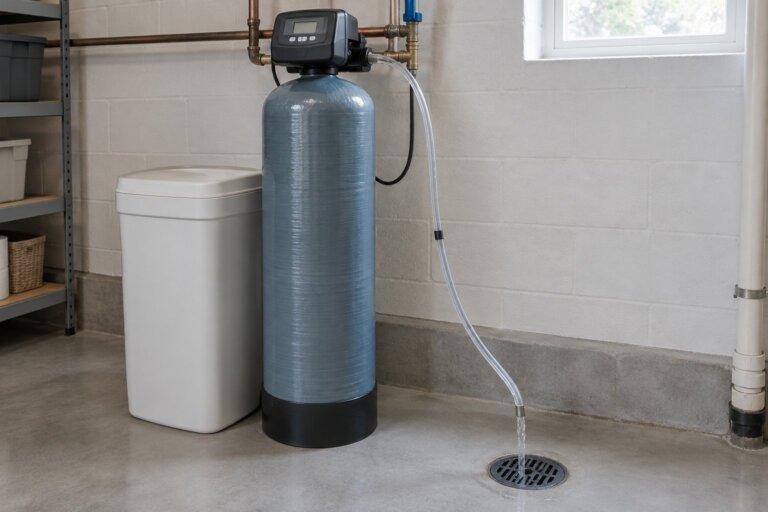
- Sewage or musty: often bacteria growing in a dirty brine tank, or a drain line set up without an air gap. Check that the softener’s drain hose ends above the drain, not pushed into it.
- Bleach or chlorine: normal for a short time after you sanitize. It should clear once you flush the lines.
- Salty taste rather than a smell: a different problem, covered in water softener water tastes salty.
How do you clean and sanitize a smelly water softener?
Rheem’s order is to clean first, then sanitize. Whirlpool’s owner’s manual for its WHES40 and WHES44 softeners gives the sanitizing steps:
- Clean out the brine tank if there is sludge or old salt, and break up any salt bridge.
- Run a softener cleanser through a regeneration. Whirlpool’s manual tells owners to use its softener cleanser every four months; follow the cleanser’s label for the amount.
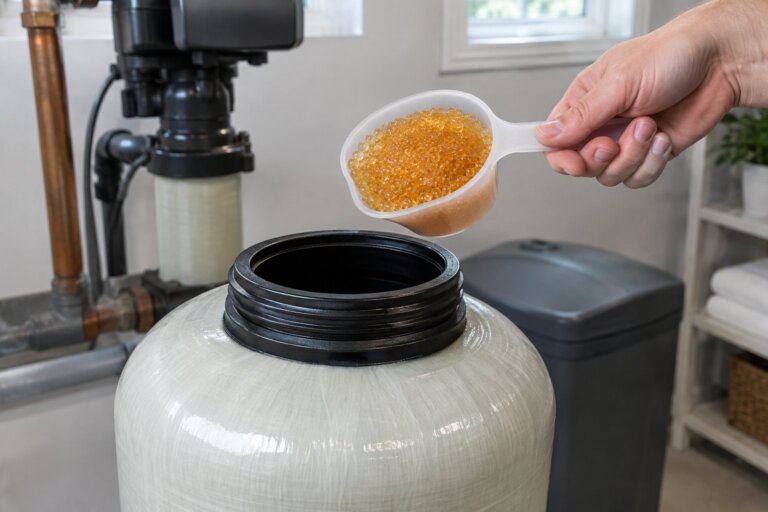
- Sanitize: open the salt lid, remove the brine well cover and pour about 3 ounces, or 6 tablespoons, of household bleach into the brine well. Replace the cover.
- Make sure the softener is in service, not in bypass.
- Start a regeneration, which draws the bleach through the resin and out to the drain.
- Flush: after the regeneration finishes, fully open a cold water faucet after the softener and let 50 gallons run through. Whirlpool says this takes at least 20 minutes.
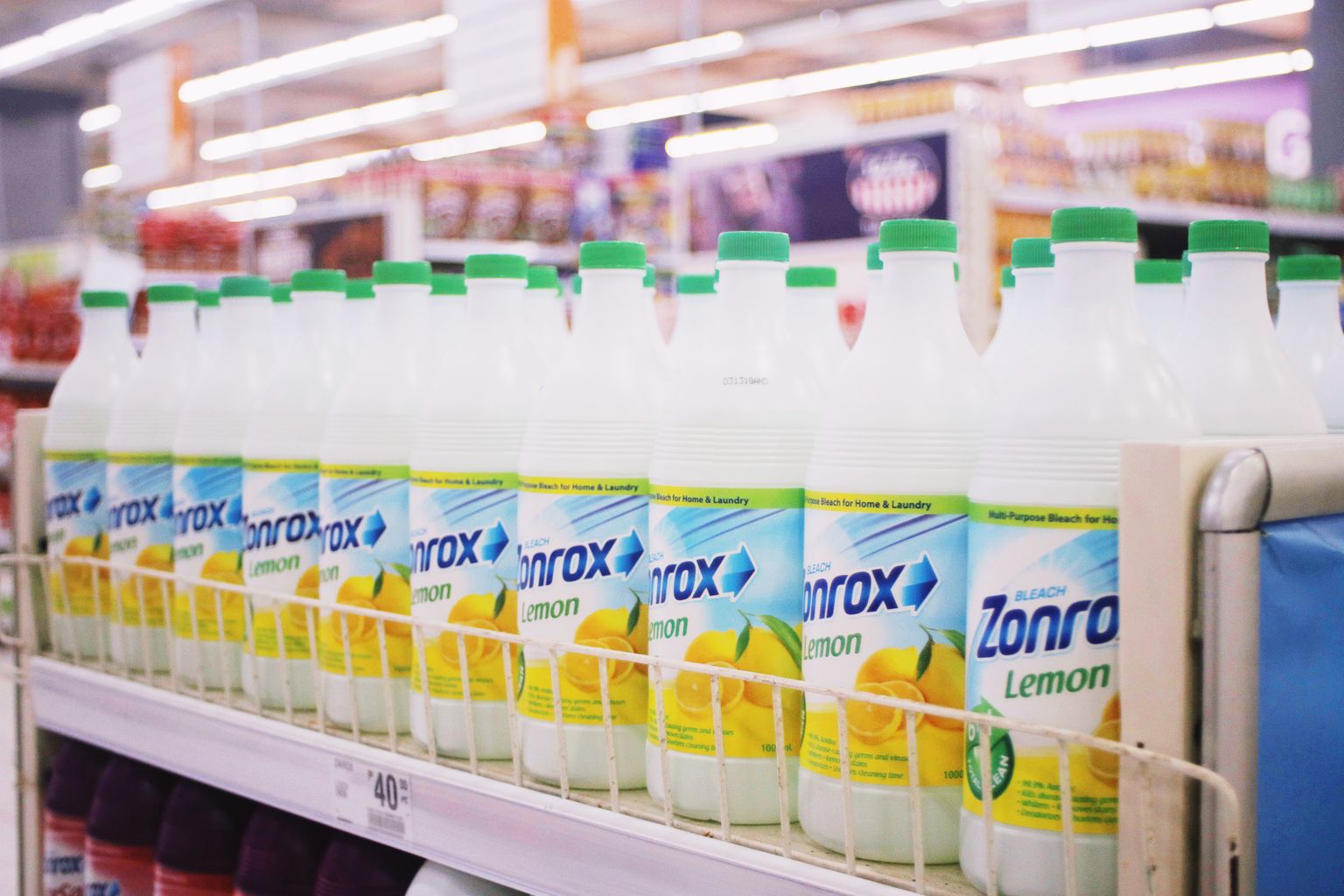
Use plain, unscented household bleach, and check your own manual first: some makers give a different amount or prefer their own sanitizer. RainSoft’s EC4 manual, for example, gives its own mix of 3/4 cup of 5.25% bleach in a quart of water for its models.
If the smell comes back after cleaning and sanitizing, Rheem suggests an extended sanitizing cycle and then contacting support. A smell that keeps returning within weeks usually means bacteria are coming in with the water supply, so the well itself needs treatment, as the Minnesota Department of Health describes for sulfur bacteria.
What we would buy for this job
- Res Care liquid water softener cleaner: the cleaning step before you sanitize, for resin fouled with iron and other metals. The listing says a half cup treats most home softeners and that it is certified to NSF/ANSI 60. $29.98 when we checked. Check your softener maker allows it first.
As an Amazon Associate, Complete Water Guide earns from qualifying purchases. Prices change, so check the listing.
Can a water softener remove a rotten egg smell?
Not in any useful way. Rheem says a sulfur smell from gas in the water supply needs filtration beyond a water softener. The Minnesota Department of Health lists options by level: activated carbon filters for hydrogen sulfide below 1 milligram per liter, oxidizing media filters such as manganese greensand up to about 6 mg/L, and aeration with filtration. The right one depends on how much hydrogen sulfide is in your water. Get the water tested before you buy anything.
How do you stop a water softener smelling again?
- Keep salt in it and let it regenerate on schedule.
- Clean the brine tank when sludge builds up.
- Run a softener cleanser on your manual’s schedule, which is every four months for Whirlpool’s models.
- Sanitize after any repair or after the softener has been off for a long time, as Whirlpool’s manual says to do after service.
- Make sure the drain line has an air gap.
Frequently asked questions
Why does my water softener smell like rotten eggs?
Usually because the water coming in contains hydrogen sulfide, or the water heater is making it. Put the softener in bypass and smell a cold tap. If the smell stays, the softener is not the source. If it goes, sanitize the softener.
Why does my water softener smell like sewage?
Often bacteria in a dirty brine tank, or a drain hose with no air gap letting drain smells back. Clean the brine tank, sanitize the softener and check that the drain hose ends above the drain.
How much bleach do I put in my water softener?
Follow your own manual. Whirlpool’s WHES40 and WHES44 manual says about 3 ounces, or 6 tablespoons, of household bleach poured into the brine well, followed by a regeneration and a 50 gallon flush.
Is it safe to drink water from a softener that smells?
Do not assume it is. A smell can come from bacteria or from hydrogen sulfide in the supply. Find the source with the bypass test, sanitize the softener if it is the cause, and test well water if the smell remains.
Will a water softener remove sulfur smell?
No. Rheem says a sulfur odor caused by gas in the water supply needs filtration beyond a water softener.
Why does my water smell after the softener regenerates?
Water that sat in the softener and brine tank is the first to come out after a regeneration, so a dirty tank or bacteria in the resin shows up then. Clean and sanitize the softener.
Sources
- Rheem Water Treatment support, Odor or Taste in Softened Water (updated February 24, 2026): bypass test, sulfur gas needs filtration beyond a softener, cleanser then sanitize.
- Whirlpool, WHES40 and WHES44 Owner’s Manual: sanitize with about 3 oz of household bleach in the brine well, recharge, run 50 gallons for at least 20 minutes; cleanser every four months.
- Minnesota Department of Health, Why Does My Water Smell Like Rotten Eggs? Hydrogen Sulfide and Sulfur Bacteria in Well Water: hot and cold faucet test, magnesium anode, softener disinfection by installer or manufacturer instructions, carbon below 1 mg/L, oxidizing media up to about 6 mg/L.
- RainSoft EC4 installation and operation manual: 3/4 cup of 5.25% bleach in a quart of water.