A water softener using too much salt is almost always regenerating more often than it needs to, or using more salt each time than it needs to. The usual causes are a hardness setting that is too high, a leak or outdoor faucet running through the softener, a maximum-days setting left at 1 or 2 days, a salt dose set too high, or an old timer-based softener that regenerates on a schedule whatever you use. Rheem’s support team lists the first three for its own softeners.
Before you change anything, work out what “too much” means for your house. Below we show the math, then each cause and how to fix it.
How much salt should a water softener use?
It depends on two numbers: how hard your water is and how much of it you use. Morton Salt says the average household uses about two bags every two months, which works out to roughly one bag a month.
You can check your own house with the efficiency mark that NSF uses. Under NSF/ANSI 44, a softener carrying the efficiency rating must remove at least 3,350 grains of hardness per pound of salt, according to NSF’s listing notes. Here is the math for a typical home:
- Water at 15 grains per gallon, and 300 gallons a day, which is the EPA WaterSense figure for an average American family at home.
- Hardness to remove each day: 15 × 300 = 4,500 grains.
- Salt needed at the NSF efficiency mark: 4,500 ÷ 3,350 = about 1.3 pounds a day.
- That is about 40 pounds in a month, one standard bag, which matches Morton’s average.
Run your own numbers. If your softener empties a 40 pound bag in a week on water like this, it is using far more than it should. If your water is very hard or your family is large, more salt can be correct.
| Hardness (gpg) | Gallons a day | Salt a month at 3,350 grains/lb |
|---|---|---|
| 10 | 200 | about 18 lb |
| 10 | 300 | about 27 lb |
| 15 | 300 | about 40 lb |
| 20 | 300 | about 54 lb |
| 25 | 400 | about 90 lb |
The table is our calculation over 30 days and assumes an efficiency-rated softener. Older or less efficient units use more salt for the same water.
Why is my water softener using too much salt?
1. The hardness setting is too high
Rheem says the hardness setting should match the hardness and iron in your water, and that the higher the hardness setting, the more salt the softener uses. A number entered in parts per million instead of grains per gallon is a big overshoot: 1 grain per gallon is about 17.1 ppm, so typing 170 instead of 10 makes the softener think the water is 17 times harder. See our guide to the water softener hardness setting.
2. Water is running somewhere you do not know about
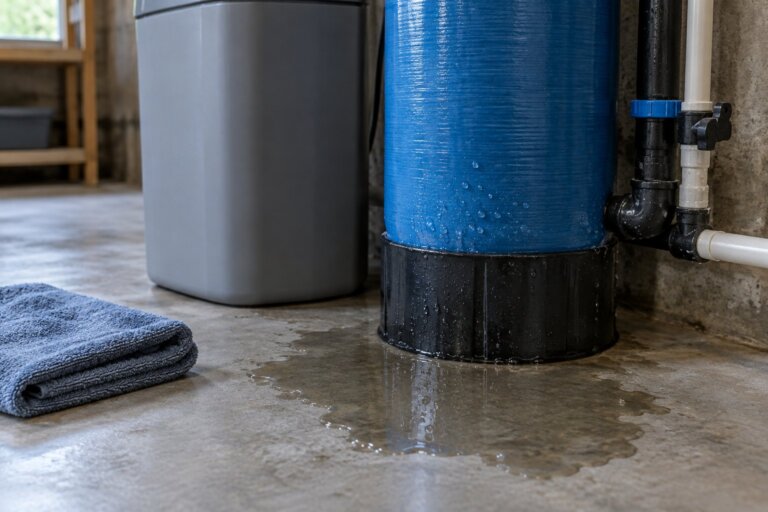
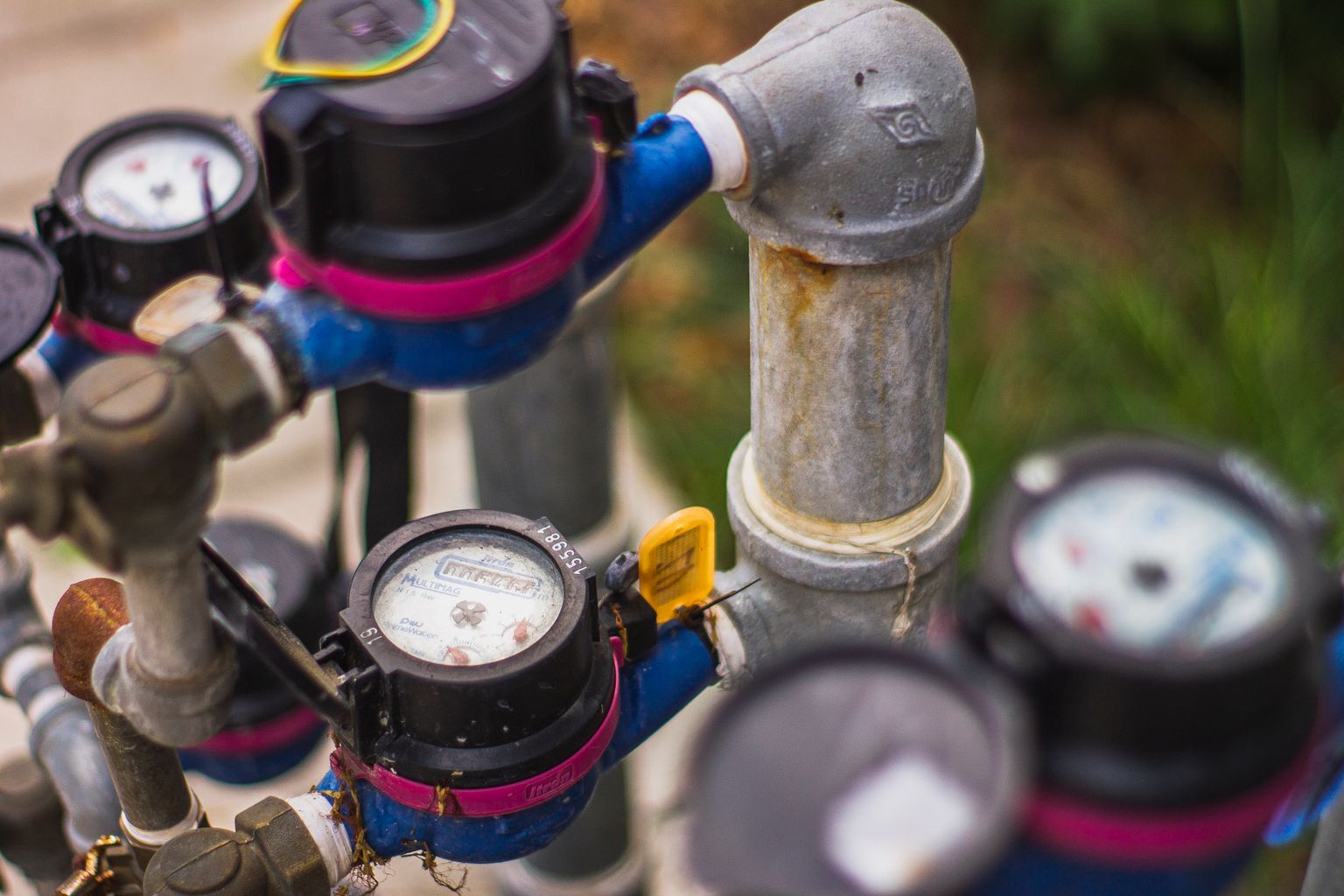
A metered softener uses more salt when it sees more water. Rheem says high water use can come from a leaky fixture or other plumbing problem, and that outdoor faucets or sprinklers on softened water put a much higher demand on the softener. Its test: turn off all water in the house, open the softener’s flow meter screen, and watch whether the number climbs. Check over several days to catch a toilet that only runs now and then.
3. The maximum days between regenerations is set too low
Rheem warns that if the maximum days setting is very low, such as 1 or 2 days, the system recharges more often and can use much more salt than necessary. Raise it, or turn it off so the softener regenerates only on demand. If your softener seems to regenerate constantly, our guide to a water softener that keeps regenerating covers the valve problems too.
4. The salt dose per regeneration is set too high
Many softener valves let you set how much salt goes into each regeneration. Pentair’s Fleck 5600SXT service manual includes a “salt setting per regeneration” line on its setup sheet for this reason. A dose set higher than your water needs adds salt to every single regeneration. If a technician set it, ask why before you change it, and stay within the range your manual allows.
5. It is a time clock softener
A time clock softener regenerates on a fixed schedule, every set number of days, whether you used water or not. Culligan describes these as time-initiated systems, compared with demand-initiated systems that regenerate based on use. A water treatment guide on brine efficiency notes that softeners can only be efficiency rated under the NSF standard if they use demand initiated regeneration, not a time clock. A timer softener keeps using salt while you are away or when fewer people live in the house. Shortening its schedule to match real use helps; replacing it with a metered or high efficiency softener helps more.
6. A change in the house
Sometimes nothing is broken. A new family member, a hot tub fill, house guests, a new irrigation zone or a switch from city water to a well all raise salt use. So does a hardness change at your water supplier. Test your raw water again before blaming the softener.
Can low salt use be a problem too?
Yes, and it is the opposite warning sign. If the salt level does not drop at all for weeks, the softener may not be making brine, often because of a salt bridge. Our guide to water softener salt level shows how to check for one.
What we would buy for this job
- Varify water hardness test strips, 0 to 25 gpg: test your raw water before you touch the hardness setting. Entering the right number in grains per gallon is the cheapest salt saving there is.
As an Amazon Associate, Complete Water Guide earns from qualifying purchases. Prices change, so check the listing.
How do you make a water softener use less salt?
- Test your raw water hardness and set the softener to match it, in grains per gallon.
- Run the flow meter test with all water off, and fix any leak it finds.
- Take outdoor faucets and irrigation off softened water if they are on it.
- Check the maximum days setting and raise it or turn it off.
- Check the salt dose against your manual.
- Track one month: write down the date and how many bags you add, and compare with the table above.
Changing the type of salt does not change how much the softener uses per regeneration, but cleaner salt leaves less sludge in the tank. Our comparison of softener salt pellets and crystals covers the difference.
Can you put too much salt in a water softener?
Filling the brine tank too full does not make the softener use more salt. The valve controls how much brine it draws each time, not the amount sitting in the tank. Keep it to the level your manual gives, so you can still see the salt and the water. If your soft water tastes salty, that is a different problem, covered in water softener water tastes salty.
Frequently asked questions
How long should a 40 pound bag of salt last in a water softener?
About a month for an average household, by Morton’s figure of two bags every two months. At 15 grains per gallon and 300 gallons a day, an efficiency-rated softener needs about 40 pounds a month by our math.
Why is my water softener suddenly using so much salt?
Something changed: a new leak, a hardness setting that was reset or entered wrong, a maximum days setting of 1 or 2 days, more people in the house, or water running to an outdoor faucet or sprinkler through the softener.
How do I adjust my water softener to use less salt?
Set the hardness to your real tested hardness, fix leaks, raise or turn off the maximum days between regenerations, and check the salt dose per regeneration against your manual.
How many bags of salt does a water softener use a month?
Morton says the average household uses about two bags every two months, so about one a month. Very hard water and large families use more.
Does a leaking toilet use softener salt?
Yes, on a metered softener. Every gallon that leaks through the softener counts toward the next regeneration, and every regeneration uses salt.
What is an efficient water softener?
One that removes a lot of hardness per pound of salt. NSF’s efficiency rating under NSF/ANSI 44 requires at least 3,350 grains of hardness removed per pound of salt.
Sources
- Rheem Water Treatment support, Excess Salt Use (updated February 19, 2026): hardness and iron setting, leak test with the flow meter, outdoor faucets and sprinklers, maximum days set to 1 or 2.
- Morton Salt, Morton Water Softeners FAQ: average household uses about two bags every two months.
- NSF, NSF/ANSI 44 listings: efficiency rating at a minimum of 3,350 grains of hardness removed per pound of salt.
- US EPA WaterSense, How We Use Water: more than 300 gallons a day per average family at home.
- Pentair, Fleck 5600SXT Downflow Service Manual: salt setting per regeneration. Culligan: time-initiated and demand-initiated systems.
- Monthly salt figures calculated by us: pounds of salt = hardness (gpg) × gallons per day × 30 days ÷ 3,350 grains per pound.
- Water Treatment Guide, Achieving Brine Efficiency in Softening: efficiency rating requires demand initiated regeneration.