Here is how to thaw frozen pipes: open the faucet the pipe feeds, then warm the frozen section with a hair dryer, an electric heating pad, a space heater kept clear of anything that burns, or towels soaked in hot water, until full water pressure comes back. Never use a blowtorch, a propane or kerosene heater, or any open flame. Those are the American Red Cross rules, and we follow them here. If you cannot find the frozen spot, cannot reach it, or the water does not come back, call a licensed plumber.
Below we explain how to tell a pipe is frozen, where the ice usually is, the exact thawing steps, why a pipe bursts (it is not where you think), and how to stop it happening again.
How do you know a pipe is frozen?
The first sign is a faucet that gives only a trickle, or nothing, on a cold morning while other faucets work. The Red Cross says that if you turn on a faucet and only a trickle comes out, you should suspect a frozen pipe. Other signs we look for:
- Frost on the outside of an exposed pipe.
- One fixture is dry while the rest of the house has water, which points to the pipe feeding that fixture.
- No water anywhere in the house, which points to the main line where it enters the building.
- A toilet that will not refill after a flush.
If water is spraying, dripping from a ceiling or pooling on the floor, the pipe has already split. Turn off the main water shutoff first, then deal with the thaw and the repair.
Where do pipes usually freeze?
Pipes freeze where cold air reaches them. The Red Cross frozen pipes guide names three groups:
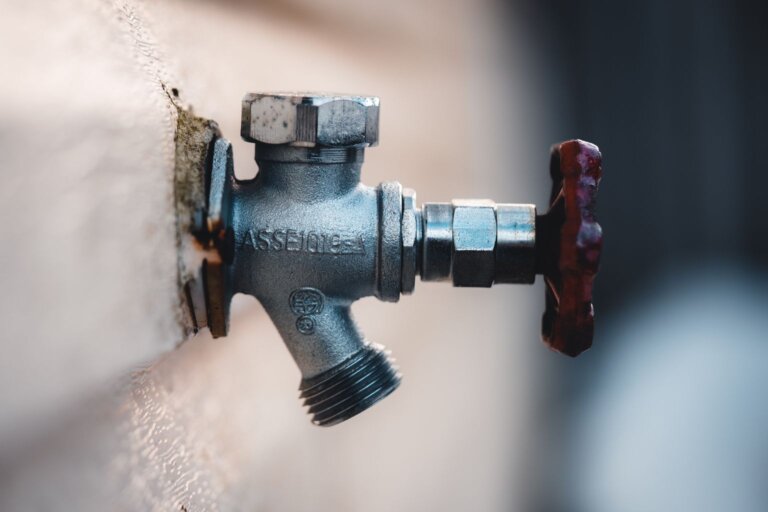
- Pipes exposed to severe cold: outdoor hose bibs, swimming pool supply lines and sprinkler lines.
- Supply pipes in unheated spaces: basements, crawl spaces, attics, garages and kitchen cabinets.
- Pipes that run along outside walls with little or no insulation.
The Red Cross also says the likely spots are against exterior walls or where the water service enters the home through the foundation. Start your search there. A pipe that has frozen is usually colder to the touch than the pipe around it, and sometimes has frost on it.
How cold does it have to be? Consumer Reports says frozen pipes generally occur below 20°F, but they can freeze above that, especially uninsulated pipes on an outside wall.
How to thaw frozen pipes, step by step
These steps follow the Red Cross method, in order.
- Open the faucet. Turn on the faucet the frozen pipe feeds, both hot and cold if it is a mixing tap. As the ice melts, moving water helps melt the rest, and an open faucet gives the water somewhere to go.
- Find the frozen section. Follow the pipe back from the faucet toward the outside wall or the point where it enters the house. Look for frost and feel for the coldest stretch.
- Warm the pipe from the faucet end first. Start near the open faucet and work back toward the ice, so melted water can drain out instead of being trapped.
- Use a safe heat source. The Red Cross lists four: an electric heating pad wrapped around the pipe, an electric hair dryer, a portable space heater kept away from flammable materials, or towels soaked in hot water.
- Keep going until full pressure comes back. A trickle is not the end. The Red Cross says to apply heat until full water pressure is restored.
- Check every other faucet. If one pipe froze, others may have too.
- Look for leaks once water flows. A split often only shows after the ice melts, so check the thawed pipe and the area under it for drips over the next hour.
Why should you never use a torch or open flame?
An open flame can start a fire inside a wall or under a floor, and it can overheat the pipe itself. The Red Cross says not to use a blowtorch, kerosene or propane heater, charcoal stove or any other open flame device to thaw a pipe. Fuel-burning heaters indoors also bring a carbon monoxide risk.
Electric space heaters need care too. The National Fire Protection Association says space heaters and heating stoves account for about 30% of home heating equipment fires but 73% of the deaths from them, and it says to keep a space heater at least 3 feet from anything that can burn. Do not leave one running in a crawl space or under a sink while you are away. With a hair dryer, keep it and its cord out of any water that drips from the pipe.
Why do frozen pipes burst?
Most people think the ice pushes the pipe apart where it forms. Research from the University of Illinois Building Research Council found that is not correct. Its study of freezing and bursting water pipes shows a pipe bursts when, first, freezing creates an ice blockage, and then further ice growth puts dangerously high pressure on the water trapped between the blockage and a closed faucet.
So the split is often away from the ice, in the stretch of pipe between the blockage and the closed tap. This is why an open faucet matters: it relieves that trapped pressure. The same study cites insurance estimates of more than $4 billion in pipe burst repairs over ten years, and found the problem more severe in the southern US, where homes are less often built for hard freezes.
How do you thaw a frozen pipe inside a wall?
You warm the room and the wall rather than the pipe. Turn the heat up, open the cabinet doors under the sink so warm air reaches the plumbing, and point a space heater at the wall from a safe distance. Keep the faucet open. If you can reach the pipe through an access panel, warm it directly.
If the water does not return, stop and call a licensed plumber. The Red Cross gives the same advice when the frozen area cannot be found or reached. Cutting into drywall to reach a pipe is better left to someone who can repair it in the same visit, because the pipe may already be split.
Will frozen pipes thaw on their own?
Yes, once the temperature around them rises above freezing, but waiting is a gamble. We found no reliable figure for how long a natural thaw takes, because it depends on the pipe, the insulation and the weather. The risk while you wait is the trapped pressure the Illinois study describes, which can split the pipe before the ice clears. Open the faucet and add gentle heat rather than waiting.
How long does it take to thaw frozen pipes?
There is no published standard time. A short section you can reach with a hair dryer or heating pad thaws far faster than a long frozen run or a pipe inside an outside wall. Treat full water pressure, not the clock, as the finish line. If you have worked on an accessible pipe for a long time with no change, the ice may be somewhere else.
Once the water flows, you may see sputtering or white, cloudy water for a minute. That is usually air pushed out of the lines. Our guides to air coming out of the faucet and cloudy drinking water explain how to tell air from something else. If pressure stays weak after the thaw, see low water pressure.
How do you stop pipes freezing again?
The Red Cross prevention list is short and cheap to follow:
- Let cold water drip from a faucet served by exposed pipes when it is very cold. Even a trickle helps prevent freezing.
- Open kitchen and bathroom cabinet doors so warm air reaches the pipes, and move cleaners out of children’s reach.
- Keep the thermostat at the same temperature day and night during a cold snap.
- If you go away, leave the heat on, set no lower than 55°F.
- Keep the garage door closed if water lines run through the garage.
- Disconnect and drain garden hoses, close the inside valve to each outdoor hose bib, and leave the outside bib open so leftover water can expand.
- Insulate pipes in unheated areas with pipe sleeves, or fit UL-listed heat tape or heat cable. The Red Cross notes that even a quarter inch of newspaper gives some protection where hard freezes are rare.
What we would buy for this job
- Frost King HC6A automatic electric heat cable, 6 ft, 120V: for the pipe that froze, once it is thawed and dry. Built-in thermostat, rated for metal and plastic pipe, 7 W per foot by the listing. $32.38 when we checked. Install it the way the maker’s sheet shows.
As an Amazon Associate, Complete Water Guide earns from qualifying purchases. Prices change, so check the listing.
When should you call a plumber?
Call a licensed plumber when you cannot find the frozen section, cannot reach it, or cannot get the water back after a fair try. Call straight away if the pipe has split, water is coming through a ceiling or wall, or the main line where water enters the house is frozen. Plumbers have electric pipe thawing equipment for metal pipe that is not a do-it-yourself tool.
Frequently asked questions
What is the fastest safe way to thaw a frozen pipe?
Open the faucet and warm the frozen section with a hair dryer or an electric heating pad, starting near the faucet and working back. Keep heating until full water pressure returns. Never use a torch or any open flame.
Should I turn off the water if my pipes are frozen?
Not if the pipe is whole. Keep the faucet open so melting water can flow out. If the pipe has split or you see water leaking, turn off the main water shutoff right away and call a plumber.
Can I pour hot water on a frozen pipe?
The Red Cross suggests wrapping the pipe in towels soaked in hot water. Use hot tap water rather than boiling water, and catch the runoff so it does not soak floors or electrical outlets.
At what temperature do pipes freeze?
Consumer Reports says frozen pipes generally occur below 20°F. Uninsulated pipes on outside walls, in crawl spaces or in garages can freeze at milder temperatures.
Should I leave faucets dripping at night?
Yes, when it is very cold. The Red Cross says running water through a pipe, even at a trickle, helps prevent freezing. Drip the cold water from faucets that are fed by pipes on outside walls or in unheated areas.
Will a space heater thaw frozen pipes?
It can, and the Red Cross lists it as a safe option if it is kept away from flammable materials. The NFPA says to keep space heaters at least 3 feet from anything that can burn. Do not leave one running while you are away.
Sources
- American Red Cross, Preventing and Thawing Frozen Pipes: at-risk pipes, thawing steps, safe heat sources, no open flame, 55°F when away. Checked November 17, 2026.
- Gordon, J. R., An Investigation into Freezing and Bursting Water Pipes in Residential Construction, Building Research Council, University of Illinois at Urbana-Champaign, 1996 (abstract on IDEALS).
- National Fire Protection Association, Heating safety: space heater share of heating fires and deaths, 3 feet clearance. Checked November 17, 2026.
- Consumer Reports, How to keep pipes from freezing: freezing generally below 20°F.