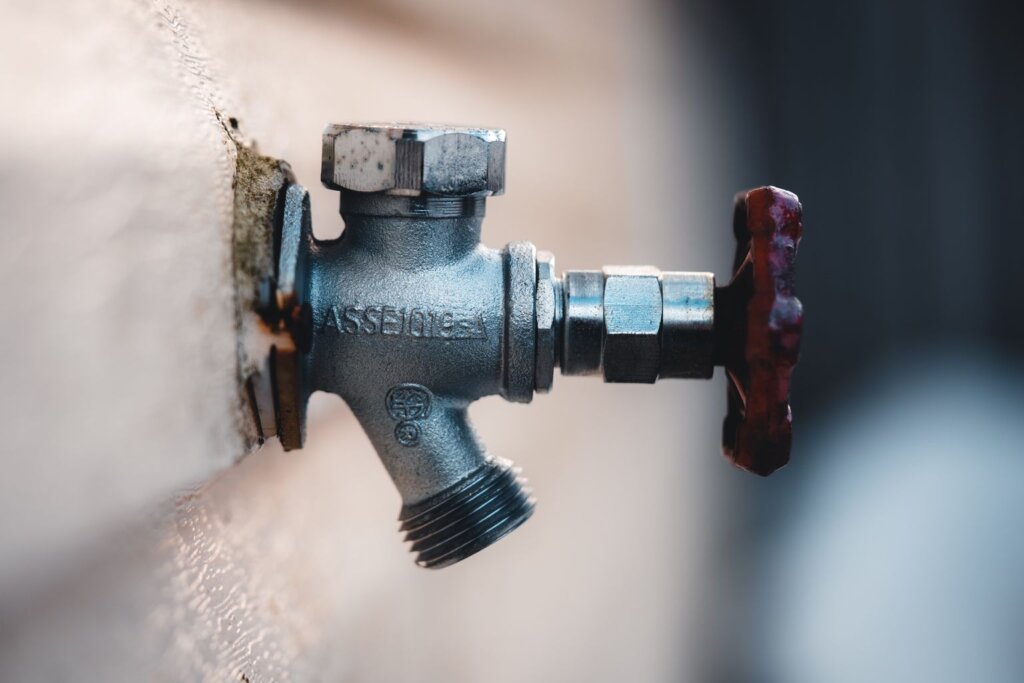
A frost free outdoor faucet works by moving the shutoff valve away from the cold. The handle is outside, but a long rod runs through the wall to a valve several inches inside the heated house, so when you turn it off, the water stops where it cannot freeze and the empty tube between the valve and the spout drains out. It only works if two things are true: the faucet slopes slightly down toward the spout, and nothing, such as a hose, is attached in freezing weather. Woodford, which makes the Model 17 sillcock, says the only cause of a burst tube is water trapped by an obstruction, such as a hose, or a faucet installed so it cannot drain.
Below we explain the parts, why a frost free faucet still bursts, how to tell if yours has, and what to do with it each winter.
How does a frost free outdoor faucet work?
It keeps the wet part of the faucet inside. Woodford’s diagram, How a Standard Frost-Proof Faucet Works, explains it this way: the water is shut off several inches into the home, the supply line does not freeze because of the heat in the home, and the faucet cannot freeze because there is no water in it. When the valve closes, all the water in front of it drains out, leaving the tube empty.
A standard outdoor faucet is different. Its valve sits right at the spout on the outside wall, so the water behind it is held in the coldest spot on the house. That is why ordinary hose bibs freeze so often, and why the Red Cross tells owners of regular faucets to close an inside shutoff and drain them before winter.
What are the parts of a frost free faucet?
- Handle and spout: the part you see outside.
- Long tube: the body that passes through the wall. Woodford sells its replacement parts for faucets from 4 to 24 inches long, so match the length to your wall.
- Stem rod: runs inside the tube from the handle to the valve.
- Valve seat and washer: at the far, indoor end of the tube. This is where the water actually stops.
- Vacuum breaker: the small cap or bump near the spout on anti-siphon models. It stops dirty water from a hose being pulled back into your drinking water.
The length matters. The valve has to sit inside the heated part of the house, past the insulation, or it is no better than a regular faucet.
Why does a frost free faucet still burst?
Because water was trapped in the tube. Woodford’s sheet is blunt about it: the only possible cause of the tube bursting is an obstruction, such as a hose left on in freezing weather, or an installation that stops the water draining after the valve is shut off.
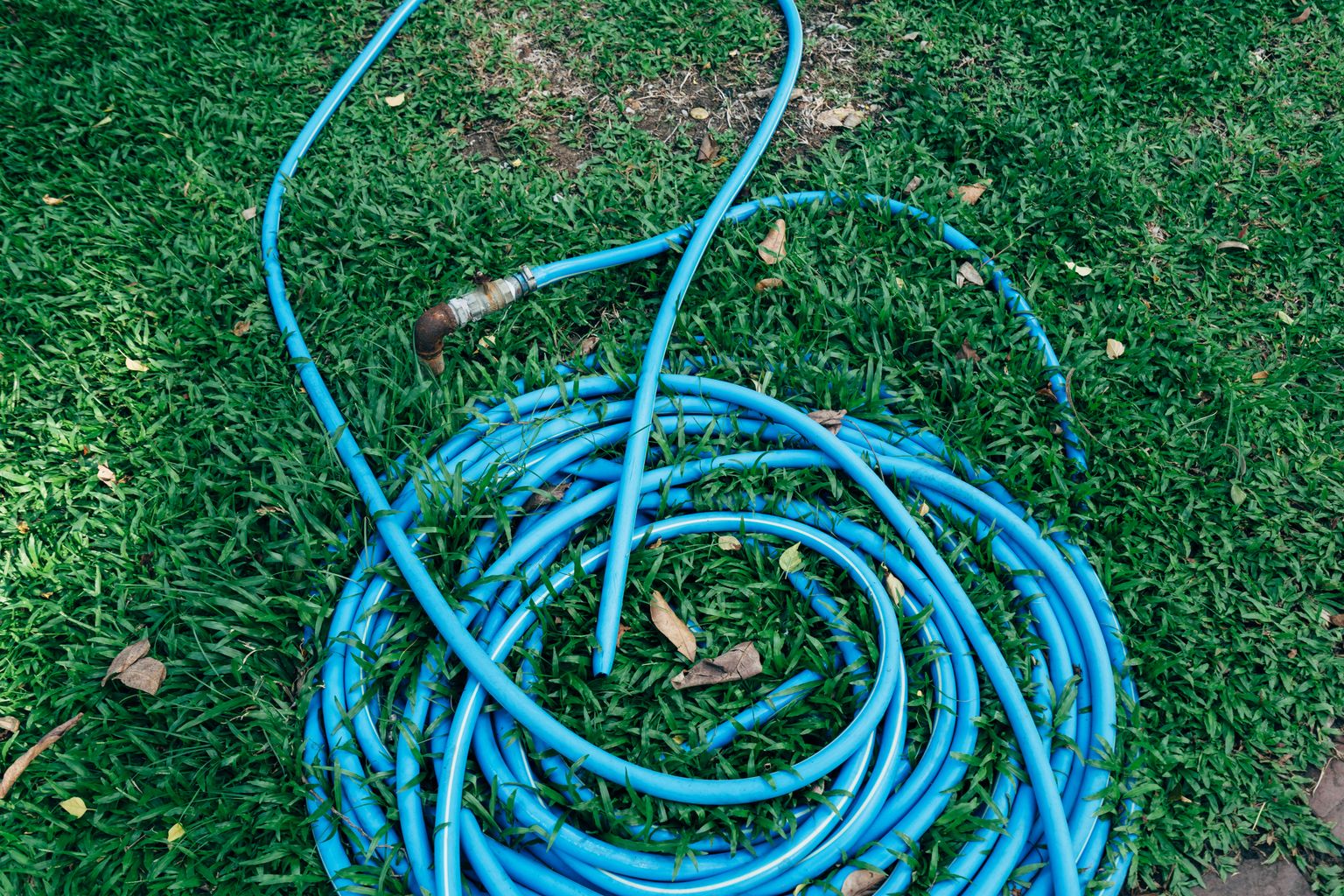
Here is what happens with a hose attached. The hose holds water in the tube instead of letting it drain. As it gets colder, that water freezes from the outside of the house back toward the inside. Once ice fills the faucet with the valve closed, the expanding ice has nowhere to go, and the copper tube splits to relieve the pressure. This is the same trapped-pressure effect behind most frozen pipe bursts.
The second cause is the slope. Woodford says the faucet must be installed with a slight downward pitch toward the spout. If it tilts back toward the house, water collects in the tube and freezes there even with no hose on.
How do you know if a frost free faucet has burst?
Usually not until spring. Woodford explains that when the tube splits, only a few drops leak at the time, and nothing shows inside the house. The split is on the outdoor side of the shutoff valve, so no water flows through it while the faucet is off. The first sign comes the first time you turn the faucet on in warm weather.
Signs we would check for the first time you use it each year:
- Water running inside the wall, the basement ceiling or the crawl space when the faucet is open.
- Much less water than usual coming out of the spout, because some is leaking inside.
- A damp patch on the inside wall behind the faucet.
Turn the faucet on for the first time while someone watches the inside wall or basement. If water appears, shut it off at once. A split tube means replacing the faucet, not the washer.
Do you need to shut off the water to a frost free faucet in winter?
Not if it is installed correctly and the hose is off. That is the point of the design. The valve is already inside the warm house. What you must do is disconnect the hose, along with any splitter, quick-connect or timer that could hold water in the tube.
If there is a separate shutoff valve inside for the faucet, closing it is a sensible extra step in a hard freeze, and it is the only safe option if you are not sure the faucet slopes the right way.
Should you cover a frost free outdoor faucet?
It is not required, but it does no harm. A foam faucet cover adds a little insulation around the spout and the hole in the wall, which helps on a very cold, windy wall. It does not fix the two things that actually cause bursts: a hose left on, or a faucet that slopes the wrong way. Remove the hose first, cover second.
How do you tell if a faucet is frost free?
Look at where the handle sits and how the faucet is built. A frost free faucet usually has:
- A handle that sits straight out from a long body, square to the wall.
- A long tube you can see from inside the basement or crawl space, running through the wall to the supply pipe.
- Often a vacuum breaker cap on top near the spout.
- A brand mark such as Woodford, Prier or Arrowhead on the body or handle.
A regular hose bib is short and connects to the supply pipe right at the outside wall. If the pipe behind your faucet is in an unheated space, treat it as a regular faucet: shut it off inside and drain it before the first freeze.
What is the difference between frost free and anti-siphon?
Frost free is about freezing. Anti-siphon is about keeping dirty water out of your supply. They are often combined in one faucet, but they are different features.
| Standard | What it covers |
|---|---|
| ASSE 1011 | Hose connection vacuum breakers, the anti-siphon device itself |
| ASSE 1019 | Wall hydrants that must be freeze resistant, automatic draining and have a permanent backflow device |
| ASSE 1052 | Hose connection backflow preventers, a two-check device |
| ASSE 1053 | Freeze resistant wall hydrants with dual check backflow protection |
That summary comes from Jay R. Smith Mfg. Co.’s explanation of the ASSE hydrant standards. The same note warns that many add-on vacuum breakers stop a hydrant from draining by itself, so water can be trapped behind them. If you fit a screw-on vacuum breaker, check that the faucet still drains after you shut it off.
What we would buy for this job
- Woodford 17CP-10 freezeless anti-siphon wall faucet, 1/2 inch x 10 inch: the Model 17 whose drain-down design we describe. Measure your wall first and pick the length that puts the valve inside the heated space. $59.59 when we checked.
As an Amazon Associate, Complete Water Guide earns from qualifying purchases. Prices change, so check the listing.
How do you get your frost free faucet ready for winter?
- Disconnect the hose and anything else attached to the spout.
- Open the faucet briefly, then close it. You should see a short flow of water drain out of the spout after you close it. That is the tube emptying.
- Check the slope. The spout end should sit slightly lower than the wall end.
- Seal the gap around the faucet where it goes through the wall so cold air cannot reach the valve end.
- Add a cover if the wall is exposed to wind.
If the faucet drips from the spout after you close it for more than a short while, the washer at the valve end may be worn. If water comes out around the handle, the stem packing may need tightening or replacing. Weak flow when it is open can point to a partly closed inside valve, as covered in our low water pressure guide. If the faucet sputters when you first open it in spring, that is usually air, explained in why air comes out of a faucet.
Frequently asked questions
How does a frost free hose bib work?
Its shutoff valve sits at the end of a long tube, several inches inside the heated house. When you close it, the water stops inside where it cannot freeze, and the water left in the tube drains out of the spout.
Can a frost free faucet freeze?
Yes, if water is trapped in the tube. Woodford says the cause is a hose or other obstruction left on in freezing weather, or an installation that does not slope down toward the spout.
Do I need to disconnect my hose from a frost free faucet?
Yes. A connected hose stops the faucet from draining, and the trapped water can freeze and split the tube. Disconnect the hose and any splitter or timer before the first freeze.
Why is my frost free faucet leaking inside the wall?
The tube most likely split during a freeze. Woodford explains the split stays hidden until the faucet is turned on, because it is on the outdoor side of the valve. The faucet usually needs replacing.
How long should a frost free faucet be?
Long enough that the valve end sits inside the heated space past the wall insulation. Woodford makes replacement parts for faucets from 4 to 24 inches long, so measure your wall before you buy.
Should water drip from a frost free faucet after shutting it off?
A short flow right after you close it is normal, because the tube is draining. A steady drip that does not stop usually means a worn washer at the valve end.
Sources
- Woodford Manufacturing Company, How a Standard Frost-Proof Faucet Works (Form works.104, rev. 04/15): valve several inches inside, automatic draining, downward pitch, hose left on as the cause of bursts, hidden split.
- Woodford Faucet Finder: repair kits for faucets 4 to 24 inches long. Checked November 17, 2026.
- Jay R. Smith Mfg. Co., ASSE Standards 1011, 1019, 1052 and 1053 for Hydrants.
- American Red Cross, Preventing and Thawing Frozen Pipes: close inside valves to outdoor hose bibs and drain them.