

Sparkling Water vs. Club Soda: What’s the Difference—and Which Should You Drink?
Updated on • U.S. guide to bubbles, taste, and health
Both drinks are refreshing, sugar-free, and naturally low in calories. Where they differ is in ingredients, taste, and how they fit into your routine. Below, we break it down so you can make the smarter pick—whether you’re hydrating all day or mixing a weekend spritz. If you’re new to bubbly water in general, start with our Sparkling Water Guide.
Definitions (Plain English)
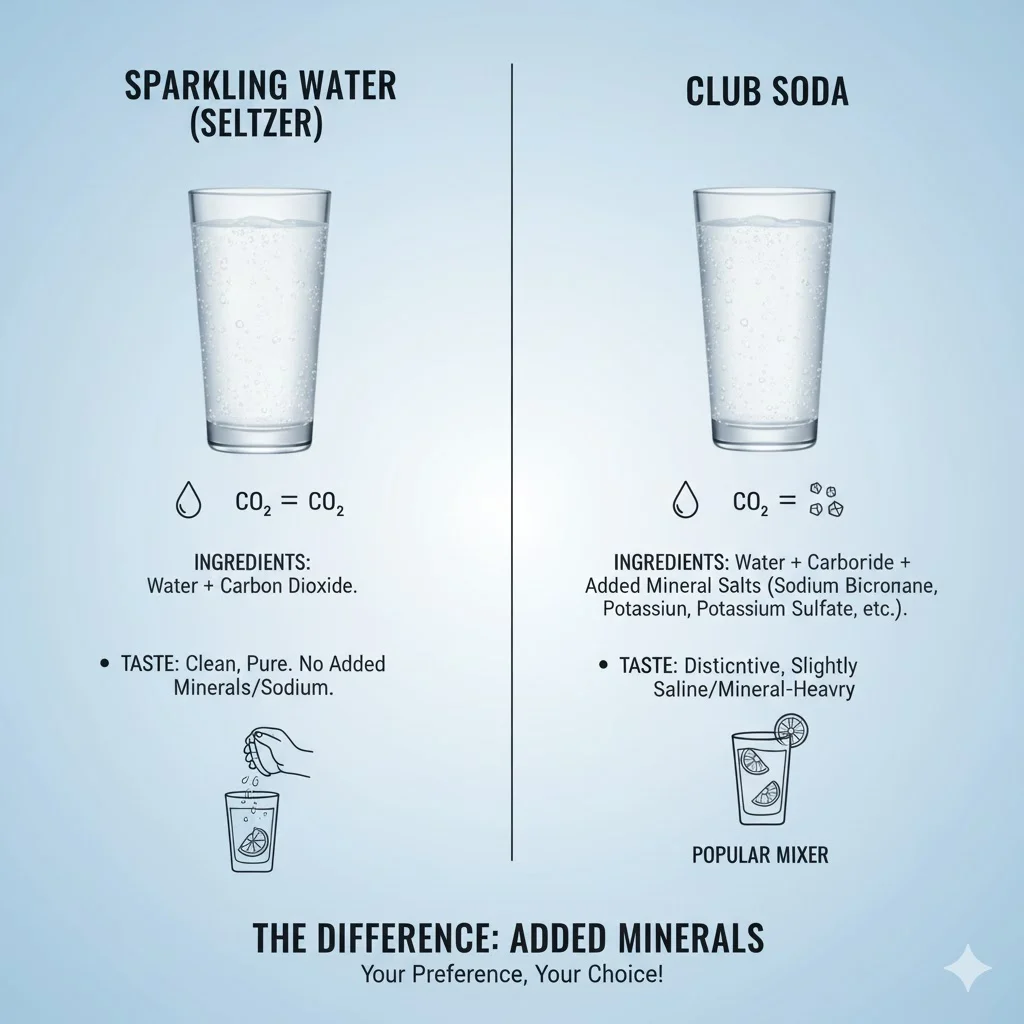
- Sparkling water: Water + CO₂. Can be naturally carbonated mineral water or purified water that’s been carbonated. Flavors may be added (unsweetened).
- Club soda: Carbonated water with added minerals for taste—commonly sodium bicarbonate (baking soda), potassium sulfate, and/or sodium chloride.
Ingredients & Labels: What to Look For
You’ll often see the difference right on the label. Club soda lists added mineral salts; many sparkling waters list only “carbonated water” (and natural flavors if flavored).
- Calories/Sugar: Both are typically 0—unless juice or sweeteners are added.
- Sodium: Club soda frequently has more sodium; check milligrams per serving if you’re watching salt.
- Minerals: Some sparkling mineral waters naturally contain calcium, magnesium, or bicarbonate; amounts vary by brand/source.
Taste, Bubbles, and Mouthfeel
Carbonation level and minerals change the experience. Sparkling waters tend to feel crisper and drier; club soda’s mineral salts can soften acidity and add a gentle saline note.
- Crisp & clean: Choose sparkling water when you want a neutral base that won’t overshadow food.
- Rounded & mixer-friendly: Club soda’s minerals play well with citrus, bitters, and spirits.
Which Is “Healthier”?
For most U.S. adults, both can be part of a healthy pattern. The main difference is sodium. If you have high blood pressure or are aiming to reduce sodium, sparkling water usually makes the simpler daily default.
- Zero sugar: Big upgrade over soda/juice.
- Watch sodium in club soda: Add it up if you drink multiple cans a day (see AHA sodium guidance).
- Teeth check: Acidity matters for enamel. If you love citrus flavors, read our dentist-informed guide Sparkling Water and Teeth for safe sipping habits.
When to Choose Sparkling Water vs. Club Soda
Use this quick chooser to match the drink to your moment:
- All-day hydration: Sparkling water (plain or non-citrus). Lower sodium, cleaner taste.
- Mixing cocktails & mocktails: Club soda (minerals improve balance with citrus/bitters).
- With meals: Either works—sparkling for crisp neutrality; club soda for savory pairings.
- Late night: Either—just check caffeine if using flavored lines (see brand pages).
Comparison Table (At a Glance)
| Feature | Sparkling Water | Club Soda |
|---|---|---|
| What it is | Water + CO₂ (sometimes natural minerals) | Carbonated water + added mineral salts |
| Taste | Crisp, clean, neutral | Slightly saline, rounder mouthfeel |
| Sodium | Usually low/zero (check label) | Often higher (varies by brand) |
| Best for | Daily sipping, pairing with delicate foods | Cocktails/mixers, savory or citrus-forward drinks |
| Common add-ins | None; sometimes natural flavors | Sodium bicarbonate, potassium sulfate, sodium chloride |
Smart Buying Tips (U.S. Stores)
- Check sodium per serving. If you go through several cans a day, pick lower-sodium options.
- Keep it unsweetened. “Sparkling lemonade/soda” styles can add sugars or juice—great for treats, not for all-day sipping.
- Flavor choice = habit builder. If bold aromas help you ditch soda for good, that’s a win (see our sparkling water hub for guidance).
What About Teeth?
Carbonation lowers pH slightly, while citrus flavors can be more acidic. For enamel-friendly habits—like avoiding all-day sipping and waiting 30–60 minutes before brushing—see Sparkling Water and Teeth.
FAQs
Is club soda the same as sparkling water?
- No. Club soda adds mineral salts for taste; sparkling water is typically just water + CO₂ (sometimes naturally mineralized).
Which is better for daily hydration?
- Sparkling water usually wins for daily sipping (often lower sodium, cleaner flavor). Club soda is great as a mixer.
Does club soda have more sodium?
- Often yes—always read the label if you’re tracking salt.
Is either drink bad for teeth?
- Both are sugar-free, which is great. Manage acidity by avoiding grazing, pairing flavors with meals, and brushing later. See our full guide to sparkling water and teeth.
References & Further Reading
