

How to Flush a Water Heater: Complete Step-by-Step Guide
Updated on , Home water maintenance explained
Water heaters are one of the most crucial appliances in any home, yet they are often ignored for years. Over time, minerals like calcium and magnesium settle at the bottom of the tank. This sediment buildup reduces heating efficiency, increases energy bills, and can even cause your water heater to fail early.
Flushing your water heater is a simple maintenance task that can extend the unit’s lifespan and ensure a constant supply of hot, clean water. In this 2000+ word guide, we will walk you through everything you need to know — including step-by-step instructions, how often to flush, common problems, safety tips, and when to call a professional.
Why Flushing a Water Heater Is Important
Over time, minerals present in hard water settle at the bottom of your water heater tank. This layer of sediment acts as a barrier between the heating element and the water, forcing the heater to work harder and consume more energy. Here’s why flushing is essential:
- Improves heating efficiency: Removes insulation-like sediment buildup that reduces heat transfer.
- Prevents rumbling or popping noises: Sediment causes boiling pockets that make loud sounds.
- Extends water heater lifespan: Reduces overheating and tank corrosion.
- Improves water quality: Dirty sediment can discolor water and cause bad odors.
- Reduces energy bills: Less energy is wasted when heat can transfer efficiently.
According to the U.S. Department of Energy, even a small layer of sediment can increase your water heater’s energy use by 25% or more. Flushing is the easiest way to avoid this.
Tools and Supplies You’ll Need
- Garden hose (6–15 feet)
- Bucket (optional)
- Screwdriver
- Gloves and safety glasses
- Towel for floor protection
- Adjustable wrench (if needed)
Safety First: Before You Start
Because you’ll be dealing with extremely hot water, pressure, and electrical or gas connections, safety is crucial:
- Never flush immediately after use: Let the heater cool for at least 1–2 hours.
- Wear gloves: Water inside can reach 120–140°F.
- Turn off power or gas supply: Prevents dry firing and overheating.
- Use a proper drainage area: Sediment-filled water can stain surfaces.
Step-by-Step: How to Flush a Water Heater
Step 1: Turn Off the Water Heater
For electric heaters, turn off the breaker.
For gas heaters, set the thermostat to “Pilot” or turn off gas supply entirely.
Step 2: Turn Off the Cold Water Supply
Locate the cold-water valve at the top of the unit and rotate it clockwise to stop water intake.
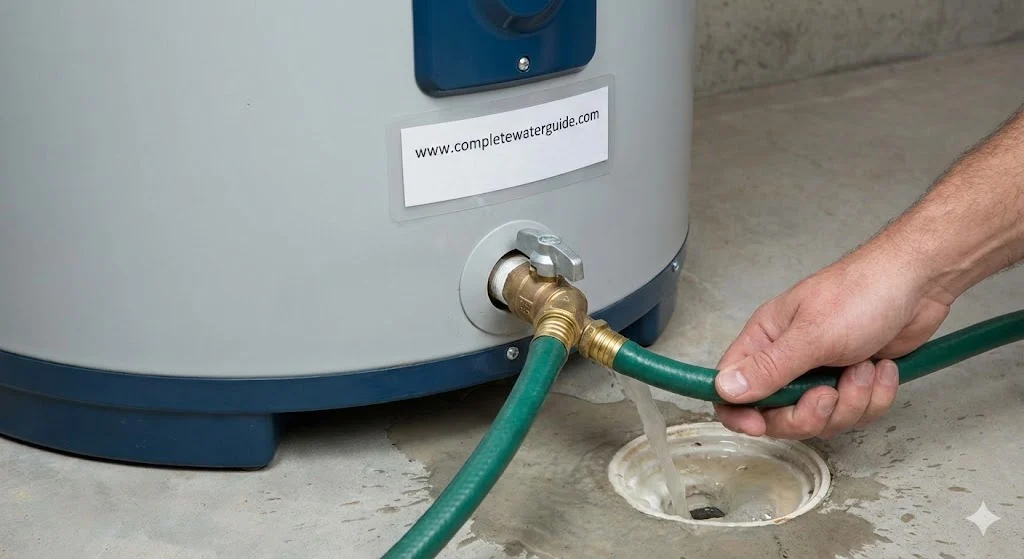
Step 3: Attach a Garden Hose
Connect the hose to the tank’s drain valve (usually near the bottom). Run the other end into a drain, driveway, or outdoors area.
Step 4: Open the Drain Valve
Once opened, hot water will start flowing out. This water may contain brown sediment, scale flakes, or rust.
Step 5: Open the Pressure Relief Valve
This allows air into the tank and helps draining happen faster. Be careful — it may release hot steam.
Step 6: Turn On the Cold Water to Flush Out Sediment
Turn the cold-water valve back on for short bursts. This helps push out stubborn sediment from the bottom.
Step 7: Continue Flushing Until Water Runs Clear
Cloudy, sandy, or rusty water indicates sediment is still coming out. Keep flushing until the water becomes clean.
Step 8: Close the Drain Valve and Disconnect Hose
Carefully remove the hose and wipe the area. Then close the relief valve.
Step 9: Refill the Tank
Turn the cold-water valve back on to refill the tank. Leave a hot water faucet open inside your home to release trapped air.
Step 10: Turn Power or Gas Back On
Once the tank is completely full, turn the heater back on. You should hear normal heating sounds soon after.
How Often Should You Flush a Water Heater?
The frequency depends on your water hardness:
- Hard water areas: Every 6 months
- Moderate hardness: Once per year
- Soft water regions: Every 18–24 months
If you live in a region where minerals are high, flushing more frequently protects the tank from major damage.
Signs Your Water Heater Needs Flushing
- Rumbling or popping noises
- Hot water takes longer to heat
- Water smells metallic or rusty
- Temperature fluctuations
- Discolored water from hot water tap
- Reduced hot water supply
Special Instructions for Gas Water Heaters
If you have a gas water heater, make sure to:
- Turn the thermostat to “Pilot” mode.
- Check the burner after flushing for sediment drops.
- Relight the pilot if necessary after the flush.
Special Instructions for Electric Water Heaters
Electric tanks require extra caution:
- Power must be OFF before draining.
- Dry firing can permanently damage the heating elements.
- Turn power back on only after confirming the tank is completely full.
Common Problems After Flushing (and Fixes)
1. Water Leaking from Drain Valve
Tighten the valve gently with a wrench. If leaking continues, you may need a valve replacement.
2. No Hot Water After Flushing
Check if the power or gas supply is back on. Also ensure the tank is full before heating.
3. Sediment Still Appearing in Water
Flush again with stronger bursts of cold water, especially if you haven’t flushed in several years.
4. Low Water Pressure After Flushing
Sediment may clog faucet aerators. Remove and clean them.
Maintenance Tips to Keep Your Water Heater Healthy
- Install a water softener if you have very hard water.
- Check the anode rod every 2–3 years.
- Keep temperature set between 120–130°F.
- Test the pressure relief valve annually.
When to Call a Professional
If you notice serious symptoms — like tank leaks, heavy rust, foul smells, or no hot water at all — you may need a licensed plumber. Sediment buildup can cause permanent tank damage if left unchecked.
Internal Resources for Further Reading
Learn more about water science and maintenance from our related guides:
- Is Water Wet? Explained with Science
- How Long Can You Go Without Water?
- Is Sparkling Water Bad for Your Teeth?
- How Many Ounces of Water Should You Drink Daily?
FAQs
How long does it take to flush a water heater?
- Usually 30–60 minutes, depending on sediment buildup.
Do tankless water heaters need flushing?
- Yes — tankless heaters should be flushed every 12 months using vinegar or a descaling solution.
Can flushing damage the heater?
- No — flushing prevents damage and prolongs lifespan.
What if the drain valve is clogged?
- A plumber may need to clear the valve or replace it.
