
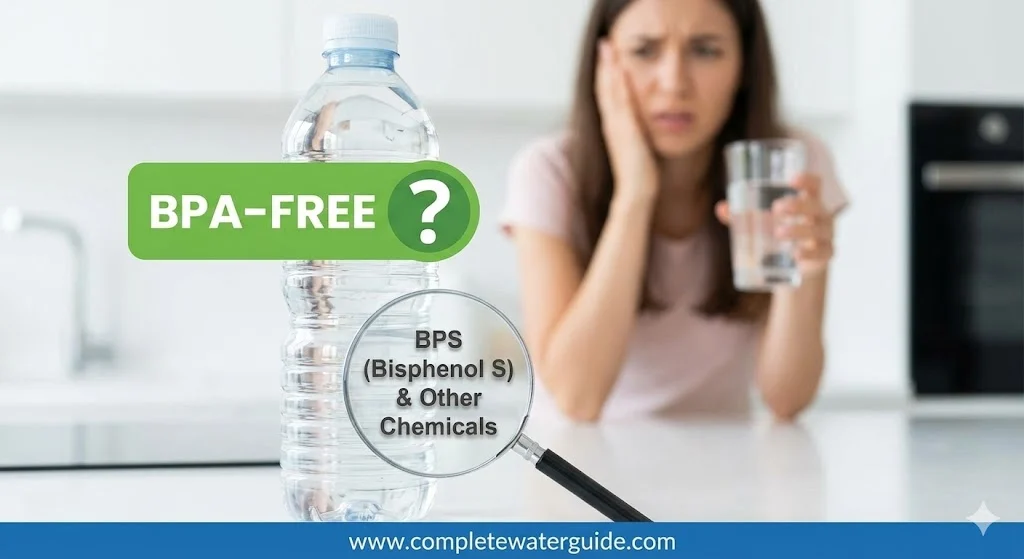

You see the “BPA-Free” sticker on a water bottle and assume it’s 100% safe. But does removing one chemical make plastic harmless? Here’s an answer-first guide uncovering the truth about regrettable substitutions (like BPS and BPF), estrogenic activity, and whether “Tritan” plastic is actually better. We’ll help you decide if you should trust the label or switch to glass.
The “Regrettable Substitution” Trap
When science linked BPA (Bisphenol A) to reproductive issues and cancer, companies rushed to remove it. However, to make hard, clear plastic, they still needed a hardening agent. Enter BPS and BPF.
Research suggests these substitutes are “chemical cousins” to BPA and may interfere with your body’s hormones (endocrine system) in very similar ways. This is why many health experts warn that “BPA-Free” is a marketing term, not a safety guarantee. For a broader look at daily plastic risks, read our guide on Is It Safe to Drink Water From Plastic Bottles Daily?
Comparison: BPA vs. BPA-Free vs. Alternatives
| Material Type | Key Chemical | Safety Verdict | Best Use |
|---|---|---|---|
| Old Polycarbonate (#7) | BPA (Bisphenol A) | Unsafe. Linked to hormonal issues. | Avoid completely. |
| Standard “BPA-Free” | BPS or BPF | Questionable. Similar risks to BPA. | Short-term use only. |
| Tritan™ Plastic | Copolyester (No BPA/BPS) | Better. Tested for estrogenic activity. | Durable reusable bottles (e.g., Nalgene). |
| Polypropylene (#5) | Olefins | Generally Safe. Heat resistant. | Tupperware, some sports bottles. |
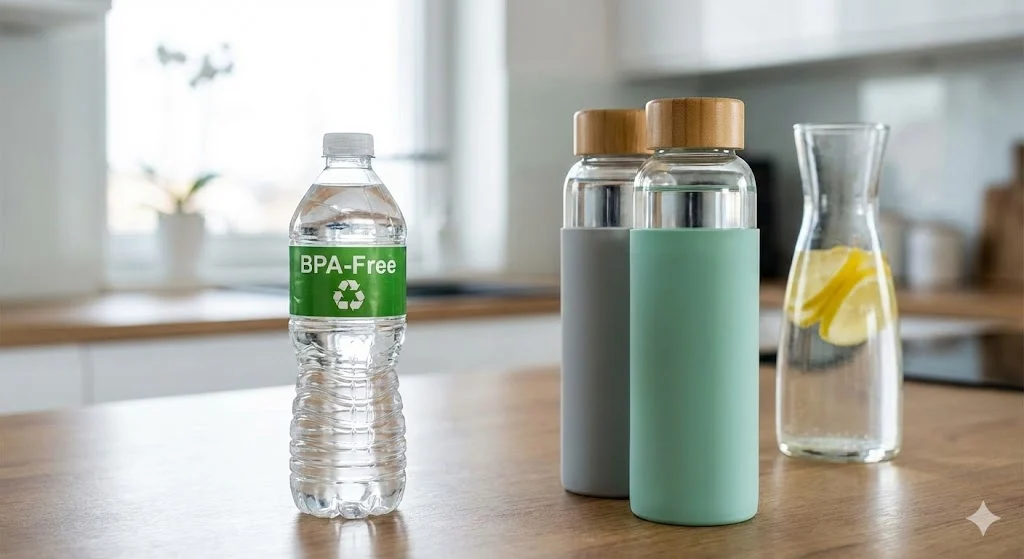
| Stainless Steel / Glass | None | Safest. Inert and non-leaching. | Daily water intake. |
Note: Even “safe” plastics can degrade. If your bottle becomes cloudy or scratched, it’s time to replace it.
Why “Estrogenic Activity” Matters
The main concern with BPA and its substitutes is that they are Endocrine Disruptors. They mimic the hormone estrogen in the body.
- Reproductive Health: Potential impacts on fertility in both men and women.
- Development: Particular risk for pregnant women, infants, and children.
- Metabolism: Some studies link these chemicals to obesity and metabolic disorders.
How to Minimize Risk with BPA-Free Bottles
You don’t have to throw away every piece of plastic you own, but you should treat it differently:
- Avoid Heat: Heat accelerates chemical leaching. Never put boiling water in a plastic bottle, and don’t leave it in a hot car (a major risk discussed in our daily plastic safety guide).
- Hand Wash Only: The high heat and harsh detergents of a dishwasher can break down the plastic surface, releasing chemicals.
- Discard Damaged Bottles: If your BPA-free bottle is scratched, pitted, or cloudy, the protective seal is broken. Recycle it.
- Switch for Acidic Drinks: Lemonade or juice is acidic and can draw chemicals out of plastic faster than plain water. Use glass for these.
FAQs
Is Tritan plastic safe?
Tritan is considered one of the safest plastics available. It is free of BPA, BPS, and BPF, and has been tested by third-party labs to ensure it does not have estrogenic or androgenic activity.
What does BPA-Free actually mean?
It simply means the product does not contain Bisphenol A. It does not guarantee the product is free of other bisphenols (like BPS) or phthalates.
Are silicone bottles safe?
Yes, food-grade silicone is generally considered a safe, chemically stable alternative to plastic. It does not leach chemicals under normal use and handles heat better than plastic.
How can I tell if a bottle has BPA?
Check the recycling code on the bottom. Code #7 (Polycarbonate) often contains BPA. Codes #2, #4, and #5 are generally BPA-free materials.
References
- NIEHS — Bisphenol A (BPA)
- National Institutes of Health — Estrogenic chemicals in BPA-free plastic
- Mayo Clinic — What is BPA?
What Readers Say (Verified)
Verified
I had no idea about BPS. I just threw out my old ‘BPA-Free’ cheap bottles and bought stainless steel.
Verified
Very informative. The tip about not washing plastic in the dishwasher is a game changer for me.
Verified
Good breakdown of Tritan vs other plastics. Makes choosing a gym bottle much easier.
Verified
Scary that ‘BPA free’ isn’t enough. Thanks for highlighting BPS and BPF risks.

1 Comment
Plastic Water Bottles and Heat: What Happens When Bottles Get Warm? - completewaterguide.com
December 20, 2025[…] You might think you are safe because your reusable sports bottle says “BPA-Free.” Unfortunately, heat doesn’t discriminate. Many alternatives contain BPS or BPF, which can also leach when heated. To understand why the label might be misleading, check out our guide: BPA-Free Plastic Bottles: Are They Really Safe? […]