Reading 0% — Dive in 🌊
Is a Leaking Water Heater Dangerous

Is a Leaking Water Heater Dangerous? 3 Critical Risks

Quick Answer
Is a Leaking Water Heater Dangerous? 3 Critical Risks
Yes, a leaking water heater can be very dangerous. Explosion Risk: If the leak is coming from the Temperature & Pressure (T&P) valve, the tank could be over-pressurized and prone to exploding. Electrocution: For electric heaters, water dripping onto exposed wires creates a severe shock hazard. Scalding Burns: Hot water escaping under pressure can cause third-degree burns instantly.

1. The T&P Valve Explosion Hazard

The Temperature and Pressure (T&P) valve is your safety net. If pressure builds too high, it opens to let steam escape. If this valve is leaking or stuck, it means your tank is under immense stress. A blocked valve can turn your water heater into a rocket, capable of launching through your roof. Never plug a leaking T&P valve.

2. Electrical Shock (Electric Heaters)

Water is highly conductive. If water leaks from the top of the tank or pools around the bottom where electrical connections are housing, touching the unit can be fatal. If you see water on an electric heater, do not touch the puddle. Go straight to your circuit breaker panel.

3. Structural & Mold Damage

While less immediate than an explosion, a slow leak destroys subfloors and encourages toxic black mold growth (Stachybotrys) within 24-48 hours. This poses long-term respiratory risks to your family.

Is Your Leak an Emergency? (Diagnosis Table)

Leak Location Likely Cause Danger Level Action
Side Valve (T&P) Excess Pressure / Faulty Valve CRITICAL (Explosion) Shut off power/fuel. Call pro immediately.
Bottom of Tank Internal Tank Rust/Crack High (Flooding) Tank failure imminent. Replace unit.
Top Connections Loose Fitting / Anode Rod Medium (Shock risk) Tighten connections. Watch wires.
Drain Valve (Spigot) Loose Valve / Bad Washer Low Tighten with wrench or cap it.

If you see steam hissing from anywhere, treat it as a critical emergency and evacuate the area.

Dr. Emily Carter

Dr. Emily Carter

Water Science & Facts · 24 articles

Dr. Emily Carter is a highly respected Water & Health Expert and Certified Water Heater Specialist with over 12+ years of professional experience in residential and commercial water systems. Her work focuses on the intersection of safe water quality, efficient…

Finding a puddle around your water heater is stressful, but is it an emergency? While a small drip might seem harmless, a leaking water heater can be a ticking time bomb—literally. Here’s an answer-first guide on the critical risks of leaks (from explosions to electrocution), how to identify if your T&P valve is failing, and the exact steps to take immediately to keep your home safe.
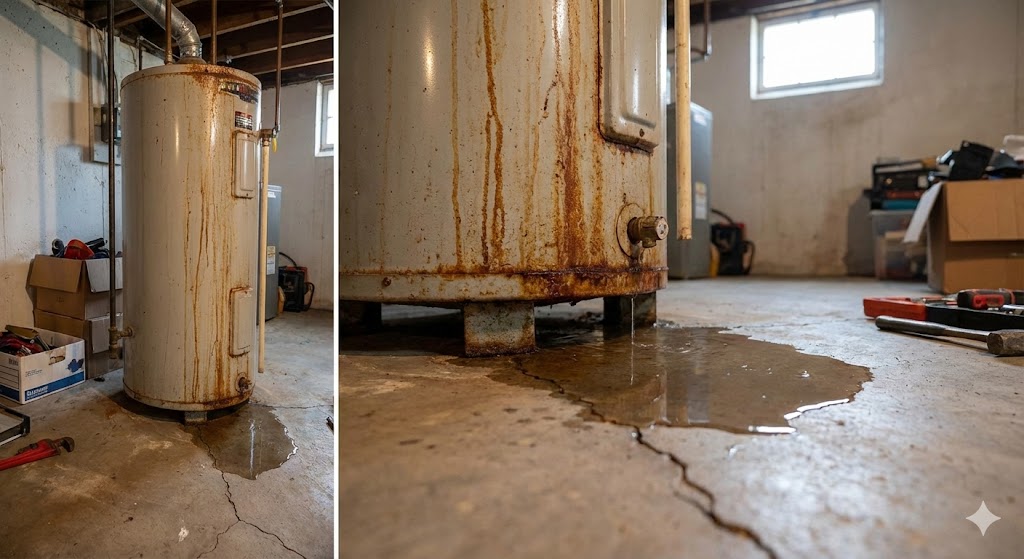
Water heater leaking from the bottom onto a concrete floor
Even a small leak can indicate dangerous internal pressure buildup or imminent tank failure.

Emergency Steps: What to Do RIGHT NOW

If you confirm a leak, follow this exact sequence to minimize danger:

     
  1. Turn Off the Heat Source:
    • Electric: Flip the breaker labeled “Water Heater” in your electrical panel.
    • Gas: Turn the dial on the heater thermostat to “OFF” or shut the gas supply valve on the pipe.
  2.  

  3. Turn Off the Water: Locate the cold water inlet valve (usually a handle or wheel above the tank) and turn it clockwise until it stops. This prevents the tank from refilling.
  4.  

  5. Drain the Tank (If Safe): Connect a garden hose to the bottom drain valve and run it to a floor drain or outside. This removes the scalding water and pressure.
  6.  

  7. Call a Professional: Leaks often require part replacement or a new tank. Don’t try to weld or patch a tank yourself.

FAQs

Can a water heater leak cause a fire?

Yes, indirectly. If water leaks onto electrical wiring, it can cause short circuits and sparks, leading to an electrical fire. For gas heaters, if the leak extinguishes the pilot light but gas continues to flow (and the safety valve fails), gas can accumulate.

Is a small drip dangerous?

A small drip isn’t an immediate explosion risk, but it is a sign of failure. Small leaks can become massive floods overnight once the metal rusts through completely. Do not ignore it.

Can I use my water heater while it is leaking?

No. Using a leaking heater maintains pressure and heat inside a compromised vessel, increasing the risk of rupture or flooding. Shut it down immediately.

How much does it cost to fix a leak?

If it’s just a loose valve or pipe connection, it might cost $150-$300 for a plumber. If the tank itself is leaking, the unit cannot be repaired and must be replaced, costing $1,200-$3,000 depending on the model.

References

Don’t wait for a flood. If you spot a leak, find a trusted local plumber immediately via our Water Heater Repair Services page or check our guide Water Heater Troubleshooting.

What Readers Say (Verified)

Robert K. Texas • 24 Nov 2025

Verified

★★★★★

The part about the T&P valve saved me. Mine was hissing, and I shut it off just in time before the pressure got worse.

Angela M. Vancouver • 21 Nov 2025

Verified

★★★★★

Scary but informative. I didn’t realize a leaky heater could cause an electrical fire.

Simon P. Manchester • 17 Nov 2025

Verified

★★★★☆

Good checklist for emergencies. Printed it out and taped it near the boiler.

Nathan L. Perth • 14 Nov 2025

Verified

★★★★★

My tank leaked from the bottom. This guide helped me confirm it was dead before I called a plumber.

Dr. Emily Carter

Dr. Emily Carter is a highly respected Water & Health Expert and Certified Water Heater Specialist with over 12+ years of professional experience in residential and commercial water systems. Her work focuses on the intersection of safe water quality, efficient heating systems, and long-term health impact for households across the United States. She is known for translating complex plumbing and water-heating science into clear, practical advice that homeowners can actually use.

Leave a Reply

Your email address will not be published. Required fields are marked *