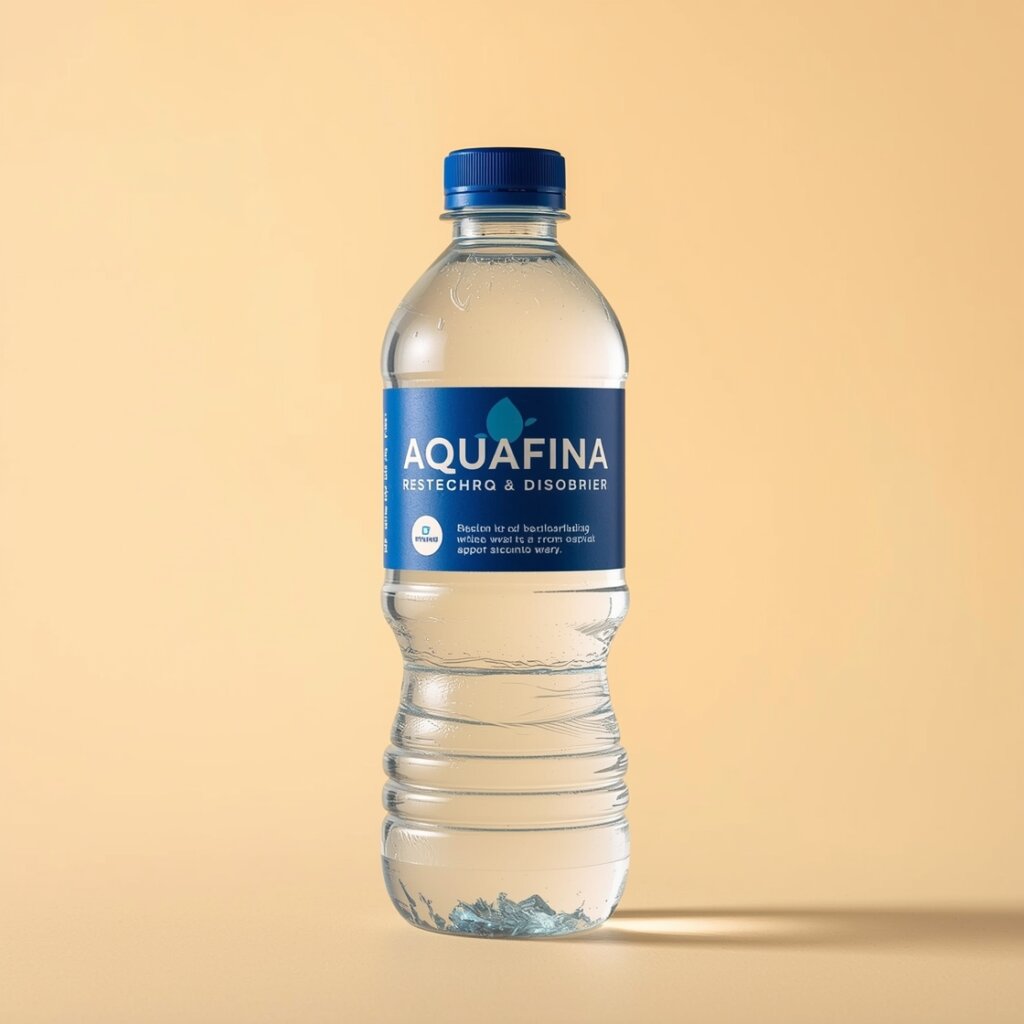
Quick Answer: Yes, trace amounts. Aquafina measured roughly 0.5 ppt (parts per trillion) total PFAS in Consumer Reports’ widely cited bottled water testing — below the 1 ppt limit scientists recommended in that report and well below the bottled water industry’s 5 ppt voluntary standard. Aquafina is purified municipal water run through PepsiCo’s 7-step “HydRO-7” process, which includes reverse osmosis — one of the few methods that actually removes PFAS. It tested cleaner than Poland Spring (1.66 ppt) but above non-detect brands like Icelandic Glacial.
What Exactly Did Testing Find in Aquafina?
Consumer Reports tested 47 bottled waters for per- and polyfluoroalkyl substances (PFAS) in its landmark analysis. Aquafina’s result came in at approximately 0.5 ppt total PFAS — placing it in the cleaner half of major noncarbonated brands tested.
For context, the numbers that matter in 2026:
- EPA legal limit (2024): 4 ppt each for PFOA and PFOS in drinking water
- Scientist-recommended limit (CR report): 1 ppt total PFAS
- Bottled water industry voluntary standard: 5 ppt total
- Aquafina: ~0.5 ppt — under all three
How Aquafina Compares to Other Brands
| Brand | Total PFAS (ppt) | Type |
|---|---|---|
| Icelandic Glacial | Non-detect | Spring |
| Essentia | 0.2 | Purified |
| Evian | ~0.3 | Spring |
| Dasani | ~0.4 | Purified |
| Aquafina | ~0.5 | Purified |
| Fiji | ~0.5 | Artesian |
| Nestlé Pure Life | ~1.0 | Purified |
| Poland Spring | 1.66 | Spring |
Full rankings across 20+ brands: Best Bottled Water Without PFAS and our complete bottled water rankings.
Why Aquafina Tests Relatively Clean: The RO Factor
Aquafina is not spring water — it is purified municipal water, and in the PFAS conversation that is actually an advantage. PepsiCo’s “HydRO-7” purification includes reverse osmosis, plus ozonation and UV treatment. Reverse osmosis physically excludes molecules by size and removes the large majority of both long-chain (PFOA, PFOS) and short-chain PFAS — something basic carbon filtration and natural spring filtration cannot reliably do.
This is the same reason Smartwater (vapor distillation) and Essentia (RO) test low: the purification method matters more than the source. Spring waters skip this step, which is why some — like Poland Spring — test 3x higher than Aquafina despite the “natural” branding.
Is 0.5 ppt Actually Safe?
By every current standard, yes. 0.5 ppt is one-eighth of the EPA’s 4 ppt legal limit for individual compounds and half of the strictest scientist-recommended 1 ppt total threshold. PFAS exposure is cumulative across food, dust, cookware and water — so the practical goal is minimizing your largest sources, and at 0.5 ppt, Aquafina is not a meaningful contributor.
One honest caveat: the widely cited figure comes from Consumer Reports’ testing of a sample at one point in time. Municipal source water varies by bottling plant and year. PepsiCo publishes bottled water quality reports on request, but ongoing independent retesting of Aquafina specifically is limited — the same caveat that applies to most brands.
What the HydRO-7 Process Actually Does
PepsiCo’s purification runs seven stages, and only some of them matter for PFAS. Understanding which is useful, because it explains why purified brands cluster at the bottom of the rankings:
- Reverse osmosis (the PFAS step). Water is forced through a membrane with pores around 0.0001 microns — smaller than PFAS molecules, which get physically excluded. Certified RO systems remove 94-99% of both long-chain (PFOA, PFOS) and short-chain compounds.
- Carbon filtration. Removes chlorine, taste and odor compounds. Activated carbon does reduce long-chain PFAS, but performance degrades as media saturates — which is why RO is the load-bearing step, not carbon.
- Ozonation and UV. Disinfection stages targeting bacteria and viruses. Neither removes PFAS — PFAS are famously resistant to oxidation, which is exactly why they are called forever chemicals.
So of seven steps, one does the real PFAS work. That single RO stage is the difference between Aquafina at ~0.5 ppt and an untreated spring source at 1.66 ppt.
Aquafina vs Dasani vs Smartwater: Purified Brands Compared
| Brand | Purification | PFAS (ppt) | Minerals |
|---|---|---|---|
| Essentia | RO + electrolytes | 0.2 | Added back |
| Dasani | RO + mineral blend | ~0.4 | Added back |
| Aquafina | HydRO-7 (RO + ozone + UV) | ~0.5 | None added |
| Smartwater | Vapor distillation | No published data | Added back |
The pattern holds across all four: every brand using RO or distillation that has been tested came in under 0.5 ppt. Aquafina’s distinguishing feature is that it adds no minerals back — which makes it taste flatter than Dasani or Smartwater, but has no bearing on PFAS.
Want Even Lower? Filter at Home
If PFAS is your specific concern, an NSF 53/58-certified filter takes tap water below what most bottled brands test at — for pennies per gallon. As an Amazon Associate we earn from qualifying purchases.
Clearly Filtered Pitcher
Tested against 365+ contaminants including PFOA and PFOS. The simplest way to go below bottled-water PFAS levels at home.
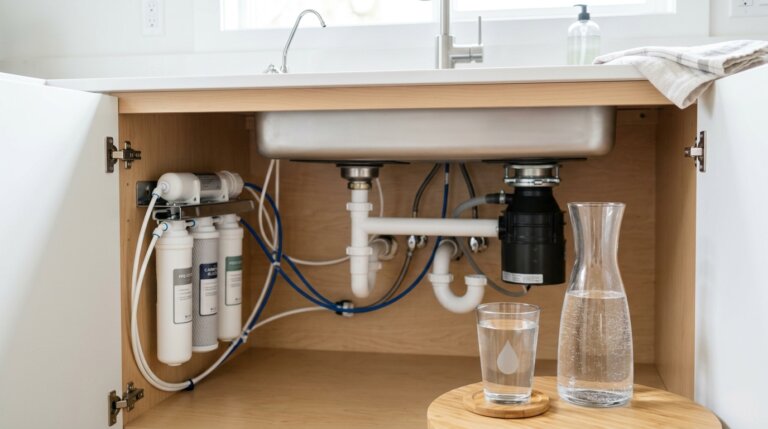
For under-sink and RO options, see the best certified PFAS filters.
What PFAS Actually Are (And Why 0.5 ppt Is a Small Number)
PFAS stands for per- and polyfluoroalkyl substances — a family of over 12,000 synthetic chemicals built around carbon-fluorine bonds, among the strongest in organic chemistry. That bond strength is why they resist heat, water and oil, why they ended up in non-stick pans, firefighting foam, waterproof fabrics and food packaging since the 1940s, and why they do not break down in the environment or the human body.
Parts per trillion is a scale most people have no intuition for. One part per trillion is roughly one drop in 20 Olympic swimming pools. Aquafina’s ~0.5 ppt is half of one drop across that volume. This does not make the number meaningless — PFAS accumulate and the science on low-dose effects is still developing — but it does mean the practical question is about cumulative exposure across all sources, not about any single bottle of water.
The compounds that regulators focus on are the long-chain ones with documented health associations: PFOA and PFOS, both largely phased out of US manufacturing but still present in the environment, with estimated half-lives in human blood of 2 to 5 years. Short-chain replacements like GenX and PFBS clear the body faster but are harder to filter out.
Where Your PFAS Exposure Actually Comes From
Focusing on bottled water while ignoring larger sources is the most common mistake in this conversation. Research on exposure pathways consistently ranks drinking water below several other routes for the average person:
- Food packaging. Grease-resistant wrappers, microwave popcorn bags and some fast-food containers have historically used PFAS coatings. Several manufacturers have phased these out, but the legacy stock is still in circulation.
- Non-stick cookware. Intact modern PTFE pans are largely stable, but scratched or overheated surfaces (above roughly 500°F / 260°C) can degrade and release compounds.
- Household dust. PFAS migrate out of treated carpets, upholstery and waterproofed textiles and settle in dust — a meaningful indoor exposure route, particularly for young children.
- Tap water. The EWG estimates PFAS are detectable in the drinking water serving more than 200 million Americans. For many households, unfiltered tap water contributes more than any bottled brand does.
- Bottled water. At the levels measured in still bottled water — nearly all under 2 ppt — this is typically the smallest of these contributors.
The practical implication: if you switched from Aquafina to a non-detect brand but still cook on a scratched non-stick pan and drink unfiltered tap water at work, you have optimised the smallest variable in the equation.
Is Aquafina Just Expensive Tap Water?
This criticism follows Aquafina everywhere, and it deserves an honest answer rather than a defensive one. Yes — Aquafina’s source is municipal water supplies, and PepsiCo has stated this on labels since 2007 after pressure from consumer groups. The bottle says “public water source.”
But “just tap water” understates what happens in between. The finished product differs from its source in measurable ways:
- TDS near zero. Reverse osmosis strips total dissolved solids to roughly 4-10 mg/L, versus typical US tap water at 150-400 mg/L. That is a genuine difference in composition, not marketing.
- PFAS reduced, not inherited. If the source municipality has background PFAS, RO removes the large majority of it. The ~0.5 ppt result reflects what survived treatment, not what went in.
- No chlorine taste. Carbon filtration removes the chlorine or chloramine residual that municipal systems require, which is most of what people notice in the taste comparison.
The fair conclusion: Aquafina is genuinely purified water, and it is also genuinely poor value at roughly $1.50 per litre compared to $0.05 per litre for RO-filtered tap water at home. Both statements are true. The criticism lands on price, not on quality.
FAQs
Does Aquafina have PFAS in it?
Trace amounts — approximately 0.5 ppt total PFAS in Consumer Reports’ testing. That is below the 1 ppt scientist-recommended threshold, the 4 ppt EPA legal limit, and the industry’s 5 ppt voluntary standard.
Is Aquafina just tap water?
It starts as municipal (tap) water, but it is then processed through PepsiCo’s 7-step purification including reverse osmosis, ozonation and UV. The finished product is significantly purer than the tap water it started as — including for PFAS.
Is Aquafina safer than spring water for PFAS?
Often, yes. Because RO purification removes PFAS while natural spring filtration does not, Aquafina (~0.5 ppt) tested cleaner than several premium spring brands, including Poland Spring at 1.66 ppt. Source type is a worse predictor of PFAS than purification method.
Has Aquafina been sued over PFAS?
No PFAS-specific lawsuit against Aquafina has succeeded. PepsiCo has faced litigation over Aquafina’s municipal source labelling — resolved by adding “public water source” to labels in 2007 — but that concerned disclosure, not contamination. Several other bottled water brands have faced PFAS-related class actions; Aquafina’s ~0.5 ppt result has not triggered one.
Does Aquafina remove fluoride?
Yes, largely. Reverse osmosis removes roughly 85-95% of fluoride along with other dissolved minerals, so Aquafina contains negligible fluoride compared to fluoridated tap water at around 0.7 mg/L. If you rely on tap water for dental fluoride, drinking exclusively purified bottled water removes that source.
Is Aquafina good for babies and formula?
Purified low-mineral water like Aquafina is generally considered acceptable for formula preparation because its low fluoride and low mineral content reduce the risk of excess intake — but it is not sterile, so standard boiling guidance still applies for infants under three months. Confirm with your pediatrician, and see our best water for baby formula guide.
How does Aquafina compare to tap water for PFAS?
It depends entirely on your municipality. Aquafina’s ~0.5 ppt is lower than many US tap supplies — the EWG has documented detectable PFAS in water serving over 200 million Americans, with some systems measuring well above 4 ppt. Check your local Consumer Confidence Report for your actual numbers rather than assuming either direction.
Which bottled water has no PFAS at all?
Icelandic Glacial reported non-detect results, and Essentia tested lowest among purified brands at 0.2 ppt. See the full PFAS-free bottled water rankings.
The Bottom Line
Aquafina contains PFAS at roughly 0.5 ppt — a measurable trace that sits under the EPA’s 4 ppt legal limit, under the industry’s 5 ppt voluntary standard, and under the 1 ppt threshold that the scientists behind the Consumer Reports analysis recommended. Among tested still waters it lands in the cleaner half, three times lower than Poland Spring and comparable to Fiji.
The reason is structural rather than accidental: reverse osmosis removes PFAS, and natural spring filtration does not. That single fact overturns the usual assumption that “natural” beats “purified” on water quality. If PFAS is your priority, the purification method on the label tells you more than the source does.
Where the honest criticism lands is value, not safety. At around $1.50 per litre versus $0.05 for RO-filtered tap water, Aquafina is an expensive way to buy a process you can run at home for a fraction of the cost — and a home system gives you a number you can verify yourself rather than a single third-party sample from 2020.
References
- Consumer Reports — What’s Really in Your Bottled Water (PFAS testing)
- EPA — PFAS National Primary Drinking Water Regulation (2024)
- PepsiCo — Aquafina Purification & Water Quality
Affiliate disclosure: as an Amazon Associate we earn from qualifying purchases. It never affects our rankings or reported numbers.