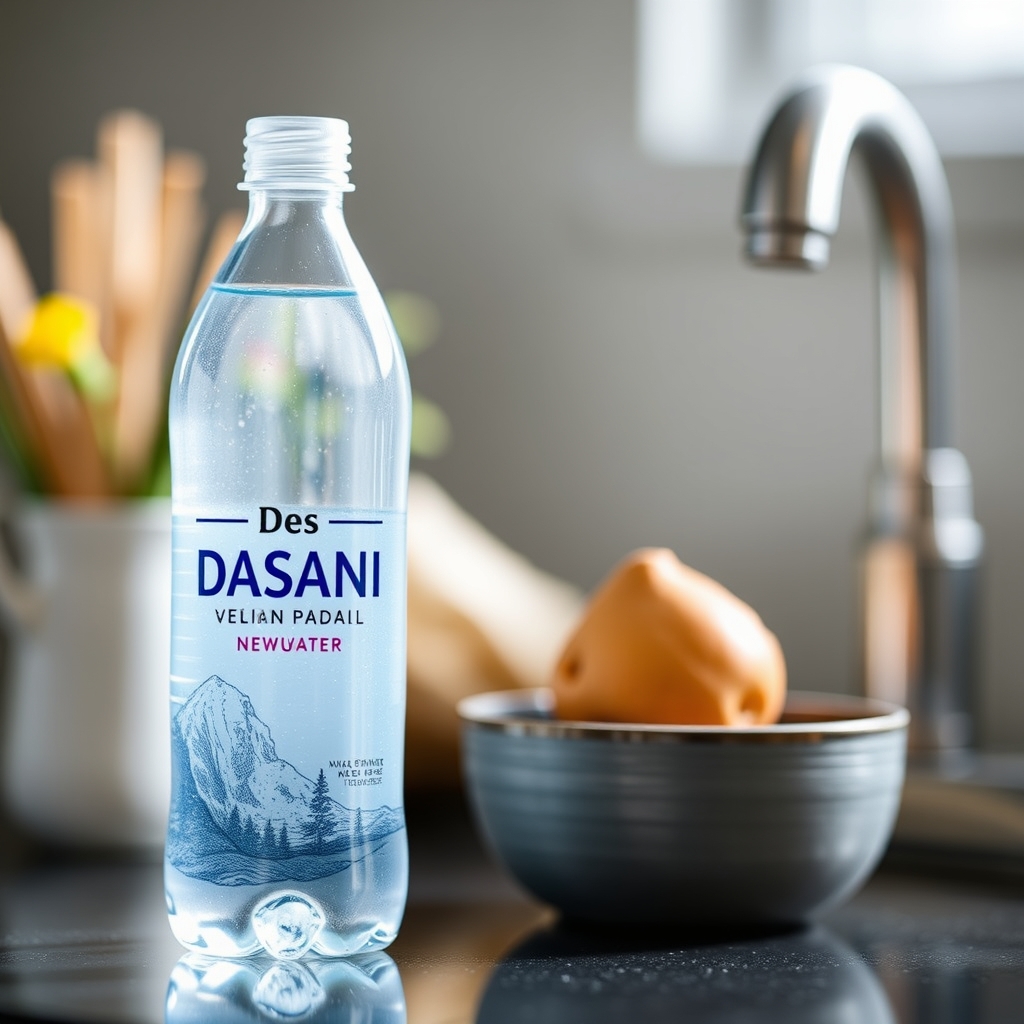
Quick Answer: Yes, trace amounts. Dasani measured roughly 0.4 ppt (parts per trillion) total PFAS in Consumer Reports’ bottled water testing — below the 1 ppt limit scientists recommended, the 4 ppt EPA legal limit, and the industry’s 5 ppt voluntary standard. Dasani is purified municipal water treated with reverse osmosis by Coca-Cola, then dosed with a signature mineral blend (magnesium sulfate, potassium chloride, salt) for taste. The RO step is why it tested among the cleaner purified brands — slightly lower than Aquafina (~0.5) and far below Poland Spring (1.66).
What Testing Actually Found in Dasani
In Consumer Reports’ analysis of 47 bottled waters for per- and polyfluoroalkyl substances (PFAS), Dasani came in at approximately 0.4 ppt total PFAS — one of the lower results among the purified, noncarbonated brands tested. It landed under every current benchmark:
- EPA legal limit (2024): 4 ppt each for PFOA and PFOS
- Scientist-recommended limit: 1 ppt total PFAS
- Industry voluntary standard: 5 ppt total
- Dasani: ~0.4 ppt — under all three by a wide margin
To put 0.4 ppt in human terms: one part per trillion is roughly one drop of water in 20 Olympic swimming pools. Dasani’s level is under half of one such drop — a genuinely tiny concentration, though PFAS accumulate across all sources, so the number is best read alongside your other exposures rather than in isolation.
How Dasani Compares to Other Brands
| Brand | Total PFAS (ppt) | Type |
|---|---|---|
| Icelandic Glacial | Non-detect | Spring |
| Essentia | 0.2 | Purified (RO) |
| Evian | ~0.3 | Spring |
| Dasani | ~0.4 | Purified (RO) |
| Aquafina | ~0.5 | Purified (RO) |
| Fiji | ~0.5 | Artesian |
| Nestlé Pure Life | ~1.0 | Purified |
| Poland Spring | 1.66 | Spring |
Full rankings: Best Bottled Water Without PFAS and our complete bottled water rankings.
Why Dasani Tests Clean: Reverse Osmosis
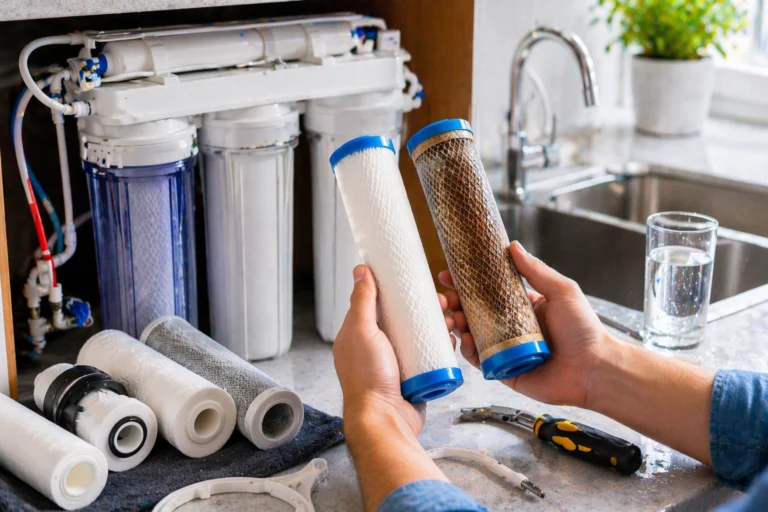
Dasani starts as municipal tap water — the same as Aquafina — and for PFAS that is actually a strength, because of what Coca-Cola does next. The purification runs the source water through reverse osmosis, a membrane process with pores around 0.0001 microns, smaller than PFAS molecules, which are physically excluded. Certified RO removes 94-99% of both long-chain (PFOA, PFOS) and short-chain PFAS.
This is the same reason purified brands cluster at the bottom of the PFAS rankings while some “natural” spring waters test higher: the purification method matters more than the source. Poland Spring, drawn from natural springs with no RO step, tested more than 4x higher than Dasani despite its wholesome branding.
The Dasani Mineral Blend: Why It Tastes Different
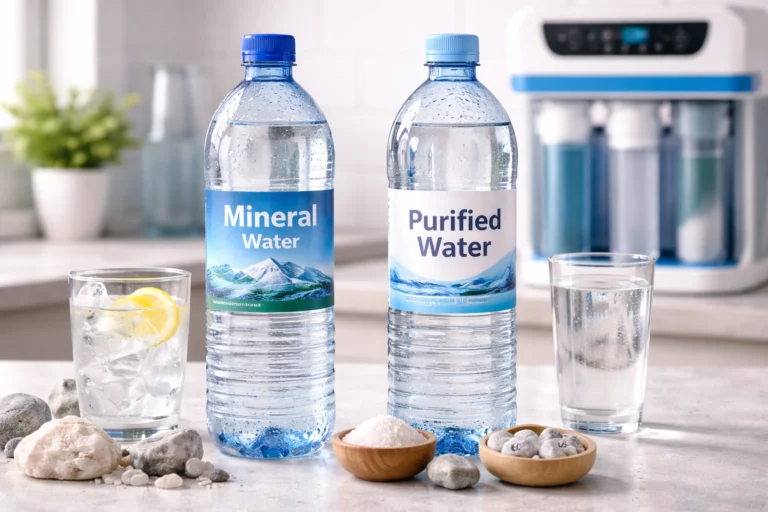
After RO strips the water nearly pure, Coca-Cola adds back a proprietary blend for taste. The label lists magnesium sulfate, potassium chloride and salt (sodium chloride). This is what gives Dasani its distinctive slightly-salty, crisp flavor that people either love or find off-putting — and it is the source of the persistent “why does Dasani taste like that?” question.
Two things worth knowing about the blend:
- It is for flavor, not nutrition. The added minerals are in trace amounts — enough to shape taste, not enough to count as a meaningful source of magnesium or potassium. Dasani is not a mineral water in any nutritional sense.
- The salt is why some find it drying. The sodium chloride, though small, is what some drinkers perceive as a faintly salty aftertaste. It has no bearing on PFAS or safety — it is purely a sensory and formulation choice.
Importantly, the mineral blend is added after purification, so it does not reintroduce PFAS. The 0.4 ppt result reflects the finished, mineral-dosed product.
Is 0.4 ppt Actually Safe?
By every current standard, yes. 0.4 ppt is one-tenth of the EPA’s 4 ppt legal limit for individual compounds and well under half the strictest 1 ppt scientist-recommended threshold. The compounds regulators focus on — PFOA and PFOS — have estimated half-lives in human blood of 2 to 5 years, which is exactly why minimizing cumulative intake matters. But at 0.4 ppt, Dasani is not a meaningful contributor to that total for a typical drinker.
The honest caveat applies here as everywhere: the figure comes from testing a sample at one point in time. Municipal source water varies by bottling facility and year, and Coca-Cola does not publish continuous independent PFAS retesting of Dasani specifically. Treat 0.4 ppt as representative and directional, not as a permanent guarantee for every bottle.
Where Your PFAS Exposure Really Comes From
Fixating on bottled water while ignoring larger sources is the most common mistake in this topic. For the average person, drinking water — especially low-tested bottled water — ranks below several other routes:
- Food packaging. Grease-resistant wrappers, microwave popcorn bags and some takeout containers have historically used PFAS coatings.
- Non-stick cookware. Scratched or overheated pans (above roughly 500°F / 260°C) can degrade and release compounds.
- Household dust. PFAS migrate from treated carpets, upholstery and waterproofed textiles into dust — a notable route for young children.
- Tap water. The EWG estimates detectable PFAS in water serving more than 200 million Americans — for many households, more than any low-tested bottled brand.
The practical takeaway: swapping Dasani for a non-detect brand while still using scratched non-stick pans and drinking unfiltered tap water optimises the smallest variable in your exposure.
Want Even Lower? Filter at Home
If PFAS is your specific concern, an NSF 53/58-certified filter takes tap water below what most bottled brands test at — for pennies per gallon. As an Amazon Associate we earn from qualifying purchases.
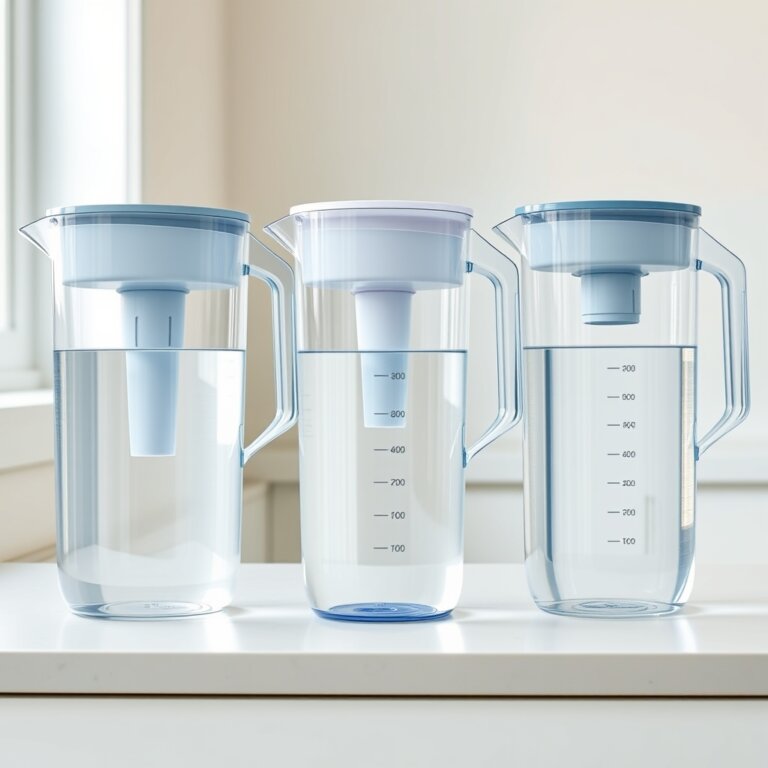
Clearly Filtered Pitcher
Tested against 365+ contaminants including PFOA and PFOS. The simplest way to go below bottled-water PFAS levels at home.
For under-sink and RO options, see the best certified PFAS filters.
Is Dasani Just Expensive Tap Water?
This criticism follows Dasani as closely as it does Aquafina, and it deserves a straight answer. Yes — the source is municipal water, which Coca-Cola discloses. But “just tap water” understates the processing. The finished product differs measurably:
- TDS reset. Reverse osmosis strips dissolved solids to near zero, then the mineral blend adds a controlled, consistent amount back — so every bottle tastes identical regardless of which city’s water it started as.
- PFAS reduced, not inherited. If the source municipality has background PFAS, RO removes the majority. The 0.4 ppt reflects what survived treatment.
- No chlorine. Carbon filtration removes the chlorine or chloramine residual that municipal systems require.
The fair conclusion mirrors Aquafina’s: Dasani is genuinely purified water, and it is also genuinely poor value at roughly $1.50 per litre versus $0.05 for RO-filtered tap water at home. The criticism is about price, not quality.
Frequently Asked Questions
Does Dasani have PFAS in it?
Trace amounts — approximately 0.4 ppt total PFAS in Consumer Reports’ testing. That is below the 1 ppt scientist-recommended threshold, the 4 ppt EPA legal limit, and the industry’s 5 ppt voluntary standard.
Why does Dasani taste different from other water?
After reverse osmosis, Coca-Cola adds a mineral blend of magnesium sulfate, potassium chloride and salt for flavor. The salt in particular gives Dasani its distinctive slightly-salty, crisp taste that people either love or dislike. It is a formulation choice and has no bearing on safety or PFAS.
Is Dasani just tap water?
It starts as municipal water, then goes through reverse osmosis and carbon filtration before a mineral blend is added back. The finished product is significantly purer than the source, including for PFAS, though it is expensive relative to home-filtered tap water.
Is Dasani safer than spring water for PFAS?
Often, yes. Because reverse osmosis removes PFAS while natural spring filtration does not, Dasani at ~0.4 ppt tested cleaner than several spring brands, including Poland Spring at 1.66 ppt. Purification method predicts PFAS levels better than whether water is labelled “spring” or “purified.”
Does Dasani remove fluoride?
Yes, largely. Reverse osmosis removes roughly 85-95% of fluoride along with other dissolved minerals, and the added mineral blend does not include fluoride. Dasani therefore contains negligible fluoride compared to fluoridated tap water.
Which bottled water has no PFAS at all?
Icelandic Glacial reported non-detect results, and Essentia tested lowest among purified brands at 0.2 ppt. See the full PFAS-free bottled water rankings.
The Bottom Line
Dasani contains PFAS at roughly 0.4 ppt — a measurable trace that sits comfortably under the EPA’s 4 ppt legal limit, the 5 ppt industry standard, and the strict 1 ppt scientist-recommended threshold. Among tested still waters it is one of the cleaner purified brands, slightly lower than Aquafina and more than 4x lower than Poland Spring.
The reason is reverse osmosis: it removes PFAS regardless of source, which is why Dasani’s municipal origin is an advantage rather than a liability here. The signature mineral blend that shapes its taste is added after purification and has no effect on the PFAS result. Where the criticism lands is value — at around $1.50 per litre, Dasani is an expensive way to buy a process you can run at home for a fraction of the cost, with a number you can verify yourself.
References
- Consumer Reports — Bottled Water PFAS Testing (47 products)
- EPA — PFAS National Primary Drinking Water Regulation (2024)
- FDA — PFAS in Bottled Water Survey
- Environmental Working Group — PFAS Contamination Map
- The Coca-Cola Company — Brands & Product Information
- ATSDR/CDC — Health Effects of PFAS Exposure
Affiliate disclosure: as an Amazon Associate we earn from qualifying purchases. It never affects our rankings or the numbers we report.