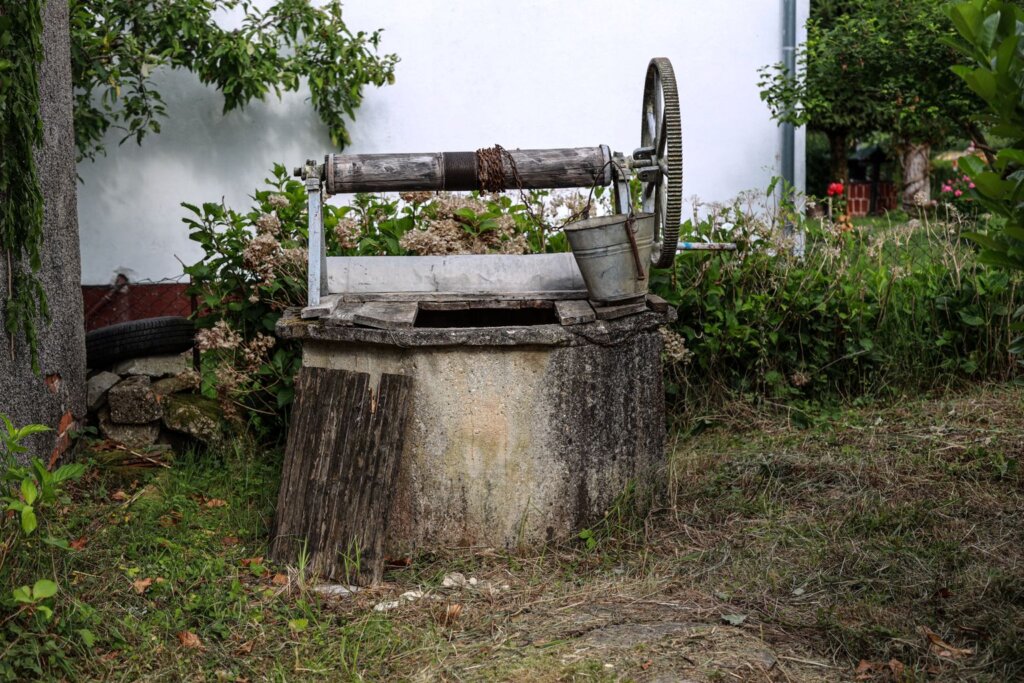
Here is how to shock a well: pour a measured amount of plain, unscented liquid bleach down the well, circulate it until every tap smells of chlorine, leave it in the pipes for 6 to 12 hours without using the water, then flush it out and test for coliform bacteria. Those are Oregon State University’s steps, which aim for an initial chlorine level of 50 to 100 parts per million. Penn State Extension adds an important limit: shock chlorination kills the bacteria in the well at the time, but it does not fix the way they got in.
Below are the bleach amounts by well size, the full steps, how long to wait, when to retest, and when shocking is not enough.
When should you shock a well?
Penn State Extension lists three times:
- After a new well is built.
- After work on an existing well, or after a new submersible pump is installed.
- After a water test comes back positive for coliform bacteria.
It is worth doing because bacteria in private wells are common. Penn State cites a survey of 450 Pennsylvania private wells that found about 35% contained coliform bacteria. The CDC also has well disinfection steps for after an emergency such as a flood.
How much bleach do you need to shock a well?
It depends on the well’s diameter and the depth of water in it, not the total depth of the well. Oregon State University’s Well Water Program gives this table for ordinary 5 to 6% laundry bleach, aiming for very roughly 100 ppm:
| Well diameter | Under 50 ft of water | 50 to 100 ft | 100 to 150 ft | 150 ft or more |
|---|---|---|---|---|
| 2 inch | 1 cup | 1 cup | 1 cup | 1 cup |
| 4 inch | 1 cup | 2 cups | 3 cups | 1 quart |
| 6 inch | 2 cups | 1 quart | 1.5 quarts | half a gallon |
| 8 inch | 1 quart | half a gallon | half a gallon | 3 quarts |
| 10 inch | half a gallon | 3 quarts | 3 quarts | 1 gallon |
| 12 inch | half a gallon | 3 quarts | 1 gallon | 1 gallon |
The depth of water is the distance from the water level down to the bottom of the well. Oregon State says it is on your well log, which your well driller or local water office can help you find.
Use the right bleach. Oregon State says to use plain liquid laundry bleach with no additives or scents, labeled sodium hypochlorite at about 5 to 6%. Scented bleach is the wrong product.
How to shock a well, step by step
- Protect your treatment equipment. Penn State warns that some water treatment equipment can be damaged or exhausted by high chlorine levels. Put softeners, filters and RO systems in bypass, or check their manuals.
- Open the well. Oregon State says that if pipes come up through the well cap, do not remove the cap bolts, because the seal plate or even the pump can drop down the well; use the vent pipe opening instead. If in doubt, call a well professional.
- Dilute the bleach. Use no more than 2 cups of bleach per 2 gallon bucket of water. Oregon State says straight bleach can corrode metal well parts.
- Pour it down the well, without splashing yourself.
- Circulate it. Run a hose from a faucet near the well. Once you smell chlorine, put the hose back down the top of the well so the water mixes and washes the casing. If you never smell chlorine, add more diluted bleach.
- Chlorinate the whole house. Open each tap, shower and outdoor faucet one at a time, hot and cold, until each smells of chlorine. Running hot water draws chlorine into the water heater.
- Wait. Oregon State says hold the chlorine in the pipes for 6 to 12 hours and do not use the water. A few toilet flushes are fine.
- Flush it out. Run a hose outdoors until you no longer smell chlorine, then run the indoor taps. Oregon State says not to use this water on plants, and that less chlorinated water down the drain is better for a septic tank.
- Test. Do not drink the water until a coliform test comes back clean.
What we would buy for this job
- Chlorine test strips, 0 to 500 ppm, 200 count: a nose for chlorine is a rough guide; these read the high range Oregon State aims for, 50 to 100 ppm, and confirm when the flush has brought it back down. The listing names well chlorination checks. $15.99 when we checked.
As an Amazon Associate, Complete Water Guide earns from qualifying purchases. Prices change, so check the listing.
How long do you leave bleach in a well?
Oregon State says 6 to 12 hours. If your state health department gives its own contact time, follow that. Do not drink, cook with or bathe in the water during that time.
When should you retest the water?
The extension guides differ a little, so we would follow the more careful one. Oregon State says to test for coliform bacteria about 3 days later. Penn State says to retest about 10 to 14 days after disinfection, and if that is clean, test again two to three months later. If bacteria come back in either test, Penn State says a continuous disinfection system will be needed. Our guide to well water testing cost covers what a lab test runs.
Does shocking a well fix bacteria for good?
Often not. Penn State’s own study of wells with coliform bacteria found that shock chlorination plus a sanitary well cap removed the bacteria for one year in only 15% of the wells. It worked best where bacteria counts were low, fewer than 10 colonies per 100 mL, and there was no E. coli.
Shocking treats a one-time event, such as a new pump or a flood. If bacteria keep coming back, something is letting surface water in: a cracked casing, a loose cap, poor grading around the wellhead, or a well that is too shallow. Fix the cause, or add continuous treatment such as UV. Our comparison of a water filter vs a water purifier explains what removes bacteria.
Can you shock your own well?
Yes, for most wells. The steps are simple, and Oregon State’s guide is written for homeowners. Call a well contractor if the cap is hard to open safely, if the well is in a pit, if you do not know the water depth, or if bacteria keep returning. Shocking also does not treat iron bacteria or sulfur smells long term; see our guides to iron bacteria and well water that smells like rotten eggs.
Frequently asked questions
How much bleach do I need to shock my well?
It depends on the well’s diameter and the depth of water in it. Oregon State’s table ranges from 1 cup for a 2 inch well to 1 gallon for a 10 or 12 inch well with deep water, using plain 5 to 6% bleach.
How long should bleach sit in a well?
Oregon State says 6 to 12 hours, without using the water. Follow your state’s instructions if they give a longer time.
When can I drink my well water after shocking it?
Only after a coliform test comes back clean. Oregon State says to test about 3 days later; Penn State says about 10 to 14 days later, then again in two to three months.
What kind of bleach do you use to shock a well?
Plain liquid laundry bleach with no scents or additives, labeled sodium hypochlorite at about 5 to 6%, according to Oregon State.
Do I need to bypass my water softener when shocking a well?
Usually, yes. Penn State says high chlorine can damage or exhaust some water treatment equipment, so check your softener, filter and RO manuals or bypass them.
Why did bacteria come back after I shocked my well?
Because something is still letting it in. Penn State found that shock chlorination and a sanitary cap kept bacteria out for a year in only 15% of contaminated wells it studied. Find the source or add continuous disinfection.
Sources
- Oregon State University Well Water Program, Shock Chlorination: 50 to 100 ppm target, bleach table by well diameter and depth of water, plain 5 to 6% sodium hypochlorite, 2 cups per 2 gallons, cap and vent cautions, circulate, 6 to 12 hours, flush, test about 3 days later.
- CDC, How to Disinfect Wells After an Emergency.
- Penn State Extension, Shock Chlorination of Wells and Springs (updated May 29, 2025): when to shock, 35% of 450 Pennsylvania wells with coliform, 15% one-year success with a sanitary cap, equipment damage, retest at 10 to 14 days and two to three months.