
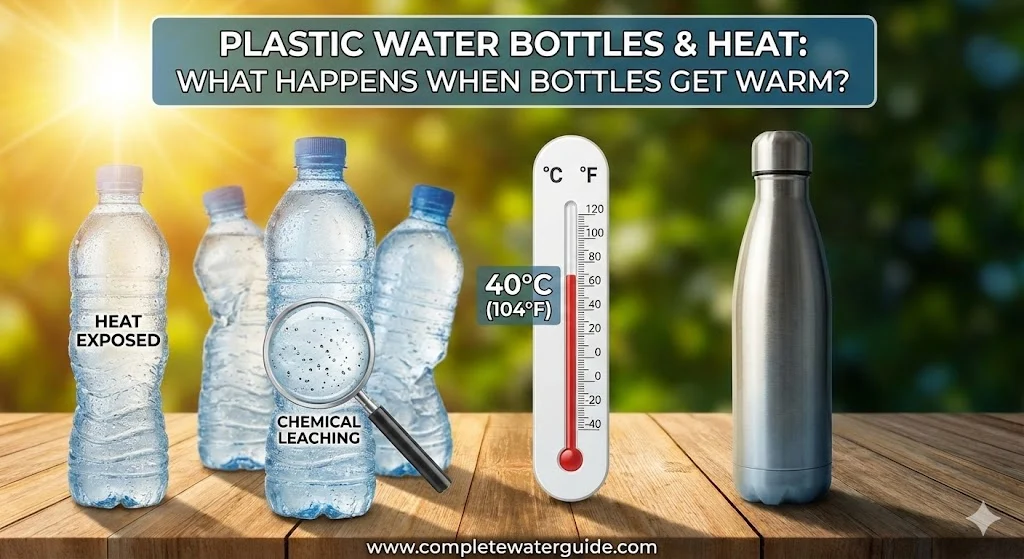

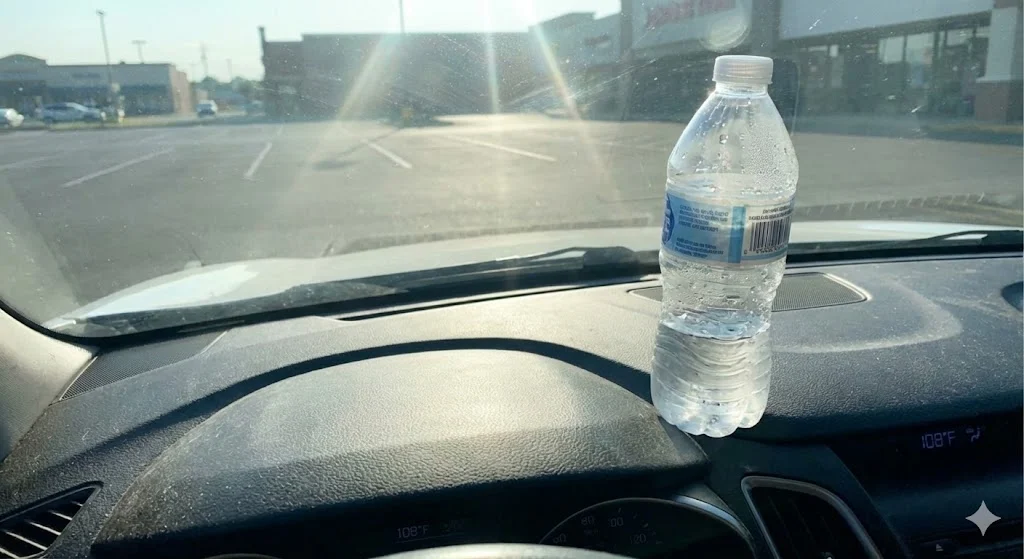
We’ve all done it: left a water bottle in the car on a sunny day and taken a sip later. It tastes warm, maybe a little “plasticky.” But is that weird taste dangerous? Here’s an answer-first guide on how heat accelerates chemical leaching (Antimony and microplastics) and turns your hydration into a bacterial breeding ground. We’ll explain why you should never drink “hot car water” and how to store your bottles safely.
The Chemistry: Why Heat is the Enemy
Plastic is not a solid wall; it is a mesh of molecules. Heat acts as energy that shakes this mesh apart.
1. Antimony Leaching
Most single-use bottles are made of PET. A catalyst called Antimony is used to make this plastic. At room temperature, antimony levels are usually safe. However, studies show that at 150°F (common in summer cars), antimony levels can skyrocket to unsafe limits. If you are wondering about the long-term effects of this exposure, read our deep dive: Is It Safe to Drink Water From Plastic Bottles Daily?
2. The “BPA-Free” Myth Under Heat
You might think you are safe because your reusable sports bottle says “BPA-Free.” Unfortunately, heat doesn’t discriminate. Many alternatives contain BPS or BPF, which can also leach when heated. To understand why the label might be misleading, check out our guide: BPA-Free Plastic Bottles: Are They Really Safe?
Temperature vs. Safety: A Danger Scale
| Scenario | Approx Temp | Chemical Risk | Action |
|---|---|---|---|
| Refrigerator / Cool Room | 35°F – 70°F | Low (Standard) | Safe to drink. |
| Beach Bag / Direct Sun | 90°F – 100°F | Moderate | Drink quickly or move to shade. |
| Car in Summer | 130°F – 170°F | Very High (Toxic) | Discard immediately. |
| Dishwasher (Hot Cycle) | 140°F – 180°F | High (Degrades plastic) | Hand wash plastic only. |
Note: UV rays from the sun damage plastic even faster than ambient heat, causing it to become brittle and release microplastics.
The Bacteria Factor
Heat isn’t just about chemicals; it’s an incubator. If you have already taken a sip from your bottle, you have introduced mouth bacteria into the water. In a warm environment (like a gym bag or car), these bacteria can multiply exponentially in just a few hours. Drinking “warm backwash” water is a common cause of upset stomachs.
Rules for Heat & Hydration
- The “Touch Test”: If the bottle feels hot to the touch, the water inside has likely already begun to absorb chemicals from the plastic.
- Don’t Refill with Hot Water: Never put tea or coffee in a standard plastic bottle. Use stainless steel or ceramic.
- Rotate Emergency Kits: If you keep a case of water in your trunk for emergencies, swap it out every 3–6 months. Don’t let it bake there for years.
- Glass for the Car: If you must leave water in the car, use a glass bottle or a vacuum-insulated stainless steel bottle. They are heat-stable.
FAQs
Is it safe to drink water left in a hot car?
No. The heat causes plastic to release chemicals like Antimony and BPA/BPS into the water. It may also harbor unsafe levels of bacteria.
Can I boil water in a plastic bottle?
Absolutely not. Boiling water will melt standard PET bottles and cause rapid, severe chemical leaching in harder plastics.
Does freezing a plastic bottle release chemicals?
Generally, no. Unlike heat, freezing slows down the migration of chemicals. However, water expands when frozen, which might crack the plastic, making it hard to clean later.
Why does warm bottled water taste sweet?
That strange “sweet” or chemical taste is often the taste of the plastic itself (specifically aldehydes or plasticizers) leaching into the water.
References
- National Library of Medicine — Antimony leaching in bottled water
- Poison Control — Plastic Water Bottles in Heat
- Time — Why You Shouldn’t Drink Water Left in a Hot Car
What Readers Say (Verified)
Verified
Living in the desert, this is crucial info. I used to drink hot trunk water all the time. Never again.
Verified
The ‘sweet’ taste explanation makes so much sense now. Gross!
Verified
Good reminder to rotate the emergency water in my ute. Thanks.
Verified
Simple, clear table. Switched my kids to stainless steel bottles for summer camp.
