Quick answer
Alkaline water is simply water with a pH above 7. For most healthy people, the evidence does not show that it hydrates better, neutralises body acid, or prevents disease. Your blood pH is held in a narrow range by your lungs and kidneys regardless of what you drink. The more useful question is not the pH of your water but what is dissolved in it, because a high pH tells you nothing about lead, arsenic, nitrate, PFAS or bacteria.
Walk down any beverage aisle and you will find bottles printing a number on the front. 8.0. 9.5. The number looks like a score, and the packaging is designed so you read it that way. It is not a score. It is a measurement of one narrow property, and on its own it says very little about whether the water is good for you.
Here is what the pH number actually means, which claims about alkaline water are supported, and which are not.
What “alkaline” actually measures
The pH scale runs from 0 to 14. A pH of 7 is neutral. Below 7 is acidic, above 7 is alkaline. The scale is logarithmic, which means each whole step is a tenfold change, so water at pH 9 is ten times more alkaline than water at pH 8.
That sounds dramatic, and it is one of the reasons the marketing works. But pH describes the balance of hydrogen ions in the water. It does not describe what else is in there.
Regulators treat pH accordingly. The US Environmental Protection Agency lists pH in its secondary drinking water standards, the non-enforceable guidelines that cover taste, odour and appearance rather than health, with a recommended range of 6.5 to 8.5. The World Health Organization takes a similar position: pH matters operationally, because it affects how well disinfection works and how much water corrodes pipes, but WHO has not set a health-based guideline value for pH on its own.
In other words, both bodies treat pH as a water-management parameter, not a health metric.
| Regular drinking water | Alkaline water | |
|---|---|---|
| Typical pH | Around 6.5 to 8.5 | Around 8 to 9.5 |
| Where the pH comes from | Source geology and treatment | Natural minerals, added minerals, or electrolysis |
| Tells you it is safe to drink | No | No |
| Removes contaminants | No, that is the filter’s job | No, that is the filter’s job |
| Hydrates you | Yes | Yes |
| Proven extra health benefit | n/a | Not established in humans |
| Regulated as a health parameter | No, aesthetic guideline | No, aesthetic guideline |
Where alkaline water comes from
Not all alkaline water is made the same way, and the distinction matters more than the number on the label.
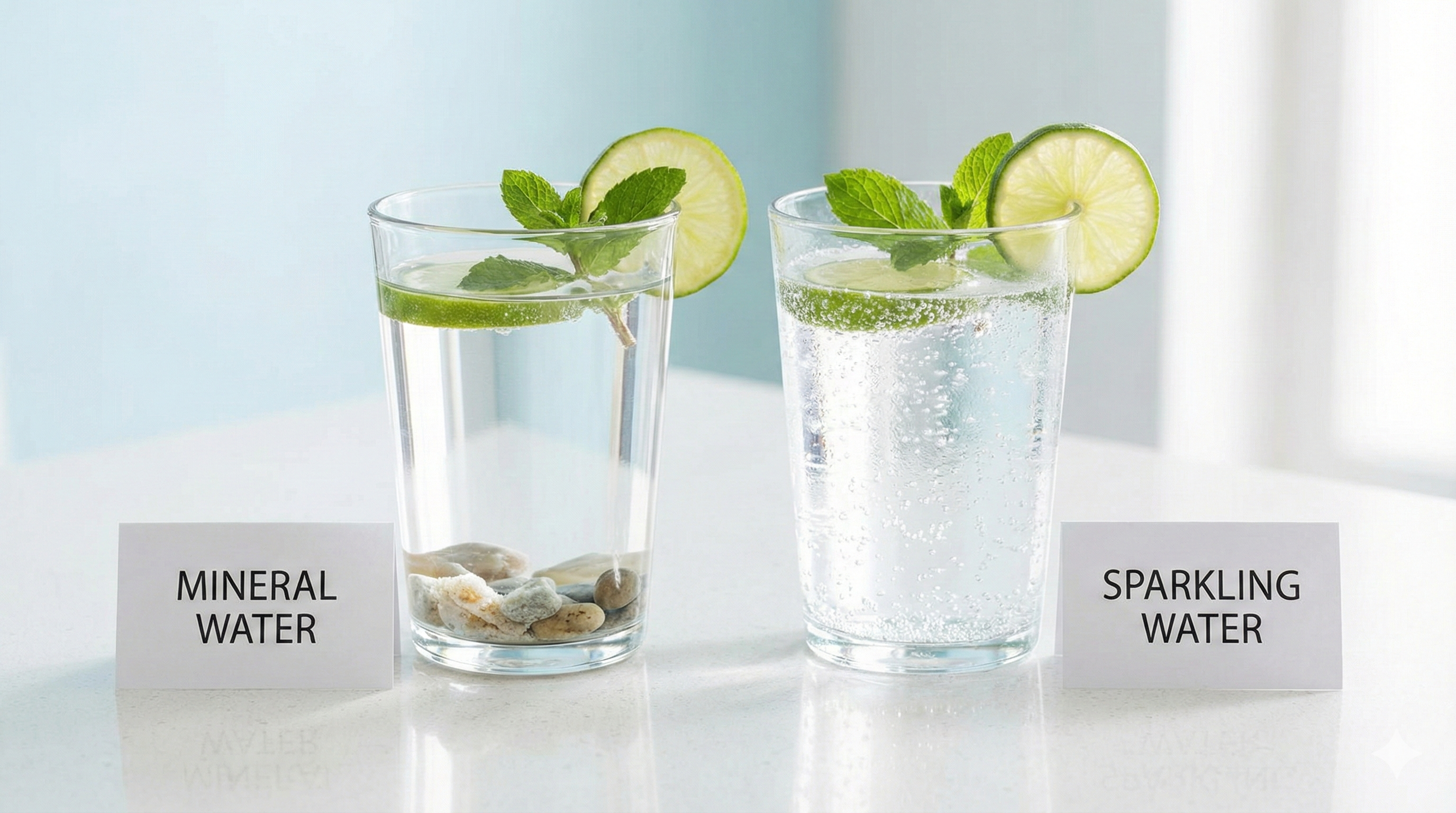
- Naturally alkaline water picks up minerals such as calcium, magnesium and bicarbonate as it moves through rock. The higher pH is a side effect of the mineral content.
- Mineral-added water is filtered first, then dosed with minerals to raise the pH back up. Reverse osmosis systems with a remineralisation cartridge work this way.
- Ionised water is run through an electrolysis chamber that splits the incoming water into an alkaline stream and an acidic stream. The alkaline stream is what you drink.
These produce chemically different water even at the same pH, which is one reason study results are hard to compare. A trial on naturally mineral-rich alkaline water is not testing the same product as a trial on electrolysed water.
Manufacturers in this space, including Dvine H2O, publish their own comparisons of alkaline water vs regular water, so it is worth checking which of these production methods a given product actually uses before weighing it against anything you have read.
The claim that it changes your body’s pH
This is the central claim in most alkaline water marketing, and it is the one the physiology most clearly contradicts.
Your blood is held between roughly 7.35 and 7.45. That range is maintained by your lungs, which adjust carbon dioxide, and your kidneys, which adjust bicarbonate and acid excretion. It is not set by your last drink. If a beverage could meaningfully shift blood pH, that would be a medical emergency, not a wellness feature.
Your stomach sits at the other extreme, strongly acidic by design, because that acid breaks down food and kills many ingested pathogens. Alkaline water entering an acidic stomach is buffered almost immediately.
What can change is your urine pH, because the kidneys are excreting what they need to excrete. People sometimes test their urine, see the number move, and take it as proof the whole body has been “alkalised”. It is not proof of that. It is evidence the kidneys are doing their job.
What the research on alkaline water benefits actually found
A 2022 systematic review looked for human studies on alkaline, oxygenated and demineralised water published between 2000 and 2022. Across more than two decades, it identified only a handful of eligible studies, and only a small subset of those were on alkaline water specifically. The review did not find consistent evidence that alkaline water offers health benefits over ordinary mineral water in people.
That is not the same as saying alkaline water is harmful. It means the research base is thin, and the studies that do exist are mostly small, short and focused on surrogate markers rather than health outcomes.
Two specific claims are worth separating out, because they are the ones with any research attached at all:
- Acid reflux. A frequently cited 2012 laboratory study found that water at a high pH deactivated pepsin, a stomach enzyme involved in reflux damage. That work was done in a test tube, not in patients. It is a plausible mechanism, not clinical proof, and it has not translated into treatment guidelines.
- Hydration and exercise recovery. Several small trials have looked at hydration markers after exercise. They are short, involve few participants, and report mixed results. Nothing at that scale can establish a benefit for the general population.
When you read product pages, watch for the phrase “may support”. It is doing a lot of work. It signals a hypothesis, not a finding.
The Mayo Clinic’s position reflects this. For most healthy people, plain water is fine, and the stronger health claims made for alkaline water are not well supported by current evidence. If you are comparing bottled options on this basis, our breakdown of the best water for hydration covers how electrolyte, mineral and alkaline waters actually differ.
Who should be careful
If you have kidney disease, or you take medication that affects mineral balance or stomach acid, talk to your doctor before drinking alkaline water regularly. Impaired kidneys are less able to handle an added mineral load. Alkaline water is not a treatment for any condition and should never replace prescribed care.
The part that actually matters: pH is not purity
This is the practical takeaway, and it is the one that gets lost.
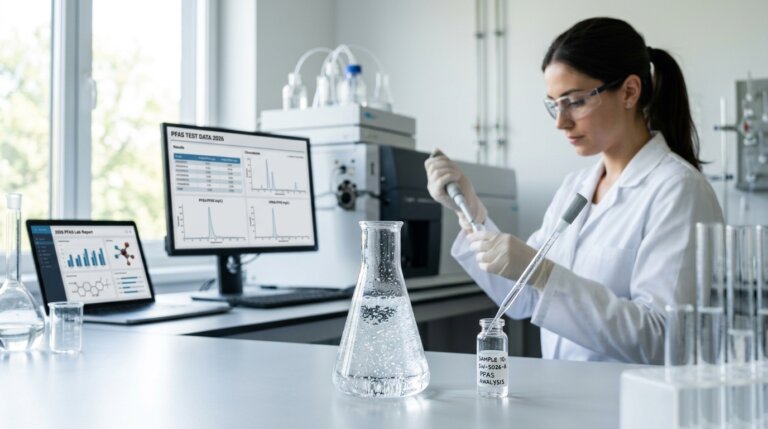
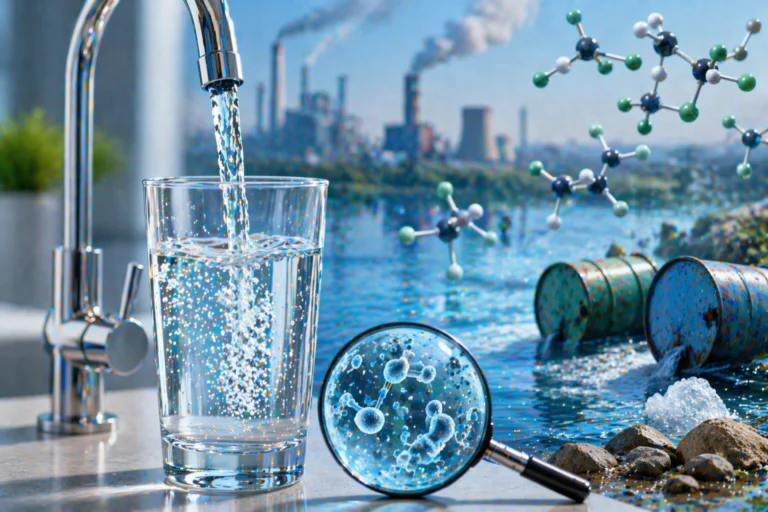
Water can sit at pH 9.5 and still contain lead leached from old plumbing, arsenic from local geology, nitrate from agricultural runoff, PFAS from industrial contamination, or bacteria from a compromised distribution line. None of those show up in a pH reading. They are found by testing for them specifically. It is worth reading how Essentia’s pH 9.5 claim holds up against actual PFAS testing, because it shows how completely separate the two questions are.
Clear water is not proof either. Most of what makes water unsafe is invisible, tasteless and odourless. The public health guidance on this is consistent: find out what is in your water, then choose a treatment that removes that. If you are on a municipal supply in the US, your utility publishes an annual water quality report. If you are on a private well, or you want to check for something your utility does not test for, use a certified laboratory.
Once you know what you are dealing with, look for filtration certified to remove it. An alkaline stage can sit downstream of that treatment if you prefer the taste. What it cannot do is substitute for it. If you are weighing a purifier that offers both, our guide to RO vs alkaline water purifiers explains which stage does which job.
So which should you drink?
If you like the taste of alkaline water and it means you drink more water through the day, that is a real benefit, just not the one on the label. Taste preference is a legitimate reason to buy something, and it is roughly the same reasoning behind mid-range options like Core Hydration at pH 7.4.
What the evidence does not support is treating a higher pH as a health upgrade, or letting an alkaline feature stand in for knowing what is actually in your water. On the question of alkaline water vs regular water, safe regular water and safe alkaline water both hydrate you equally well. The variable that matters is the word “safe”, and pH does not measure it.
Frequently asked questions
Is alkaline water better than regular water?
Not for most healthy people, based on current evidence. Both hydrate equally well. The claimed additional benefits have not been established in human research.
Can alkaline water reduce acidity in the body?
It does not meaningfully change blood pH, which the lungs and kidneys hold in a narrow range. Urine pH can shift, but that reflects kidney function rather than a change in overall body chemistry.
Does a higher pH mean the water is cleaner?
No. pH and contamination are separate properties. Water can be alkaline and still contain lead, arsenic, nitrate, PFAS or bacteria. Only testing for those specifically will tell you.
Is alkaline water safe to drink every day?
For most healthy adults it is generally considered safe. People with kidney disease or on certain medications should check with their doctor first.
What pH is normal for drinking water?
The EPA recommends 6.5 to 8.5 as a secondary, aesthetic guideline. That range is about taste and pipe corrosion, not about health risk.
Sources
- US EPA — What is pH?
- US EPA — Secondary Drinking Water Standards
- World Health Organization — pH in drinking-water
- Mayo Clinic — expert answer on alkaline water
- Systematic review — health effects of alkaline, oxygenated and demineralized water (PubMed)
Sponsor disclosure
This article was published in partnership with Dvine H2O, a water-technology company working on filtration, alkaline ionisation and hydrogen-water systems. Complete Water Guide independently researched, wrote and fact-checked the content. The sponsor did not review or influence the scientific conclusions. Links to the sponsor carry the rel="sponsored" attribute.