Want to know what is in your own tap water? Use our free Water Quality Checker Tool before buying bottled.
Disclosure: As an Amazon Associate we earn from qualifying purchases. If you buy through links on this page, we may earn a small commission at no extra cost to you — it never changes which brands we recommend.
What Is Silica Water?
Silica water is water that contains a meaningful concentration of dissolved silicon dioxide (SiO₂), the compound that makes up sand and quartz. When groundwater moves through volcanic rock, small amounts of silica dissolve into it. Water from volcanic aquifers is therefore naturally higher in silica than water from limestone or granite sources.
The nutrient people actually care about is orthosilicic acid, the soluble form the body can absorb. This distinction matters: silica in sand is inert and passes straight through you, while dissolved orthosilicic acid in water is absorbed at a rate of roughly 50%, higher than most food sources of silicon.
Silica Water Benefits: What the Research Actually Shows
Silicon has three areas of research behind it. One is reasonably established, two are preliminary. Here is the honest state of the evidence.
| Claimed Benefit | Evidence Strength | What the Research Shows |
|---|---|---|
| Bone mineral density | B+ | Framingham Offspring Study linked higher silicon intake to greater hip BMD in men and premenopausal women |
| Aluminium excretion | B | Small trials show silica-rich water increases urinary aluminium output |
| Collagen synthesis | C+ | Silicon is involved in collagen formation, but human water studies are limited |
| Skin, hair and nails | C | Most studies use choline-stabilised orthosilicic acid supplements, not water |
| Alzheimer’s prevention | D | Hypothesis-stage only. No trial has shown silica water prevents dementia |
The strongest finding comes from the Framingham Offspring cohort, which associated higher dietary silicon intake with greater hip bone mineral density. It is an observational study, so it shows correlation rather than proof, and the effect appeared in men and premenopausal women but not postmenopausal women.
Highest Silica Water Brands Ranked (2026)
Ranked by published silica content per litre. Figures come from each brand’s own water analysis; natural mineral waters vary between bottling runs, so treat these as typical values rather than exact guarantees.
| Brand | Silica (mg/L) | Source | Availability | Rating |
|---|---|---|---|---|
| Fiji | ~93 | Volcanic aquifer, Fiji | Everywhere | A+ |
| Spritzer (Malaysia) | ~70 | Taiping, Malaysia | Asia, specialty | A |
| Volvic | ~30 | Volcanic, Auvergne | Wide | A- |
| Icelandic Glacial | ~20 | Ölfus Spring, Iceland | Wide | B+ |
| Topo Chico | ~20 | Monterrey, Mexico | Wide | B+ |
| Gerolsteiner | ~13 | Volcanic Eifel, Germany | Wide | B |
| Evian | ~13 | French Alps | Everywhere | B |
| San Pellegrino | ~8 | Bergamo, Italy | Everywhere | C+ |
One honest caveat about this ranking: silica content is a single dimension, and it is not the most important one for most people. Fiji leads on silica but comes in plastic. Gerolsteiner has one-seventh the silica but far more calcium and magnesium. If your goal is overall mineral intake rather than silicon specifically, read our best mineral water rankings instead.
Where to Buy: High-Silica Water Picks
These are the exact products behind the rankings above, chosen for verified silica content, packaging and value. Silica figures come from each brand’s published analysis. Prices and availability update on Amazon.

FIJI Natural Artesian Water (500mL, 6-Pack)
The highest-silica mainstream bottled water at roughly 93 mg/L, filtered through volcanic rock in a Fijian artesian aquifer. The one silica claim that holds up.
- ~93 mg/L silica — triple most rivals
- Naturally balanced 7.7 pH
- Low sodium (~18 mg/L)

FIJI Natural Artesian Water (330mL, 24-Pack)
Same ~93 mg/L silica in a smaller bottle and a bigger case. The cheapest way to drink high-silica water daily rather than occasionally.
- 24 bottles — best cost per litre
- Same volcanic aquifer source
- Grab-and-go 330mL size

Volvic Natural Spring Water (500mL, 24-Pack)
French volcanic water at roughly 30 mg/L silica, filtered through the Auvergne lava fields. The best balance of silica, low sodium and mild taste.
- ~30 mg/L silica
- Lowest sodium here (~12 mg/L)
- Soft, neutral taste

Topo Chico Mineral Water (Glass, 6-Pack)
Naturally carbonated Mexican mineral water at about 20 mg/L silica. Glass bottles mean no microplastic exposure, unlike plastic-only Fiji.
- ~20 mg/L silica
- Glass — no microplastics
- Naturally carbonated since 1895
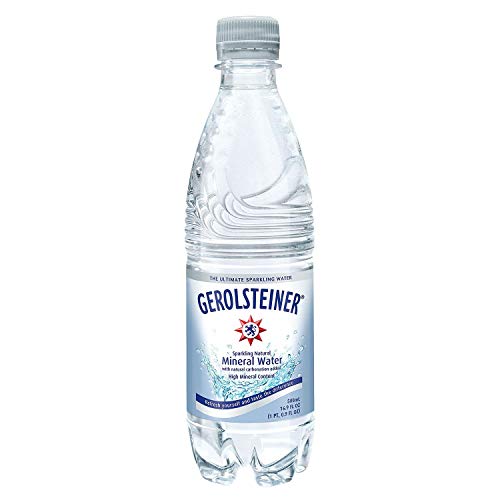
Gerolsteiner Sparkling Mineral Water (24-Pack)
Lower silica (~13 mg/L) but roughly 350 mg/L calcium. If bones are your actual reason for buying silica water, this does more for them.
- ~350 mg/L calcium, ~108 mg/L magnesium
- Volcanic Eifel source, Germany
- Strong natural carbonation

Icelandic Glacial Water (500mL, 24-Pack)
About 20 mg/L silica from the Ölfus Spring, with a naturally alkaline 8.4 pH. Worth it if you want both properties in one bottle.
- ~20 mg/L silica
- Naturally alkaline pH 8.4
- BPA-free recyclable rPET
Silica values are from each brand’s published water analysis. Natural mineral water varies between bottling runs, so treat these as typical rather than guaranteed figures.
Which Silica Water Fits Your Situation
The right choice depends on why you are looking for silica in the first place. Here is the honest pick for each scenario:
Pick: Gerolsteiner or San Pellegrino. Counterintuitive, but calcium matters far more for bone density than silicon, and these deliver 300–350 mg/L of calcium.
Pick: Fiji at ~93 mg/L. Roughly triple the next-widest-available option, and stocked almost everywhere.
Pick: A supplement, not water. Studies showing hair and nail benefits used choline-stabilised orthosilicic acid at doses water cannot deliver.
Pick: Volvic or Topo Chico in glass. Fiji is plastic-only, which matters if you are also watching microplastic exposure.
Pick: Check your tap water report. Many municipal supplies in volcanic regions carry 20–40 mg/L of silica at no cost at all.
Pick: Fiji (~18 mg/L sodium) or Volvic (~12 mg/L). Both are low-sodium while still carrying useful silica.
Is Silica in Water Bad for You?
No. Silica in drinking water is not considered harmful at any concentration naturally found in water. The EPA has set no maximum contaminant level for silica because it has no established toxicity by ingestion, and the WHO has not issued a guideline value for the same reason.
The confusion comes from an entirely different exposure route. Inhaled crystalline silica dust — the kind produced by cutting stone, concrete or engineered countertops — is a serious occupational hazard that causes silicosis and is classified as a human carcinogen by IARC. That risk applies to dust in the lungs, not dissolved silica in a glass of water. The two are chemically related but biologically unrelated exposures.
Can You Make Silica Water at Home?
Not reliably, and the popular methods do not work the way people think. Silica dissolves extremely slowly at room temperature and neutral pH, which is why natural silica water requires water sitting in volcanic rock for years.
What Actually Works
- Buying naturally high-silica bottled water
- Choline-stabilised orthosilicic acid supplements (measured dose)
- Horsetail extract, a traditional plant source of silicon
- Checking your tap water report — yours may already be high
- Eating oats, barley, bananas and green beans
What Does Not Work
- Putting quartz or crystals in water — dissolves at negligible rates
- Adding silica gel packets — not food grade, may contain cobalt chloride
- Diatomaceous earth in drinking water — an inhalation hazard when dry
- Sand in water — chemically inert at room temperature
- Sodium silicate (water glass) — strongly alkaline and unsafe to drink
Frequently Asked Questions
What is silica water?
Silica water is water containing dissolved silicon dioxide (SiO₂), usually from groundwater that has passed through volcanic rock. Ordinary bottled water contains 5–20 mg/L; high-silica brands contain 40–100 mg/L. The absorbable form is orthosilicic acid, which the body takes up at roughly 50% — a higher absorption rate than most food sources of silicon.
Is silica in water bad for you?
No. Silica in drinking water has no established toxicity, which is why the EPA sets no limit for it and the WHO has issued no guideline value. The health warnings you may have read concern inhaled crystalline silica dust from cutting stone or concrete, which causes silicosis. That is a lung exposure in occupational settings, not a drinking water risk.
Which water has the most silica?
Among widely available brands, Fiji has the most silica at roughly 93 mg/L. Spritzer (Malaysia) reaches about 70 mg/L but is hard to find outside Asia. Volvic follows at roughly 30 mg/L, then Icelandic Glacial and Topo Chico at about 20 mg/L each. Most other bottled waters sit below 15 mg/L.
What is silica water good for?
The best-supported association is bone mineral density — the Framingham Offspring Study linked higher silicon intake to greater hip BMD in men and premenopausal women. Silica-rich water also increases urinary aluminium excretion in small trials. Claims about skin, hair and nails come mostly from supplement studies using doses far above what water provides.
Does silica water remove aluminium from the body?
It increases aluminium excretion in urine, which several small studies have measured. A 2013 pilot study of 15 people found that drinking about a litre of silica-rich water daily for 12 weeks raised urinary aluminium output. However, that study had no control group and only 3 of 15 participants showed cognitive improvement. It is preliminary evidence, not proof of a health benefit.
How much silica water should I drink per day?
Studies on aluminium excretion used roughly 1 litre per day of water containing 35–40 mg/L of silica. There is no official recommended intake for silicon, as no deficiency condition has been established in humans. Typical Western dietary intake is 20–50 mg of silicon daily, mostly from grains and beer.
Can you make silica water at home?
Not effectively. Silica dissolves extremely slowly at room temperature, which is why natural silica water takes years of contact with volcanic rock to form. Putting quartz or crystals in water adds a negligible amount. Never use silica gel packets — they are not food grade and many contain toxic cobalt chloride indicator.
Does Fiji water really have high silica?
Yes. Fiji contains roughly 93 mg/L of silica, genuinely among the highest of any mainstream bottled water, sourced from a volcanic aquifer on Viti Levu. It is the one marketing claim on the bottle that holds up to the published analysis. Its other properties are more ordinary: it comes in plastic, and its calcium and magnesium levels are modest.
Does boiling water remove silica?
No — boiling concentrates silica. As water evaporates as steam, dissolved silica stays behind in the remaining water, so the concentration rises. This is why silica scale builds up in kettles and boilers. Removing silica requires reverse osmosis, deionisation or specialised anion exchange resin.
Does silica water help hair and nails?
The evidence is weak for water specifically. Studies reporting improvements in hair thickness and nail quality used choline-stabilised orthosilicic acid supplements at 10–20 mg of silicon per day in concentrated form. Even high-silica water provides a fraction of that per litre, and no trial has tested silica water alone for these outcomes.
Is silica water the same as alkaline water?
No, these are unrelated properties. Silica water is defined by dissolved silicon dioxide content; alkaline water is defined by pH above 7. A water can be high in one and low in the other. Some volcanic waters happen to be both, which is why the marketing sometimes blurs them together.
How do I know how much silica my tap water has?
Check your utility’s annual Consumer Confidence Report, though silica is often omitted because it is unregulated. Many municipal supplies in volcanic regions carry 20–40 mg/L naturally. A home water testing kit or a mail-in lab panel that includes silica will give you an exact figure.
Mineral Water Deep Dives
We have published dedicated guides on the questions that come up most often from this page:
- Best Mineral Water to Drink for Health — six brands ranked by actual calcium, magnesium and sodium content
- Does Fiji Water Have PFAS? — what testing shows on the highest-silica mainstream brand
- Gerolsteiner Review — the high-mineral German water and why it tastes so strong
- Mineral Water vs Electrolyte Water — which minerals actually matter for hydration
- Fiji vs Smartwater vs Evian — the three best-known premium brands compared head to head
- Is Mineral Water Healthier Than Tap? — when bottled minerals are worth paying for
References & Sources
- Jugdaohsingh et al. — Dietary Silicon & Bone Mineral Density (Framingham Offspring Cohort)
- Davenward et al. — Silicon-Rich Mineral Water & Aluminium Excretion (2013)
- NIH Office of Dietary Supplements — Mineral Fact Sheets
- WHO — Guidelines for Drinking-Water Quality
- EPA — National Primary Drinking Water Regulations
- CDC / NIOSH — Crystalline Silica (Inhalation Hazard)
The Bottom Line
Silica water is safe, mildly interesting, and oversold. Fiji at roughly 93 mg/L is the highest-silica water you can buy in a normal supermarket, with Volvic the best glass-bottle compromise at ~30 mg/L. The bone density research is real but observational, and the aluminium excretion finding comes from a 15-person pilot study with no control group — worth watching, not worth treating as medicine. Silica in water is not harmful at any natural concentration, and the scary headlines you may have seen are about inhaled stone dust, a completely different exposure. If your actual goal is stronger bones, a high-calcium water like Gerolsteiner will do more for you than a high-silica one. And if you want a measured silicon dose, a supplement beats any bottle.