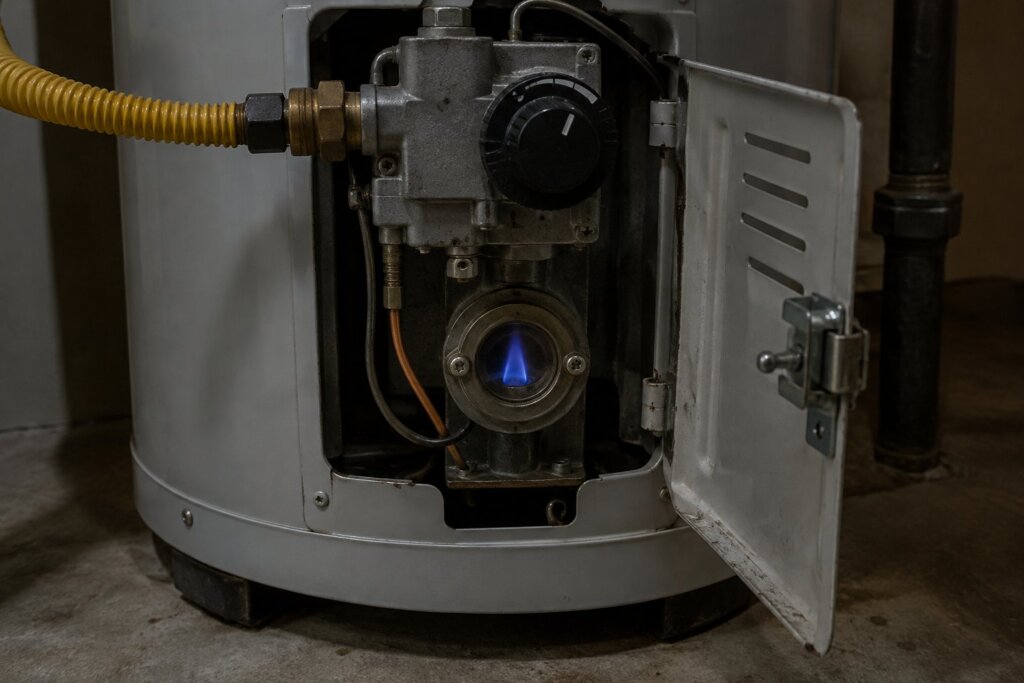
If your water heater pilot light keeps going out, the most likely causes are a thermocouple that is loose, out of position or worn out, or a burner that is starved of air because lint and dust have clogged the air intake. The manuals we read from American, Bradford White, A.O. Smith and Rheem also list drafts, low or unsteady gas pressure, a clogged pilot orifice, and a tripped safety switch. Most of these are easy to check; a few are jobs for a gas technician.
First the safety rule, then the causes with how to tell them apart, the thermocouple test from one maker’s manual, and how to clean the air intake.
First: what to do if you smell gas
Do not try to relight anything. American Water Heater’s use and care guide gives the standard instructions printed on gas water heaters:
- “Do not try to light any appliance.”
- “Do not touch any electrical switch; do not use any phone in your building.”
- “Immediately call your gas supplier from a neighbor’s phone.” If you cannot reach them, call the fire department.
The same guide says to smell all around the heater before lighting, including next to the floor, because some gas is heavier than air. A rotten egg smell that comes only from the hot water at your taps is different: that is usually sulfides in the water, which our guide to a sulfur smell in hot water covers.
Why the water heater pilot light keeps going out: 8 causes
American’s troubleshooting chart lists 13 causes for a pilot that “will not light or remain lit.” We grouped them, with the Bradford White and A.O. Smith service notes, by what you can check yourself:
| Cause | Typical sign | Fix | Who |
|---|---|---|---|
| Loose thermocouple connection | Pilot goes out when you release the button | Finger tight plus 1/4 turn at the gas valve | Pro, or careful DIY |
| Thermocouple out of position or worn | Pilot flame does not wrap the thermocouple tip; low test reading | Reposition or replace | Pro, or careful DIY |
| Dust or lint in the air intake and flame arrestor | Pilot goes out after running a while; laundry or garage dust | Clean the intake and arrestor | Owner |
| Cold drafts | Goes out on windy days or when a door is open | Find and block the draft | Owner |
| Blocked or wrong vent | Goes out after heating cycles | Inspect and clear the vent | Pro |
| Low or unsteady gas pressure, air or dirt in the line | Weak or wavering flame | Call the gas utility | Utility or pro |
| Clogged pilot orifice or tube | Small, weak pilot flame | Clean or replace | Pro |
| Tripped thermal switch or ECO | Pilot will not stay lit at all | Find the cause before resetting | Pro |
Our view: start with the two things you can safely do yourself, cleaning the air intake and checking for drafts, then test or call about the thermocouple. For problems beyond the pilot, see our water heater troubleshooting guide.
Why does my pilot light go out as soon as I release the button?
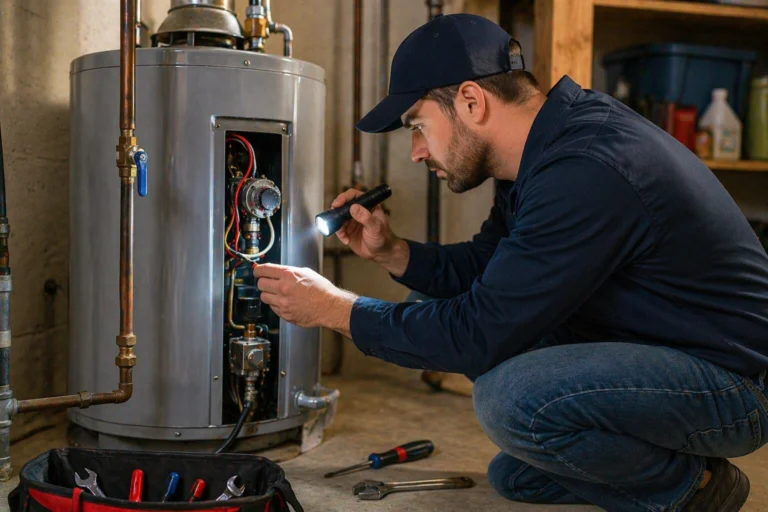
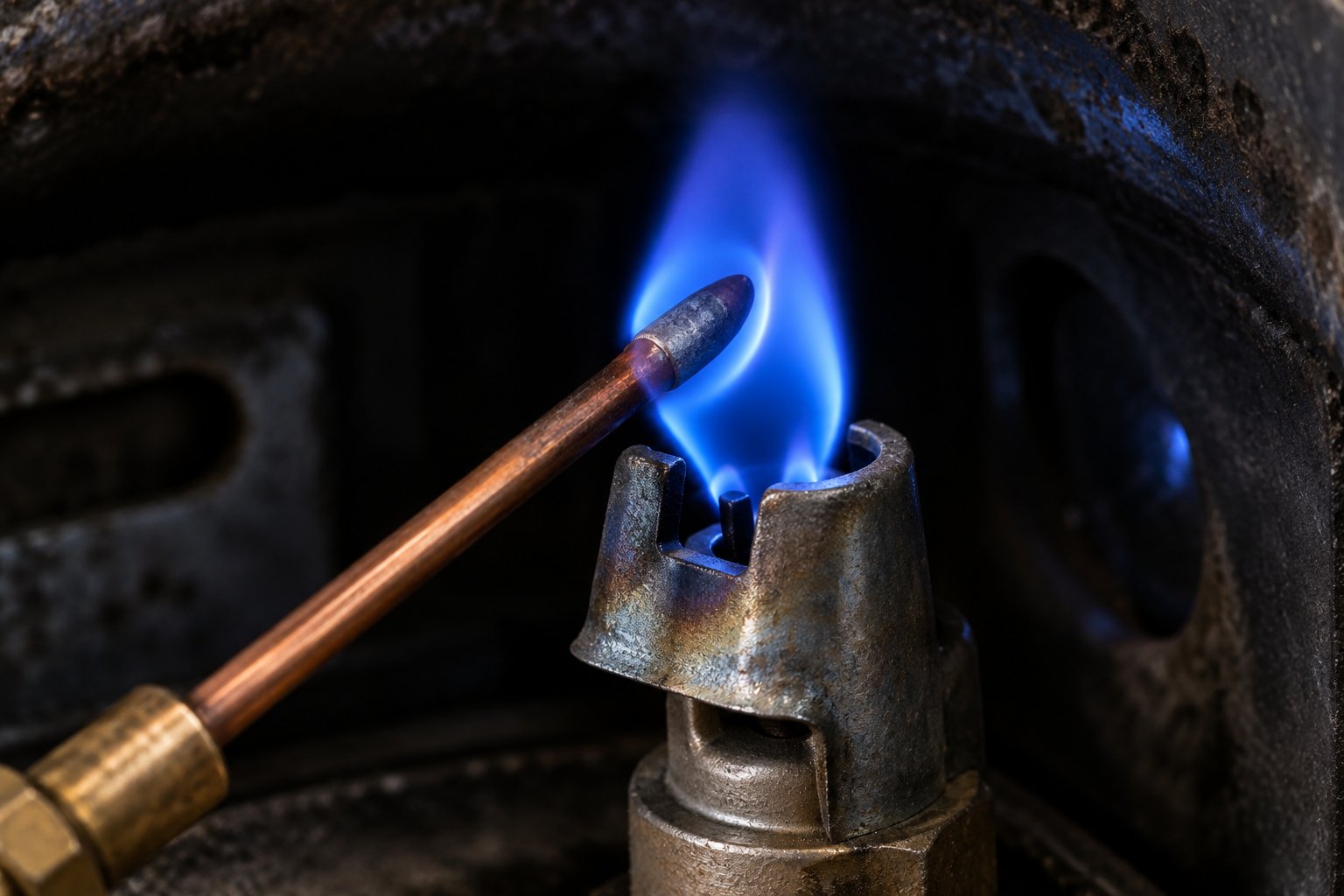
That points at the thermocouple circuit. A thermocouple is a small rod in the pilot flame that makes a tiny voltage when hot; the open HVAC textbook from BCcampus explains that this voltage holds the gas valve open, and if the flame goes out “the voltage source disappears and the normally closed, held-open valve re-closes.” If the thermocouple is not hot enough, the valve closes the moment you let go.
Bradford White’s troubleshooting chart lists these causes for a pilot that “will not stay lit when button is released”:
- A poor thermocouple connection at the gas valve.
- A thermocouple not fully pushed into the pilot bracket.
- A pilot flame that is not fully covering the thermocouple’s hot tip.
- A weak or defective thermocouple.
- An open ECO (high limit) or a defective magnet in the gas valve, which means replacing the valve.
- A resettable thermal switch that has opened.
Also check you held the button long enough. American’s lighting steps say to keep holding it “for about (1) minute after the pilot is lit” before releasing.
How do you test a water heater thermocouple?
American’s own pilot troubleshooting flowchart gives a multimeter test: disconnect the thermocouple from the gas valve, clip the meter’s leads to the copper body and the silver end, light the pilot, and watch the reading. “After 45 seconds the meter should read 12 millivolts DC or more.” If it does not, the flowchart says to replace the thermocouple; if it does, it points you to combustion air and then the gas valve.
Position matters as much as the part. Rheem’s service bulletin says the pilot flame should envelop “the top 3/8″ to 1/2″ of the tip,” and that the connection at the gas valve should be “no more than one quarter (1/4) turn beyond hand tight.” American gives the same rule: started by hand, then about a quarter turn with a wrench.
A note on who should do this. American’s manual also says “DO NOT tamper with the gas valve/thermostat, igniter, thermocouple,” that tampering voids warranties, and that only qualified technicians should service these parts. Some newer heaters, such as American’s Flame Guard models, use a thermocouple that clicks into a specific pilot assembly, so a universal part may not fit. If you are not comfortable working on gas parts, the test and replacement are a short service call.
What we would buy for this job
- AstroAI DM130B auto-ranging digital multimeter: reads DC millivolts for the thermocouple test in the American Water Heater flowchart: 12 mV or more after 45 seconds of pilot flame. Add alligator clip leads if yours has only probes.
As an Amazon Associate, Complete Water Guide earns from qualifying purchases. Prices change, so check the listing.
How do you clean the air intake and flame arrestor?
Water heaters made with flammable vapor protection draw combustion air through a screen or slots near the base and a flame arrestor under the burner. When lint and dust clog them, the burner and pilot starve for air. Bradford White says its thermal switch shuts down the burner and pilot on “restricted airflow caused by severe lint, dust or oil accumulation on the arrestor plate.”
A.O. Smith’s Bulletin 186 gives the owner steps for its models:
- Turn the gas control knob to off and let the heater cool for about 15 minutes. Remove the outer door.
- Take out the snap-in filter if your model has one.
- Push a flexible brush in and out of the air intake openings, vacuuming the brush, until it comes out clean.
- Vacuum inside the base and around the heater, including the drain pan.
- Refit a filter. “For proper operation the water heater MUST have a filter installed.”
- Relight using the instructions on the heater.
The makers differ on brushes: A.O. Smith warns against hard bristles that could damage its arrestor, American suggests a vacuum, compressed air or a soft brush, while Bradford White’s service steps use a stiff brush. Follow your own model’s instructions. In a dusty laundry room, A.O. Smith suggests checking its wrap-around filter at least once a month.
Why does the pilot go out every few days?
A pilot that goes out “periodically (after heating cycles, once a day, once a week etc.)” has its own row in Bradford White’s chart, with three causes: insufficient combustion air, an incorrect or clogged vent system, and inconsistent gas supply or pressure. The fixes are to clear the jacket openings and flame arrestor, have the venting checked for size and blockage, and check gas pressure with your utility. Our guide to a water heater not heating covers the other gas and electric causes of lost hot water.
Does gas keep flowing if the pilot light goes out?
Not on a working heater. American’s guide says the thermocouple “will shut off the gas supply to the main burner and the pilot if the flame is absent.” Its thermal switch also shuts off gas if the heater is exposed to flammable vapors such as spilled gasoline or paint fumes, or if poor combustion from a blocked vent or lack of air overheats the chamber. If American’s flame-trap shows signs that flammable vapors burned there, its chart says to replace the water heater; our guide to water heater replacement cost has current prices.
Never store gasoline, paint thinner or similar products near a gas water heater. That warning opens the gas water heater manuals we read, for a reason.
How do you relight a water heater pilot light?
Follow the label on your own heater, since controls differ. American’s steps for its piezo-lit models show the pattern:
- Turn the gas control knob to off and wait 10 minutes to clear any gas. If you then smell gas, stop.
- Turn the knob to PILOT.
- Hold the reset button all the way in and press the igniter until the pilot lights, watching through the view port.
- Keep holding the reset button for about one minute, then release.
- Turn the knob to ON and set the temperature.
American adds two stop signs: “If the pilot will not stay lit after several tries, turn gas control knob to ‘OFF’ and call your service technician or gas supplier,” and if the reset button does not pop back up when released, shut off the gas at the line valve and call for service. If the problem keeps coming back, our guide to water heater repair vs replace helps with the next decision, and our comparison of tank vs tankless water heaters covers the choice if you replace it.
Frequently asked questions
Why would my water heater pilot light keep going out?
Usually a loose, misplaced or worn thermocouple, or a burner starved of air by a dusty intake or flame arrestor. Drafts, a blocked vent, low gas pressure, a clogged pilot orifice and a tripped safety switch are other causes listed in the makers’ manuals.
How do I fix a pilot light that won’t stay lit?
Clean the air intake, check for drafts, and hold the button about a minute after lighting. If it still goes out, have the thermocouple connection checked (hand tight plus a quarter turn) and the thermocouple tested or replaced.
Why does my pilot light go out as soon as I release the button?
The thermocouple is not making enough voltage to hold the gas valve open. Bradford White lists a loose or misplaced thermocouple, a flame not covering its tip, a weak thermocouple, a tripped thermal switch or a faulty gas valve.
Does gas keep flowing if the pilot light goes out?
No. When the pilot flame goes out, the thermocouple cools and the gas valve shuts off gas to the pilot and main burner. If you smell gas anyway, leave and call your gas supplier from outside.
How many millivolts should a water heater thermocouple read?
American’s test says 12 millivolts DC or more after 45 seconds of pilot flame. A typical thermocouple makes about 25 to 30 millivolts, according to the BCcampus open HVAC textbook.
Can a dirty air filter make the pilot go out?
Yes. Bradford White says restricted airflow from lint, dust or oil on the flame arrestor can trip the thermal switch and shut down the pilot. A.O. Smith says the heater must have its filter installed and suggests monthly checks in dusty rooms.
Sources
- American Water Heater, Gas Water Heater with the Flame Guard Safety System, Installation Instructions and Use & Care Guide (as filed with the California Energy Commission): gas smell safety, lighting steps, troubleshooting chart, thermocouple multimeter test, thermal switch, flame-trap cleaning, tampering warning.
- Bradford White, Flammable Vapor Ignition Resistant Water Heaters Service Manual: Defender Safety System, troubleshooting chart for pilot outages.
- A.O. Smith, Technical Bulletin 186: FVIR C3 water heater flame arrestor cleaning instructions.
- Rheem Technical Service Bulletin: How to replace a thermocouple, residential standing pilot gas.
- BCcampus Open Textbook, Basic HVAC (Aaron Lee, 2021): Thermocouple chapter.